


Five solar power plants with total capacity of 10 MW connect to Georgia’s unified energy grid
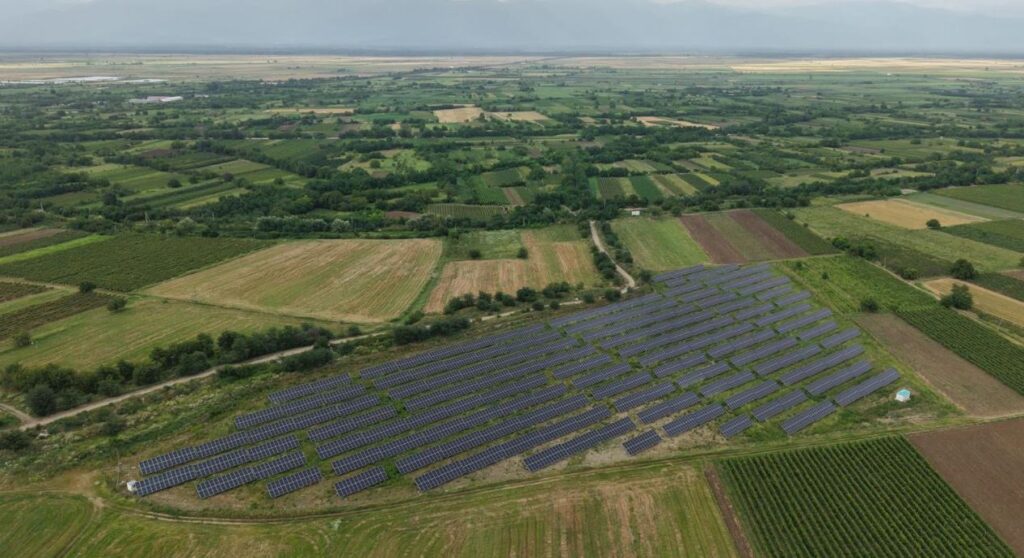
Georgia’s State Electrosystem is connecting five solar power plants with a combined capacity of 10 megawatts to the unified energy grid, marking the first-ever integration of solar energy into the country’s transmission network.
The State Electrosystem has completed installation of modern 6/10 kV voltage cells at five substations in the Kakheti region: Jugaani 110, Khirsa 110, Gamarjveba 110, Qistauri 35, and Qedi 35. This infrastructure upgrade enables the integration of solar power into Georgia’s national grid.
“Against the backdrop of global energy challenges, energy self-sufficiency and energy independence become even more important. Optimal development of renewable energy is one of the Georgian government’s significant priorities,” Alexandre Sokhadze, Head of the Energy Policy and Investment Projects Department at the Ministry of Economy and Sustainable Development, emphasised.
Beyond the immediate solar project, Georgia is advancing a comprehensive renewable energy program. The country is constructing 125 MW of wind farms with a USD 195 million investment, phased for activation over the coming years. An additional 200 MW of wind capacity is in the technical-economic study stage, representing another USD 240 million in potential investment.
In solar energy, the current 10 MW project is supported by local banks with a USD 4.75 million investment. Looking ahead, approximately 150 megawatts of additional solar capacity is in the feasibility study phase, with a projected investment of USD 88.45 million.
The renewable energy push aligns with Georgia’s long-term strategy to become a net energy exporter.
“Optimal development of renewable energies is in full compliance with long-term policy, as this ensures increased generation capacity in the country, which will allow us to become net exporters in the coming years,” Sokhadze declared.
Sokhadze highlighted the crucial importance of the Black Sea submarine cable project, which will connect Georgian and European energy markets in the coming years. This infrastructure will enable direct export of locally produced green energy to European markets.
“This creates a real opportunity for Georgia to ensure both its own energy security through renewable energy development and contribute to strengthening European energy security,” he explained.