

Ex-Defence Minister: Gakharia failed to convene Security Council on Chorchana incident despite constitutional obligations
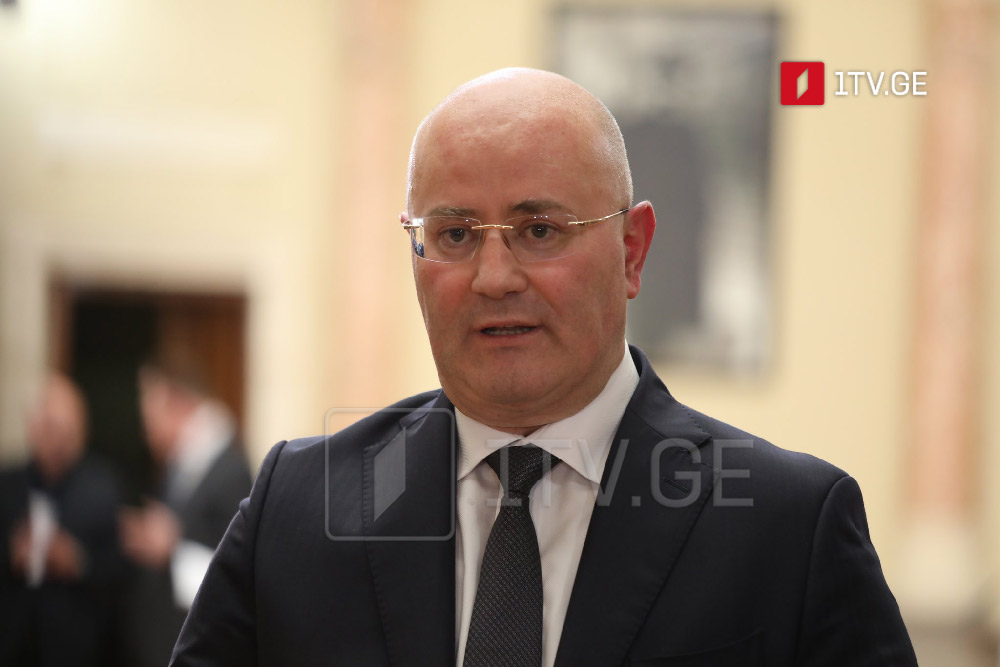
“I learned about the so-called Chorchana episode through the media at the time when watchtowers were placed at specific positions,” stated Georgia’s former Defence Minister Levan Izoria.
According to him, the main person responsible for the so-called Chorchana episode is Giorgi Gakharia, who failed to refer the matter to the Security Council for consideration.
“The question was whether I was informed about the so-called Chorchana episode. My response was that I had no information, neither through unofficial, personal communication channels nor through formal mechanisms, such as government meetings or, specifically, discussions within the Security Council framework.
I especially want to draw your attention to the last circumstance. In April 2019, the aforementioned body, the Security Council, was created, which is responsible for analysing security-related problems, their prevention, and policy planning, so that appropriate recommendations and proposals are delivered to high-ranking political officials. I had the honour of being a permanent member of this body from its very first day of creation, as Defence Minister. The legislation provides for meetings at least once every three months. Moreover, a permanent member has the authority to approach the Prime Minister on their own initiative and convene a Security Council meeting.
However, I recall only one meeting on May 1, 2019, which addressed organisational issues, as the Council had been newly established. But, on this matter, one I believe was of great importance and related to the country’s security, the Prime Minister, the European Union Monitoring Mission, and the security services should have been informed. Unfortunately, no Council meeting was convened on this topic,” declared Levan Izoria.
According to him, he learned about the so-called Chorchana episode through the media only when watchtowers were already placed at specific positions.
“As Defence Minister, I held the position for only one week after these watchtowers were installed, and within just a few days, I was no longer serving as Defence Minister. Consequently, I naturally had no opportunity for communication or clarification, especially since, just two months later, in November, I was appointed as Council Secretary. This sequence also underscores how seriously the Prime Minister prioritised security issues,” declared Levan Izoria.
According to him, the Defence Ministry had no authority whatsoever over the occupation line or the territories adjacent to its zone. This area fell within the jurisdiction of police operations, conducted in close coordination with the EU Mission for preventive purposes.
“Unfortunately, we have received a disappointing result. The security interests of our country and its territorial integrity under such occupation conditions are of the utmost importance. Naturally, when decisions are made and the result is so deplorable, namely, the loss of additional territories, it is a deeply regrettable fact. There is no evidence that the newly established body, convened with renewed motivation and responsibility to address the most critical issue – our nation’s security and the placement of watchtowers, did so in the responsible manner envisioned by legislation. This is the most critical point that was the central subject and theme of today’s interrogation.
As a permanent member of the Security Council, a lawyer, and someone who understands the primary directions and spheres of responsibility, I believe this issue should have been discussed precisely within the Security Council. Having previously led the Intelligence Service, an agency not tasked with analysing domestic threats but primarily focused on external threats and their neutralisation, I understand the importance of proper procedures. When I speak of initiative, I refer to addressing this matter before a decision is made; the relevant permanent member, who was better informed and involved in preparing the decision, should have brought this up with colleagues within this format, which, unfortunately, did not happen. Yes, I am referring to Giorgi Gakharia, especially since he was the Council Secretary,” declared Levan Izoria.
According to him, Giorgi Gakharia even delayed the appointment procedure for the position, which speaks to his responsibility.
“When the Council operated without a Secretary for two months, what meaningful discussion could take place? The official format and structure were virtually non-functional. Giorgi Gakharia bears primary responsibility for this situation, as he made the decision, especially since, at that time, the Prime Minister was the decision-maker. He is both the author of the initiative and ultimately responsible. When a Security Council exists, it should be used effectively. We pay taxes so that state institutions function properly, and responsible politicians fulfil their duties as mandated by law. We should not rely on Gakharia’s goodwill or courtesy. Instead, we must act as responsible politicians; when a threat arises, it must be discussed within the frameworks established by the Constitution and legislation. The population can only gauge responsibility by how diligently each of us operates within the boundaries set by our constitutional obligations,” declared Levan Izoria.