


Education Minister: 11 Years of schooling sufficient, optional 12th year may be offered
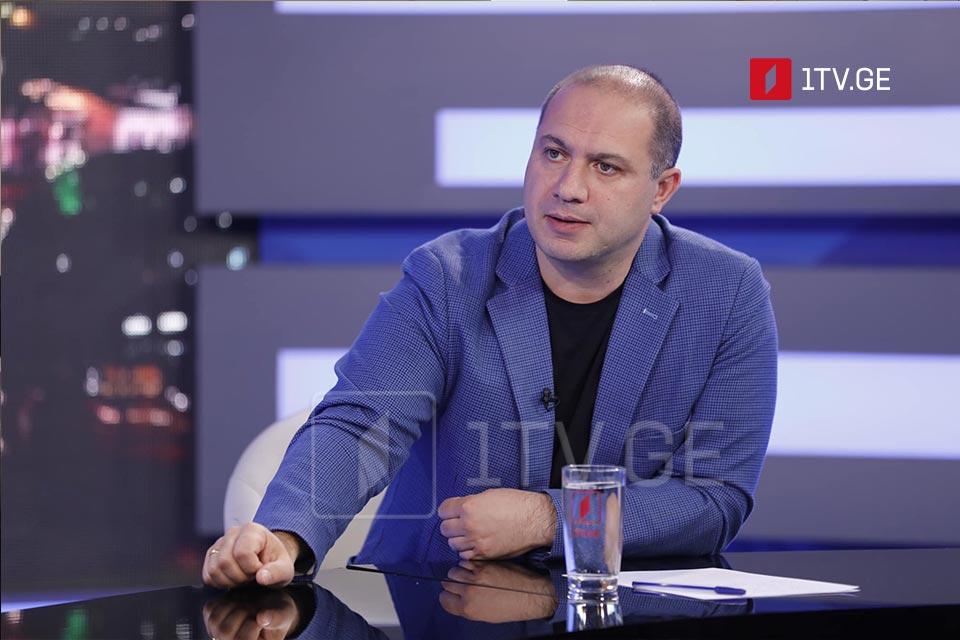
“We have compelling evidence that eleven years is sufficient to provide young people with a complete general education, and this in no way contradicts the Bologna Process,” Education, Science and Youth Minister Givi Mikanadze stated during an appearance on Georgian Public Broadcaster’s programme “Actual Topic with Maka Tsintsadze”.
According to Miqanadze, certain individuals are purposefully exploiting this issue, whilst a small group expresses genuine concern.
“An 11-year school certificate does not prevent continuation of studies in Europe. In such cases, the young person merely needs to spend one extra year studying at a European school. This approach is correct; however, we do not rule out the possibility of developing an alternative option for those who wish to undertake a 12th year of study.
Far more students pursue master’s degrees abroad, whilst very few undertake undergraduate studies in foreign countries. Unfortunately, these processes contribute to migration, and many people do not return, which is detrimental to the country. We want to ensure quality education here so that young people find employment in Georgia and earn high salaries, thus halting migration and ensuring they apply their knowledge at home,” Mikanadze stated.
3+1 University System to replace the current 4+2 model
“Where we currently have a 4+2 system, four years undergraduate and two years master’s, the first level will become three years and the second one year. It is the same system, simply with reduced duration,” Mikanadze explained.
The minister emphasised this will not apply to all fields, particularly medicine, which requires considerably longer study periods.
The reform will take approximately three to four years to implement fully and will not affect current students.
“From next year, in fields identified as suitable for the 3+1 model, we will offer this to young people who pass entrance examinations,” he said, adding that business studies has already transitioned to a three-year undergraduate system.
Mikanadze dismissed claims that this contradicts the Bologna Process as “pure falsehood” and “an attempt to mislead the public”.
Professor selection and research funding
“One of the main pillars of education reform is the proper selection of teaching staff and determining who will be full professors, associate or assistant professors,” Mikanadze said.
Textbook development should primarily be the competence of full professors, he explained, noting that current textbooks are “often spontaneously developed” and fail to meet appropriate standards.
The minister also highlighted the weak link between research activities and teaching.
“State universities must have their own budgets to conduct specific research, involving both academic staff and students. We must provide universities with funding from the state budget that will allow them to conduct research activities,” he stated.
‘One City—One Faculty’ principle
The reform includes consolidating resources by redistributing faculties amongst state universities according to their traditional profiles. For example, medical education would be centred at the State Medical University, while law would remain at Tbilisi State University.
“In Tbilisi, including Sokhumi University, there are five universities, whilst Kutaisi has two. All faculties should be redistributed based on the traditions they have always had, with the state assuming all costs,” Miqanadze explained.
To fund infrastructure improvements, certain outdated buildings will be privatised. New campuses with modern facilities and affordable student accommodation will be established near Rustavi, between Tbilisi and Rustavi.
“Within three to four years from approval of the reform concept, we plan to complete this process, though certain results will be tangible in stages,” he stated.
Strengthening vocational education
“We consider it very important to eliminate the mentality that higher education is essential, whilst offering quality alternatives,” Mikanadze said.
The Ministry has launched integrated vocational programmes in 86 schools, allowing final-year pupils to study both core subjects and vocational training. In May 2026, the first graduates will receive both school-leaving certificates and professional qualifications, enabling them to start businesses or continue further education.
“Demand for this is growing, both from pupils and schools. This is already receiving positive feedback,” he noted.
A second initiative, STEM clubs in 209 schools, focuses on strengthening knowledge in physics, mathematics, chemistry and biology.
“There is great interest in young people’s involvement, which makes participation in these processes interesting for them. This will grow annually,” Mikanadze stated.