


Economy Minister: Balancing free enterprise with social responsibility lies at heart of our drive to bring prices down
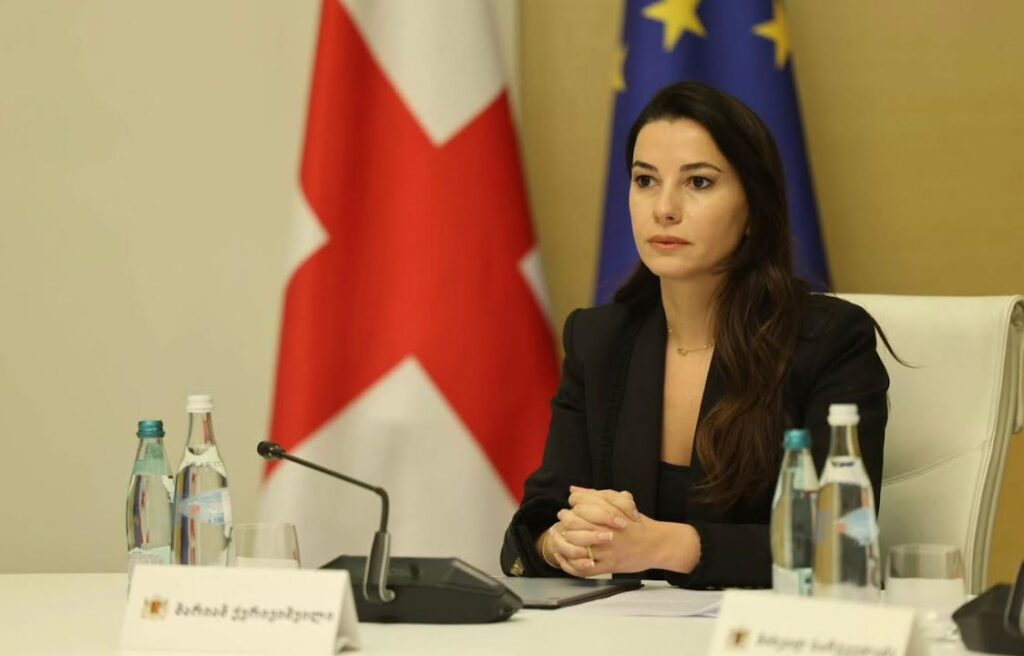
“Business in this country is free, and that is the most fundamental, most important principle, one that has, among other things, ensured the growth of investment in Georgia and the direct development of the national economy. It is precisely from these values that we approach each area and issue with the utmost care that are a matter of deep concern to our government. Whilst we have an enormous interest in the development of the private sector, we also bear a social responsibility towards our population. It is this responsibility, and the need to strike the right balance, that the process currently underway is designed to serve,” said Georgia’s Minister of Economy and Sustainable Development, Mariam Kvrivishvili.
In the Minister’s assessment, the process, conducted with considerable transparency, began by highlighting a specific issue, and all parties recognise that this is a matter of serious concern to the public.
“The government has stated that we are taking this matter in hand, and even though it is a highly complex and multifaceted process, we did not shy away from it. The first thing we did, at the Prime Minister’s instruction, was to commission an in-depth study; in effect, every link in the supply chain was analysed, and as a result, the environmental factors driving price increases were identified,” the Minister noted.
According to Mariam Kvrivishvili, the study brought key findings into the public domain, revealing an 86 per cent price mark-up from the border to the shop shelf. The Minister explained that this involves numerous links in the chain, and specific points that have been raised both in meetings and publicly, among them the nine separate fees that supermarket chains, in particular, impose on suppliers and distributors alike, which in turn directly feed into pricing policy.
“Two things matter to us above all else: first, that every business in the country should continue to operate freely, and second, it is, of course, our strong desire that businesses remain profitable so that they can continue to grow and create new jobs. But on the other hand, if we look at European prices for identical products, in Georgia the difference is frequently 30 to 40 per cent, and in some cases as much as 60 per cent,” the Economy Minister observed.
In Kvrivishvili’s assessment, this is not a straightforward process, as a great many factors must be taken into account, including the realities of the business environment, as well as various procedural and technical considerations, so that the path the government chooses to take alongside the private sector may yield lasting results, rather than short-term gains that will prove ineffective over the long run.