


Deputy Economy Minister: Georgia maintains liberal and predictable trade regime in region, creating solid foundation for long-term investments
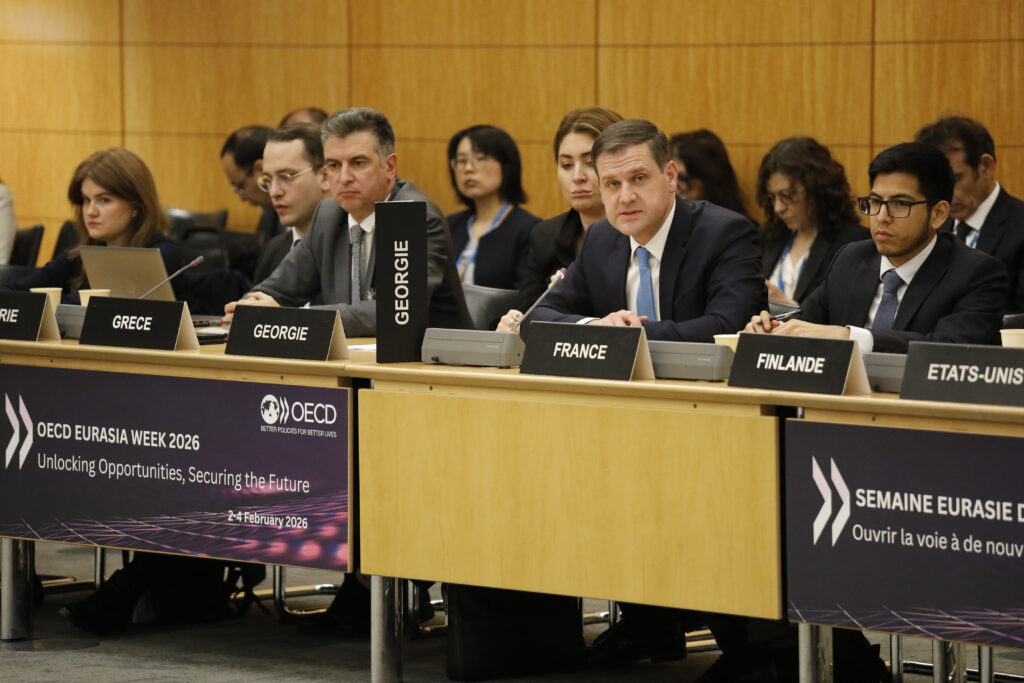
“Georgia continues economic development through implementing structural reforms, including within the framework of Deep and Comprehensive Free Trade Agreements, using trade and investment policies for structural transformation,” said Gennady Arveladze, Deputy Minister of Economy and Sustainable Development, addressing the plenary of OECD Eurasia Week in Paris.
According to Arveladze, Georgia has made significant progress in aligning its national standardization system with the European framework, both institutionally and in practice.
“The rate of adoption of European standards in Georgia has reached almost 95%, which distinguishes the country among the countries in the region. A high level of harmonization reduces technical barriers for trade and increases the ability of Georgian producers to be competitive and integrate into European and global value chains.
Georgia maintains one of the most liberal and predictable trade regimes in the region, which creates a solid foundation for long-term investments. Our trade policy is shaped by low tariffs, minimal customs barriers, facilitated procedures and transparent, rule-based management. The main priority is diversification of both export markets and export production, which strengthens economic resilience and reduces dependence risks for investors,” he said.
Gennady Arveladze remarked that Georgian products enjoy preferential access to a consumer market of over 2.3 billion, and Georgia is emerging as an efficient production and distribution hub connecting Europe, Asia, and the Middle East.
The Deputy Minister of Economy participated in panel discussions on supporting small and medium-sized businesses and digitalization.
OECD Eurasia Week is an annual high-level forum with the participation of the organization’s member countries and heads of governmental institutions from Central Asia and the South Caucasus.