


Chess grandmaster Gaprindashvili testifies: May 26, 2011, was deliberate slaughter
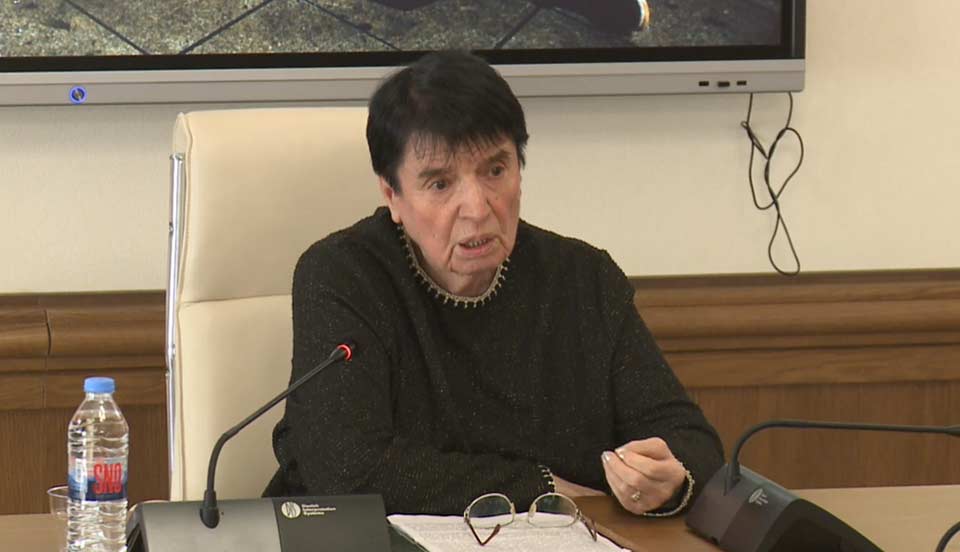
“What we endured that day, May 26, was a deliberately premeditated and orchestrated operation. They truly sought to punish us. I call it a slaughter because what happened was beyond anyone’s wildest imagination,” declared chess grandmaster Nona Gaprindashvili during her testimony before the Temporary Investigative Commission Studying the Activities of the Regime and Political Officials in Power from 2003-2012.
Gaprindashvili emphasised that protesters were left with no escape routes.
“Many rallies have taken place since April 9, and in subsequent demonstrations, but nothing of this extent had ever occurred before. On that day, we were completely surrounded by three cordons. There was no way out. I mention April 9, the horrific event that day, because, yes, they pursued people then, but protesters had escape routes. Here, there were none. A group of respected individuals was working on establishing the People’s Assembly, and you can ask those still alive. It was an honour for me to stand alongside them. My family stood with me at every protest we organised. The situation only calmed after the prison cell protests were addressed. During this brutal regime, Georgia could not remain silent, and the People’s Assembly was formed to raise awareness. If that hadn’t happened, Georgia might not even exist today.”
She affirmed that no violations occurred at any of their protests, whether in the regions or Tbilisi.
“Those of us on stage spoke openly about what was happening—the atrocities, which I won’t detail here because everyone repeats the same: torture, shootings, arrests of ordinary people simply for listening, individuals encountered on the street who were detained. There were countless such cases. We only spoke; people came voluntarily. We didn’t even pressure relatives to join us. Nothing of that sort happened because this is a democracy, and people should attend protests of their own free will. It’s impossible to see it otherwise. Whether friends or relatives chose not to participate, no relationships were damaged. It was their decision. Some lacked the courage, some were afraid, some simply didn’t want to get involved. People are different,” Gaprindashvili noted.
Regarding the events of May 26, 2011, she continued: “I can’t think of any other word—this was a deliberately executed bloody special operation. People were peacefully standing, holding candles. We never once provoked them or gave any reason to disperse us.”
Gaprindashvili explained that the people at the time were fully aware of the dire situation in the country and the ongoing tragedies. They felt something needed to be done, but it should have been carried out peacefully.
She recounted that night: “On May 26, we intended to hold a protest and, since Independence Day was to begin at midnight, we planned to organise a concert if people remained. The singer Utsnobi had come to perform. Ten minutes before midnight, a law enforcement representative came onto the stage and ordered us to disperse. We told them we were simply holding candles—nothing more. We had never broken into any building or created any disturbance—we never had anything in our hands, nor did we insult anyone, despite police officers circling us. They demanded we disperse. We explained we weren’t planning to stay overnight; we wanted to hold a concert at midnight to mark the occasion, since the government planned a parade the next day at around five o’clock, if I remember correctly. We intended to perform, then disperse, but they wouldn’t let us start. We told the crowd we planned to hold a concert—anyone who wanted to stay could, and those who wished to leave could do so. No one moved—there were about a thousand people present. Our stage was opposite the Parliament building. The crowd filled the space in the middle. That’s why we estimate about a thousand attendees.”
She described how, at midnight, three cordons advanced toward them. “As they approached, they released a massive amount of gas and opened fire—bullets aimed directly at us, including the stage. They shot into the crowd, and the weather was terrible—raining and cold. People tried to escape but had nowhere to run.”
“Again, I say, this was a deliberately executed bloody special operation. People stood peacefully, holding candles. I saw footage of Utsnobi leaving the Ministry of Internal Affairs building covered in blood—he was lucky to survive. We never provoked them or gave any reason to disperse us. If you speak calmly, democracy guarantees that right. Now they spread all sorts of lies, even calls for violence—something that, in some countries, is punishable. They tolerated that, but we did nothing of the sort. We recognised that the situation was dire and that something had to be done to improve it, to bring new people forward. It had to be peaceful. We were simply speaking out against what was happening—the tragedies unfolding in our country,” Gaprindashvili declared.
For context, the People’s Assembly, led by chess grandmaster Nona Gaprindashvili and former chair of the Georgian Parliament Nino Burjanadze, had obtained a permit for their rally that expired at midnight on May 25, 2011. Several hours before the dispersal, Gaprindashvili declared, “We will not allow the government to hold the parade peacefully.”
As the permit expired, law enforcement officials confronted protesters, ordering them to disperse. Shortly thereafter, on May 26, 2011, riot police launched a forceful crackdown, using water cannons, tear gas, and rubber bullets. Reports confirm that police officers also physically assaulted demonstrators.
The Temporary Investigative Commission is currently examining potential systemic crimes committed by the previous government between 2003 and 2012 and is preparing a comprehensive report.