


Bidzina Ivanishvili’s lawyer issues statement over The New York Times’ article about former Co-Investment Fund’s Head
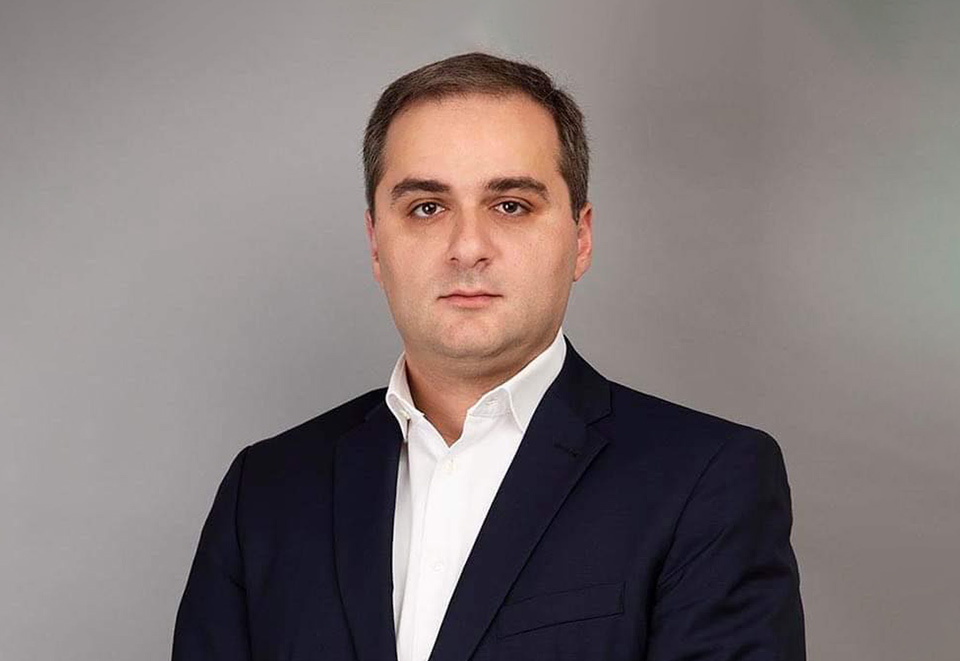
Bidzina Ivanishvili’s lawyer, Temur Tsikvadze, has issued a statement regarding an article published in The New York Times concerning the case of Giorgi Bachiashvili, former Co-Investment Fund Director.
According to Tsikvadze, the article published in the American newspaper about the Bachiashvili case is commissioned, financed, and bears no relation to the truth.
“I wish to inform the public that on October 5, 2025, The New York Times published an article commissioned by Giorgi Bachiashvili from journalist Philip Shishkin, the ‘subject’ of which was supposed to be the unlawful misappropriation by Giorgi Bachiashvili of Bitcoins belonging to the victim Bidzina Ivanishvili, and matters of money laundering.
This article is an excellent example of how The New York Times, just like The Guardian, operates under precisely the same influence as local, compromised media outlets, which, as is universally known, are heavily financed by Bachiashvili himself, amongst others, at the expense of stolen assets.
As expected, the journalist presented and uncritically endorsed only Bachiashvili’s views in the article. The victim’s positions and responses to certain questions posed are conveyed in general, abstract terms with the aim of presenting them as supposedly weak and unsubstantiated. Meanwhile, the victim’s exhaustive, well-founded responses to important questions, which the article’s commissioners and executors deemed unprofitable for themselves, are not reflected in the text at all (for example, responses provided regarding the case’s political motivation, Bachiashvili’s alleged support for Ukraine, attempts at reconciliation between the parties, Bachiashvili’s retraction of his own testimony, his supposedly being held in solitary confinement in prison, and other matters). I shan’t even enter into a detailed discussion, as these matters are unworthy of the attention of extremely bad-faith interested parties acting in such a manner.
At the same time, it must be emphasised that the article has clearly strayed from its ‘subject matter’, beyond the scope of Giorgi Bachiashvili’s unlawful misappropriation of Bitcoins belonging to Bidzina Ivanishvili. It discusses matters of political content and significance (for example, ‘rigged elections’, authoritarianism, power being seized by a single individual in various countries around the world, including the United States, Hungary, and so forth), which indicates that Bachiashvili is not merely in the role of commissioner and that we are dealing with far deeper processes. Moreover, in this instance, too, the article’s author appears not as an objective narrator but directly offers assessments and conclusions to the reader as if they were true.
Against this background, one might even feel a certain disappointment, given that we are talking about globally renowned media outlets. However, information circulated only recently that even the sitting President of the United States was compelled to file a defamation lawsuit against The New York Times in a Florida court, rather sheds light on everything and leaves no room for disappointment in the mind of a logically thinking person.
In Donald Trump’s assessment, he filed suit against ‘one of the most terrible and degraded newspapers in the country’s history’, supported by radical leftists, and the lawsuit accuses the said media outlet of disseminating maliciously distorted information replete with lies.
When the President of the United States says this, it becomes even clearer that the article published in connection with the Bachiashvili case (though, as I have already noted, the article’s text covers a far broader spectrum of issues) is commissioned, financed, and bears no relation to the truth. It is evident that these major ‘media’ outlets with a certain history and erstwhile reputation today differ in no way from local (I refer to certain media operating in Georgia) ‘media’ with narrow mercantile interests, operating by the same principles and for the same purposes, which is simultaneously very sad and shameful,” notes Bidzina Ivanishvili’s lawyer in his statement.