

Bidzina Ivanishvili’s attorney addresses Giorgi Bachiashvili Case
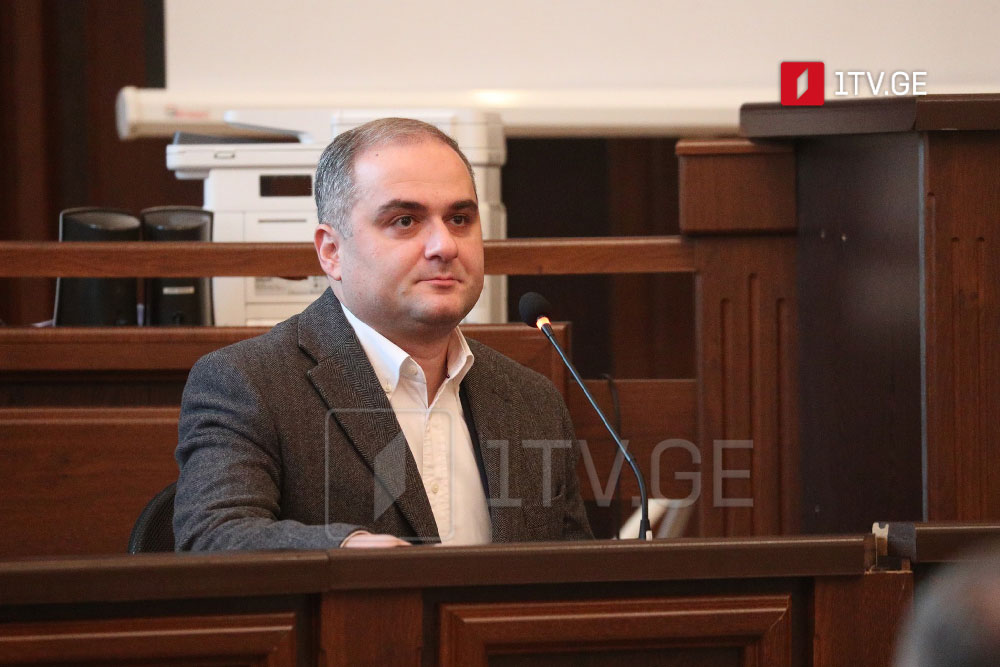
Bidzina Ivanishvili’s attorney, Temur Tsikvadze, released a statement on Thursday regarding the Giorgi Bachiashvili case.
Below is the statement as follows:
“Following the conclusion of the Court of Appeals hearings, I would want to provide more explanation to the public regarding Giorgi Bachiashvili’s unlawful appropriation of huge sums of cryptocurrency to Bidzina Ivanishvili, as well as money laundering.
During the analysis of the case proceedings at the appellate stage, I want to draw the public’s attention to the diametrical change in some positions held by the convicted Giorgi Bachiashvili (compared to what he held during the investigation and first instance court proceedings), which put him in direct contradiction with himself.
Bachiashvili’s primary point was that, reportedly, after loan repayment, he got to fund Bitcoin mining, he also paid the bank administrator cash in the form of the agreed-upon benefit/interest. He supported this claim with the so-called calculation he supplied to the investigators, as well as the inauthentic audio tape he provided. In his opinion, the edited audio recording established that the victim, Bidzina Ivanishvili, had agreed (we clearly stated to the public that the mentioned audio recording contains no agreement from the victim’s side) to give him a loan in exchange for transferring certain benefits to the bank.
In reality, the money he transferred to the bank manager he qualified as profit remaining after the completion of transactions, which belonged to the victim Bidzina Ivanishvili. After the investigation began against him, he reclassified the money as an extra bonus for the bank’s loan issuing.
After he was offered additional examination of the documents/calculations he had presented, he categorically refused both the examination of documents and the citation of testimonies or explanations he had given during the investigation and first instance court proceedings.
Another crucial topic concerns convicted Bachiashvili’s admission, which confirms that if he can be considered an investor in the Bitcoin mining transaction at all, this is only possible within the scope of the USD 1,305,000 he mobilised, and not in relation to the USD 5,000,000 portion that represented Bidzina Ivanishvili’s investment in the mining contract. Specifically, in email correspondence conducted with a cryptocurrency exchange in 2016, the convicted party states that he funded a Georgian Bitcoin mining startup (i.e., a new company without experience), and his participation amounted to approximately USD 1,500,000. This directly refers to the company that also received Bidzina Ivanishvili’s investment through a bank loan totalling USD 5,000,000. Thus, in official correspondence related to anti-money laundering procedures (“AML/KYC procedures”), the convicted party directly acknowledges what the injured party maintains: that Bachiashvili does not represent an investor in the USD 5,000,000 portion.
The conditions described above are more than enough to convince the public that Bidzina Ivanishvili is seeking his own cryptocurrency, which Bachiashvili has unjustly taken.
Bachiashvili’s statement regarding the victim allegedly demanding that he produce anti-Western rhetoric is absurd. Bachiashvili has presented nothing to substantiate this, because such a thing does not exist in nature.
It is equally brazen lies that criminal prosecution against him is happening because of sympathy or support expressed toward the Ukrainian state.
As I noted above, even the once “sensational” and “exclusive” audio recording that the convicted released at the time was devalued by Bachiashvili, in the sense that he completely denied the existence of the fact (transfer of cash to the bank administrator), which he was trying to confirm through this recording.
Even from the inauthentic/edited audio recording (on which the “German expertise” could not exclude traces of influence, could not determine the time of its creation, nor the number of participating persons) the following emerges:
1) Bachiashvili has no proven loan; 2) the bank refuses Bachiashvili a loan, especially considering that an unsecured loan should have been considered for extremely risky activity; 3) it is unacceptable for Bidzina Ivanishvili to order the bank administrator to issue a loan to another person; 4) there has been no case where Bidzina Ivanishvili, as a shareholder/beneficial owner of Cartu Bank, would guarantee a third party. 5) Bachiashvili has already paid a certain amount for the Bitcoin mining (production) contract, while he has no agreement on a loan. 6) Bachiashvili tries to obtain unconditional agreement from Bidzina Ivanishvili for issuing him a loan, gives him false information, as if investing money in Bitcoin mining is the same as purchasing solid assets, while his partial participation with personal funds represents a kind of security, which is obviously absurd; 7) Despite the defendant’s attempts, Bidzina Ivanishvili does not give any agreement or condition to Bachiashvili for issuing him a loan. To reconsider the issue, Bidzina Ivanishvili directs Bachiashvili to the bank director. Actually, this is the complete content of the edited audio recording, and it is inconceivable that an objective evaluator would assess this as evidence of Bachiashvili’s investorship.
Here, I want to address once again Bachiashvili’s explanations for why he was entitled to an unsecured loan from the victim’s bank. Bachiashvili tried to present the issue as if he was morally entitled to an unsecured loan, as well as allegedly according to unhealthy banking practices established by Bidzina Ivanishvili.
Giorgi Bachiashvili provided three reasons for seeking an unsecured loan. Specifically: a) he allegedly received low compensation corresponding to a mid-level bank manager; b) he allegedly performed secret/risky assignments for Bidzina Ivanishvili; and c) Bidzina Ivanishvili allegedly established unhealthy banking practices when his close associates or acquaintances received bank loans without collateral. None of the aforementioned so-called justifications corresponds to reality, and the case materials indicate the contrary.
Another misleading instance cited by Bachiashvili is Bidzina Ivanishvili’s allegedly unhealthy banking practice, in which close associates or acquaintances got bank loans without security. This lie was also revealed during the investigation process, as the prosecutor’s office’s investigation and the evidence obtained irrefutably confirmed that not a single business loan was issued without security to a third party in approximately twenty years (if not more),” Temur Tsikvadze stated.