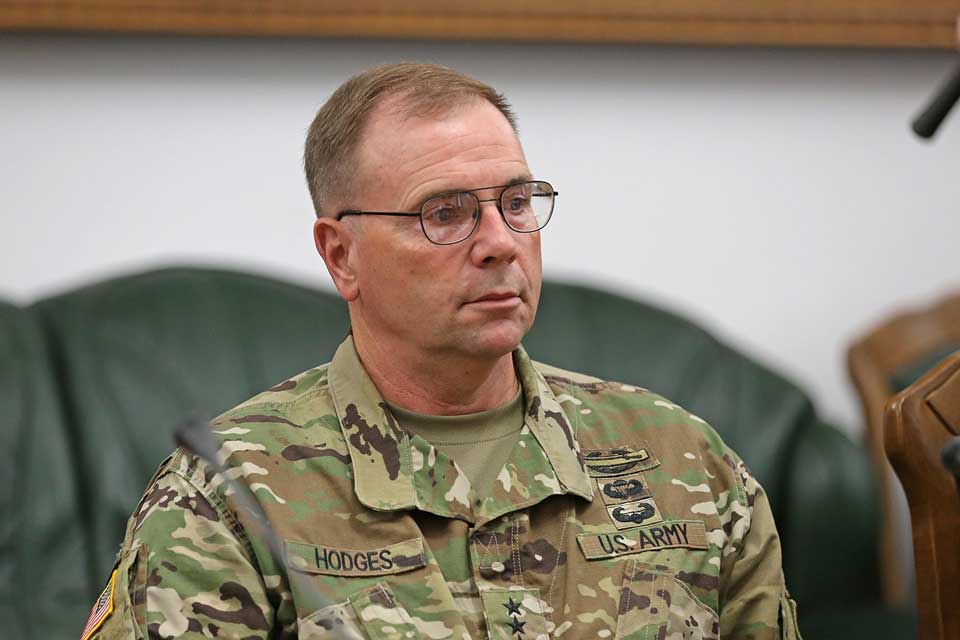
“The strategic end state against Iran remains unclear,” former Commander of U.S. Army Forces in Europe Ben Hodges made the statement in an interview with the GPB’s First Channel.
“The strategic planning – we still don’t know the end state. What is the objective, the purpose for the war? I’ve heard a lot of different justifications: that we want to get rid of the nuclear program, we want to protect protesters, we want to keep the strait open, all these different things. But the tactical approach has not led to any of the strategic objectives. We still don’t know where all of the enriched uranium might be, and there’s about 500 kilograms reportedly out there. Iran had at least 5,000 mines that they could put into the Strait of Hormuz, according to the US Defense Intelligence Agency. I don’t know about their ability to deploy those mines, but all you need is a few to make the strait a challenge where insurance companies would be reluctant to insure vessels going through it. It looks like there are almost two different wars going on. The US and Israel are fighting a war using all of our traditional capabilities. But the Iranians, on the other hand, don’t have to defeat the US Navy and the Israeli Air Force – they have to survive. They have to maintain control over their own population, and they have to demonstrate that they can still disrupt the shipment of oil through the strait. So what the US and Israel are doing does not necessarily defeat what Iran is trying to do,” he said.
According to Hodges, the Trump administration had failed to correctly assess the consequences of military action against Iran, pointing to problems in strategic thinking within the White House.
“I think this is 100% political decision-making. Everybody at US Central Command responsible for this region – they all know the importance of the strait, and that the reaction of the Iranians, if they had ever been attacked by us, would be to do exactly what they’re doing. They all knew that. I think the belief in the White House was that this will last three or four days – the president even said it would last just a few days, that it would decapitate the government, it would collapse, the people would rise up, and then everything would be great.
That was a terrible misunderstanding of the situation by the White House. There are also indications that the two lead negotiators, Mr. Witkoff and Mr. Kushner, were completely out of their depth and did not understand what they were doing. They didn’t have the technical expertise to negotiate effectively with the Iranians ahead of time. So just a commodate of errors in strategic thinking by the White House,” he said.
Hodges also did not rule out that the Trump administration may need to deploy US Marines to reopen the Strait of Hormuz — a step he described as risky.
“If the Trump administration is feeling desperate — pressure from a lot of different angles, domestically as well as from other countries — and feels it has to use military force to secure the strait, this will be a challenge. I have enormous confidence in the courage, skill, and competence of our Navy, our Air Force, and the Marines. They could do it, but at what cost and for how long? That worries me the most — that they’re going to feel they have to do this. I think it would be preferable, and would give the president a way out of his own mess, if European countries were to tell the president: help Ukraine again, help Ukraine defeat Russia, provide aid to them, stop giving Russia exceptions on sanctions, stop helping Russia, which, by the way, is helping Iran target Americans. Use that leverage, and then maybe European countries would be more willing to help either diplomatically, economically, or militarily with the strait. That is what I would want to see,” he said.
You can listen to the full version of the interview with former Commander of U.S. Army Forces in Europe Ben Hodges on Georgian Radio in Levan Akhalaia’s author programme World News.