


Auditor General presents State Audit Office’s 2025 performance report to Budget Committee
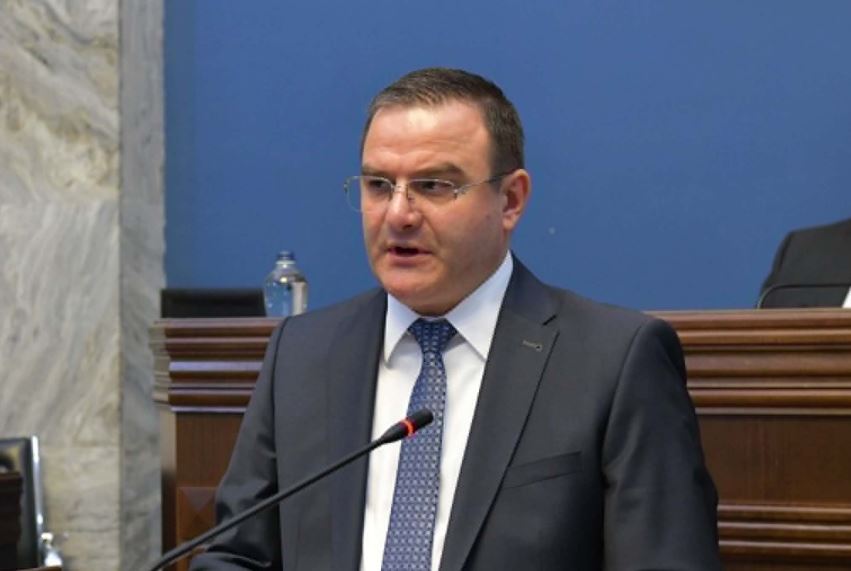
The Auditor General of Georgia, Giorgi Gabitashvili, has presented the State Audit Office’s 2025 performance report to a meeting of the Parliamentary Budget and Finance Committee.
As Gabitashvili noted, the implementation of recommendations issued by the Audit Office resulted in the recovery of overpayments to the budget, the mobilisation of additional revenues, and, in several instances, substantial savings of budgetary resources.
He stated that the total funds recovered, saved, or generated for the state budget during the reporting period amounted to 11.8 million GEL.
“In 2025, we conducted 44 audits, including five financial, 26 compliance, three inter-agency compliance, and ten performance audits. Through our financial audits, we covered over 28.5 billion GEL, representing 95% of the consolidated budget.
In total, financial irregularities identified during the 2025 audits amounted to 36.5 million GEL. These reflect systemic deficiencies, including inefficient, uneconomical, and misallocated use of budgetary resources, as well as issues with procurement and asset management. However, through the implementation of the Audit Office’s recommendations, overpayments were clawed back, additional revenues were mobilised, and budgetary resources were saved in numerous instances. The total financial impact of these recovered, saved, and additionally mobilised funds was 11.8 million GEL during the reporting period.
Following real-time audits by our office, we terminated two tenders valued at 9.2 million GEL due to issues in the documentation and unclear requirements. Consequently, the uneconomical expenditure of budgetary resources was successfully prevented.
Due to high-risk circumstances identified in 2025, 17 audit reports or specific cases of information were forwarded to the Prosecutor’s Office for further action. Of these, four matters were attached to ongoing criminal cases, while investigations into new criminal cases were initiated in 13 instances. The financial value of the materials referred to the Prosecutor’s Office amounts to 80 million GEL,” the report states.
According to Gabitashvili, the audits conducted in 2025 highlighted several systemic issues and structural challenges.
“Financial Audit: As you are aware, within the framework of financial audits, the State Audit Office reviews and evaluates the financial statements of public entities, issuing an opinion on their completeness and accuracy. Of the five financial audits conducted in 2025, an unqualified (clean) opinion was issued in only one instance, qualified opinions were given in three cases, and one adverse opinion was issued.
In 2025, the State Audit Office advanced to a new stage of institutional development. For the first time, it conducted an audit of the consolidated financial statements of state-budget-funded organisations, replacing individual ministerial financial audits. As a result, the financial coverage of the consolidated budget increased to 95%, enabling us to fully meet the criteria set by international auditing standards and assessments. This includes critical frameworks such as the Supreme Audit Institutions Performance Measurement Framework (SAI-PMF), the International Monetary Fund’s Fiscal Transparency Evaluation, and the PEFA (Public Expenditure and Financial Accountability) assessment. This marks a major step forward, bringing the State Audit Office’s financial audit practices into full compliance with the requirements of the International Standards of Supreme Audit Institutions.
Nevertheless, the findings of the financial audits conducted during the reporting period reveal that the financial accounting and reporting process in the public sector faces persistent challenges, underscoring the need for continued efforts.
Specifically, systemic deficiencies were identified in the following categories:
Accounting and reporting of non-financial assets, evidenced by the existence of unrecorded, zero-value recorded, damaged, or redundant assets;
The accumulation of material inventories is unfit for operation;
Financial asset accounting issues, including the management of accounts receivable and payable;
Accounting and reporting of investments in equity instruments;
The absence of a unified accounting policy, which prevents the elimination of intra-group transactions, alongside a lack of accounting policies at the individual budgetary organisation level;
The accounting and reporting of legal disputes and other contingent liabilities;
The execution of mandatory inventories;
The failure of budgetary organisations to utilise specialised financial accounting information systems.
Compliance Audit: We conducted 29 compliance audits in 2025, covering a 3.2 billion GEL expenditure.
A priority for the Audit Office is identifying systemic shortcomings across the public sector and issuing targeted recommendations. To this end, the office employs an ‘inter-agency compliance audit’ tool. Unlike traditional compliance audits, this method thematically covers dozens of budgetary organisations simultaneously. The issues identified through these audits are common to most public agencies and, in many cases, resolving them falls outside the remit of individual entities. Consequently, systemic compliance audits maximise the public benefit through economies of scale. In 2025, we conducted three inter-agency compliance audits, examining the administrative expenses of public agencies at all levels of government.
Another strategic direction for the Audit Office is the auditing of State-Owned Enterprises (SOEs). The office’s stated objective is to audit 20 major SOEs during the current strategy period (2023–2027). In 2025 alone, the office conducted seven individual compliance audits, three systemic compliance audits, and one performance audit within state-owned enterprises. As a result, by the end of 2025, we have already neared the target set for 2027.
The deficiencies identified within our compliance audits can be grouped into four primary systemic areas:
Public Procurement Management: Findings detected at various stages of procurement carried out by budgetary organisations;
State Asset Management: Issues relating to the utilisation and oversight of assets under agency management;
Organisational and Personnel Management: Matters concerning the internal governance and human resource operations of public bodies;
Budgetary Resource Management: Issues related to budget management by public entities, including financial planning and execution.
Performance Audit: Performance auditing remains a high priority and strategic focus for the Audit Office. It examines the economy, efficiency, and effectiveness of budgetary resources deployed within state programmes and projects. Implementing recommendations from performance audits directly enhances the quality of public administration.
In 2025, we conducted ten performance audits, tackling issues of acute public relevance. Specifically, these audits covered the social, healthcare, education, environmental protection, public order, and security sectors.
Based on the audit outcomes, we issued key recommendations, which will be discussed in detail within the framework of the Audit Group established under the Budget and Finance Committee. We believe that fulfilling these recommendations will significantly boost operational efficiency across several areas of public management.
Donor Audits: Turning to another key facet of our work: auditing projects funded by international organisations. Since 2018, the State Audit Office has served as a regional auditor for internationally funded projects. We believe that this recognition by international bodies testifies to the high quality and rigorous standards of our audits.
In 2025, we conducted a financial audit of a major World Bank-funded project, the ‘Georgia Human Capital Programme’, and carried out an independent verification of the project’s planned results and indicators. The World Bank relies directly on the Audit Office’s verification reports to make decisions regarding the disbursement of project funding to the country. In 2025, the Audit Office prepared its third verification report, which was appended to our report on the ‘Annual Execution of the 2024 State Budget of Georgia’. In addition, negotiations with the Asian Development Bank have successfully concluded, enabling the State Audit Office to initiate its audit of the bank-funded capital project. This cooperation will continue in the coming years.
Implementation of Recommendations: Regarding the recommendations issued by the Audit Office, more than 3,200 recommendations were made between 2020 and 2025. Of these, 79% have been fully or partially implemented, 11% are ongoing, and 10% remain unfulfilled. A positive trend is visible at the central government level, where the implementation rate of recommendations has risen from 47% to 61% over the last five years. It is important to note that this progress was greatly aided by close coordination with Parliament and intensive discussions within the Audit Group format.
Conversely, the implementation rate for local authorities remains problematic. To date, only 36% of recommendations have been fully implemented, 43% are partially implemented, 6% remain work in progress, and 15% have seen no action taken.
Statistically, the implementation rate also varies by audit type. Recommendations issued under financial audits have the highest completion rate at 61%, while performance audit recommendations stand at 30%. This disparity is largely due to the complex nature of performance audits, which naturally require more intricate and prolonged implementation processes.
Relations with Parliament: In terms of legislative cooperation, the Audit Group under the Budget and Finance Committee serves as an invaluable platform for our office. In 2025, the group reviewed a historically high figure of 31 audit reports. The reviewed audits comprised 10 financial, 9 compliance, and twelve performance audits.
To reinforce oversight in public financial management and ensure better compliance with our findings, close cooperation with Parliament and its committees remains a cornerstone priority for the State Audit Office.
Public Audit Institute: The State Audit Office actively leverages its expertise and institutional resources to upgrade the qualifications of public servants. Training courses provided by the Public Audit Institute address highly relevant issues for budgetary organisations, aiming to enhance the efficiency of public bodies through professional development for civil servants.
In 2025, a total of 1,131 participants attended 37 educational events and training sessions run by the Institute. Last year, the Institute also secured the Educational Organisations Management System certificate (ISO 21001:2018), a milestone highlighting its compliance with international benchmarks for educational quality.
Office Finances: Finally, regarding the finances of the State Audit Office itself. As you know, our financial statements are audited by one of the world’s ‘Big Four’ private accounting firms, selected directly by Parliament.
Our 2025 financial audit was conducted by PricewaterhouseCoopers Georgia (PwC). For the eighth consecutive year, the office received an unqualified opinion, confirming that our financial statements are prepared in strict accordance with the law.
For context, following legislative amendments enacted in 2025 that abolished the Anti-Corruption Bureau and the Personal Data Protection Service, the State Audit Office assumed the majority of their respective preventive and supervisory functions on March 2, 2026. According to the State Audit Office, this restructuring has expanded its mandate and institutional role, enabling a more comprehensive approach to managing public sector risks. The organisational merger is now complete, and the newly acquired functions have been fully integrated into the Office’s operations.