


Suspending visa-free travel would be EU’s “greatest strategic mistake,” says Georgian FM
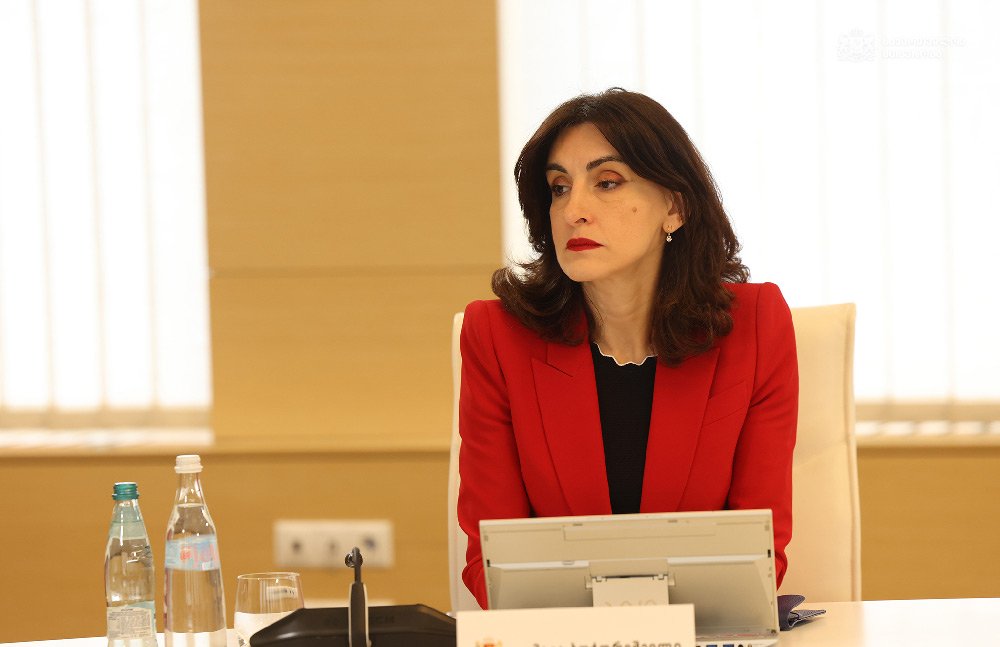
“The essence of the statement made a year ago was precisely this: we did not want issues related to the European Union to be used as weapons in political battles. However, for an entire year now, we have seen exactly that happening, and visa liberalisation is part of it,” Foreign Minister Maka Botchorishvili declared on the GPB First Channel’s programme “Topic of the Day.”
“This is a mechanism for blackmail, designed to create a radical agenda in Georgia; it has no other purpose. Why should Georgian citizens be punished? Why should Georgians’ visa-free travel be cancelled? If the European Union is so concerned about the human rights situation in Georgia, we could have held a human rights dialogue, which was created precisely for discussing such issues with Georgia, to hear their positions and for them to hear ours. Yet this has not happened. Speculation without any dialogue whatsoever. Of course, anything can be done, but I still hope that such a decision will not be taken regarding Georgian citizens, and that the European Union will reconsider punishing Georgia’s people.
However, it is extremely difficult to rely on the rationality of any decision under today’s bureaucratic conditions, especially when we observe so many irrational choices coming from the European Union’s External Action Service. We are not the only ones raising this issue; many others are discussing it today, and a great deal is being written about it. Repeatedly, we hear that the work of the EU’s External Action Service is not sufficiently effective and does not adequately serve Europe’s interests,” Botchorishvili stated.
The Foreign Minister made this statement in response to the presenter’s question about the extent of the threat to visa liberalisation for the country or specific target groups, given recent critical messages from the European Union towards the Georgian government.
When asked by presenter Tamta Sanikidze whether the government expects visa restrictions to be imposed on specific individuals, as one option under consideration is targeted visa restrictions, for example, against government representatives, Botchorishvili noted that such a regime is already in effect for diplomatic passport holders.
“I am not sure what else the European Union had at its disposal. If we consider the target groups, a regime has been put in place for holders of diplomatic passports. When we travel to EU member states for specific meetings, we apply for visas at the embassies of the respective EU countries. Naturally, we obtain visas from those countries, and this does not pose a significant problem for Georgia’s population. I doubt that this is what those issuing such blackmail-like statements are aiming for.
Honestly, I cannot see that their calls to abolish the visa-free regime serve any genuine purpose. Most of these voices originate from opposition representatives, members of various political groups, and so-called non-governmental organisations, which seem to operate as satellites in some coordinated manner.
We also hear them saying, with hands on hearts, that we are doing everything to prevent Georgian citizens from having their visa-free travel to the European Union suspended. No, the Georgian government has done everything to ensure that Georgian citizens have a visa-free travel regime with the European Union and is doing everything for them to benefit from this regime.
Countless steps have been taken over the years. We don’t talk about these efforts every day, do we? So much has been achieved, from readmission agreements to strengthened police cooperation, the deployment of police attachés, and beyond. All of these are our initiatives. For instance, the introduction of border controls when we began conducting joint checks with the EU side for citizens travelling to EU member states. Do you know how many measures Georgia has implemented to meet the requirements for visa-free travel and to ensure that our citizens face no obstacles when travelling to EU countries? I would say this: if such a decision is made, it would be the greatest strategic mistake on the part of the European Union, and of the EU’s External Action Service,” Botchorishvili declared.
According to the Foreign Minister, Georgia also sent an additional report in August.
“You remember that they demanded Georgia submit a report. We submitted a comprehensive report in April detailing compliance with visa regime requirements. So, why did they demand an additional report, insisting it be submitted by August 31, just as local elections were scheduled in Georgia for October 4? Everything was handled in such a way that, if necessary, whether we failed to send the report or if there was anything within it that could be used to intensify pressure or blackmail, it would be exploited for that purpose. However, they were unable to find anything of that sort.
The report was sent on the agreed date, the report was sent quite well prepared, and those two issues that were mentioned repeatedly and concerned legislation were written very clearly in the same report; that the laws were adopted by Georgia’s legitimate parliament, which has the legitimate right to adopt legislation in accordance with the interests of Georgian society. If any law is deemed incompatible with the European Union, they should sit down and discuss with us which specific regulation or norm the law conflicts with.
When every EU country speaks out about foreign interference, each claiming it poses a problem for them, how can this be considered incompatible with the European Union’s stance on Georgia? It’s hard to imagine. Everyone discusses it constantly. If, at the EU level, this issue is addressed promptly and appropriate legislation on foreign interference is enacted promptly, I am confident that the European Union will be able to operate under better conditions. After all, this is genuinely a serious challenge for the EU. Recognising this early at the EU level would be a positive step forward,” Botchorishvili stated.