


SSSG: MIA never purchased ‘camite’; no substance used for crowd control is classified as banned
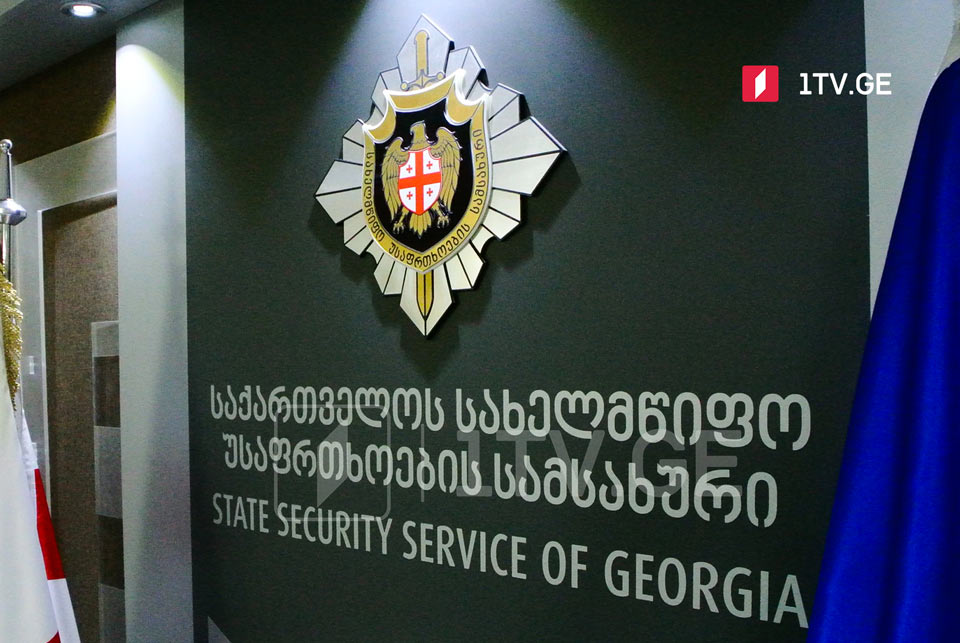
“The investigation has established that the substance “o-Chlorobenzylidene Malononitrile” was used for crowd control on the night of December 4-5, 2024, with “propylene glycol” solution used as a solvent, and neither of these substances falls under the category of banned substances,” stated by the Deputy Head of the State Security Service of Georgia (SSSG), Lasha Maghradze, at a briefing held at the State Security Service.
According to him, “bromobenzyl cyanide”, also known as ‘camite, ‘ has never been purchased by the Ministry of Internal Affairs of Georgia (MIA).
“As you may recall, for several days now, the State Security Service has been probing into a criminal case concerning both the information conveyed in a report produced by the BBC, as well as the campaign conducted in Georgia based on it.
In this criminal case, more than 160 investigative actions have been undertaken, and 93 witnesses have been questioned. The witnesses include current and former employees of the Ministry of Internal Affairs, medical professionals, experts, individuals featured in the report by the British broadcaster, representatives of non-governmental organisations, and other persons.
Various types of documentation have been obtained from the Ministry of Internal Affairs and the Customs Department of the Revenue Service. The investigation collected 25 samples from the databases of the First and Second Directorates of the Special Task Force of the Ministry of Internal Affairs. These samples were subjected to chemical analysis at the Levan Samkharauli National Bureau of Forensic Expertise.
As a result of the operational and investigative measures, it has been determined that the chemical powder purchased by the Ministry of Internal Affairs of Georgia and used over the years during ongoing protests, when the situation necessitated crowd control, is ‘o-Chlorobenzylidene Malononitrile’.
The Ministry of Internal Affairs purchased this substance from an Israeli company on December 18, 2007, and March 27, 2009, alongside the solvent substance ‘trichloroethylene’. During transportation, it was assigned the international transport code UN3439, while the solvent liquid was designated with the code UN1710.
These codes are recorded in customs documentation and all other relevant papers, including disposal certificates issued during subsequent use. A 17.5-kilogram canister containing the said powder has been obtained as a sample. Attached to it is an information sticker produced by the supplier organisation, which, among other details, lists the name of the substance as ‘o-Chlorobenzylidene Malononitrile’ and the corresponding international transport code UN3439.
The investigation has also established that, in addition to the Ministry of Internal Affairs, various Georgian organisations, including Aversi-Rational, GPC, Rustavi Azot and others, have imported cargo of dozens of different names for civilian, industrial and medical purposes with the international transport codes UN3439 and UN1710 mentioned in the BBC report a total of 606 times over the past 20 years, of which transport code UN3439 has been recorded 507 times and transport code UN1710 99 times in the Customs Department’s accounting databases.
Regarding the substance known as ‘bromobenzyl cyanide’, also referred to as ‘camite,’ the Ministry of Internal Affairs of Georgia has never purchased such a substance.
Those individuals whose so-called conclusions or information served as the basis for the BBC’s circulated reports about the use of a toxic chemical were questioned as witnesses in the case. During their questioning, every single one of them denied that their information or conclusions related to the poisonous chemical ‘camite’.
According to the authors of the so-called research, they would not have been able to establish the fact of ‘camite’ use for the elementary reason that they had not conducted research in this direction.
Within the framework of the investigation, representatives of medical and expert circles were also questioned as witnesses. Furthermore, based on information from open sources, we can clarify that the use of the substance known as ‘bromobenzyl cyanide’, or camite, against people results in the most severe, and often even lethal, consequences. For this reason, it was banned in the modern civilised world during the 1930s, in the interest of public safety.
Against this backdrop, it is noteworthy that, according to documents obtained from the Georgian Ministry of Health in the days following November 28, 2024, out of the 54 individuals transported to medical facilities by emergency medical assistance teams, only five exhibited mild intoxication and were discharged from the clinics the very next day. The investigation has also established that in the early days of December 2024, specifically during the night of December 4-5, the substance ‘o-Chlorobenzylidene Malononitrile’ was used for crowd control, with a ‘propylene glycol’ solution serving as the solvent. Neither of these substances is classified as a banned substance.
The chemical examination conducted by the investigation identified the following substances obtained from the Special Task Force of the Ministry of Internal Affairs: firstly, the chemical substance ‘o-Chlorobenzylidene Malononitrile’; secondly, trichloroethylene (specifically referring to the written-off residue amounting to 880 litres); and thirdly, propylene glycol,” states the SSSG.
Furthermore, as the Deputy Head of the SSSG noted, it was impossible to question a single witness among the persons of interest to the investigation, Lasha Shergelashvili, whose information the views expressed in the report produced by the BBC were largely based upon.
“It is a noteworthy fact that operational, investigative, and related actions are currently ongoing at the State Security Service concerning this individual, in connection with one of the recent high-profile criminal cases. This case pertains to the accused Beka Chulukhadze’s purchase and possession of firearms and combat materials, including the explosive substance TNT.
We remind the public that these operational and investigative measures have been carried out concurrently with the well-known events of October 4 this year.
The investigation is actively pursuing a version that Lasha Shergelashvili, who is employed under contract by Ukrainian special services, instructed Beka Chulukhadze several days before October 4 to purchase and hide the aforementioned combat equipment, explosive substances, and devices near Tbilisi. Shergelashvili is currently in Ukraine.
Thus, the irrefutable evidence gathered by the investigation provides grounds to conclude that the information presented in the BBC report regarding the alleged use of the so-called chemical weapon ‘camite’ against protesters in Georgia is entirely false and deliberately misleading. It constitutes disinformation intended to harm Georgia’s interests, a campaign in which, regrettably, Georgian citizens are also involved. The actions of those responsible, alongside the authors of the BBC report, appear to be part of a carefully orchestrated, organised campaign aimed at damaging Georgia to achieve specific hostile objectives,” stated Lasha Maghradze.
According to him, since the investigative actions regarding one of the two main directions, specifically, the fabricated claim of police use of the substance ‘camite’, which was banned in the 1930s, have been exhausted, the State Security Service (SSSG) is still pursuing an investigation into a possible crime involving assistance in hostile activities for a foreign organisation.
“The State Security Service continues to investigate the potential offence under Article 319 of the Criminal Code of Georgia, which pertains to aiding hostile activities for a foreign organisation.
Like any responsible national security agency, the State Security Service of Georgia will continue to prioritise political stability and security, recognising these as among the main challenges facing our country in the realm of security,” stated the Deputy Head of the SSSG.
For context: The BBC has recently published an investigative report titled: WW1 toxic compound sprayed on Georgian protesters, BBC evidence suggests. The BBC alleges the use of chemical weapons from the First World War, citing paediatrician Konstantine Chakhunashvili, former head of the Special Task Force Lasha Shergelashvili, and expert Prof Christopher Holstege as sources. Respondents also include Eka Gigauri and Giorgi Bachiashvili. In the report, Lasha Shergelashvili states that, “in his opinion, this is the same substance he was asked to test for in a water cannon in 2009.” Furthermore, the BBC states that “the Georgian authorities said our investigation findings were ‘absurd’ and the police had acted legally in response to the ‘illegal actions of brutal criminals’”.
Meanwhile, Georgian Dream announced legal action against the BBC in international courts over ‘false’ allegations, while the State Security Service of Georgia (SSSG) has initiated an investigation into the BBC’s public reporting on crime.