


Speaker: Voting rules for non-resident citizens change; diaspora to vote in their homeland once every four years
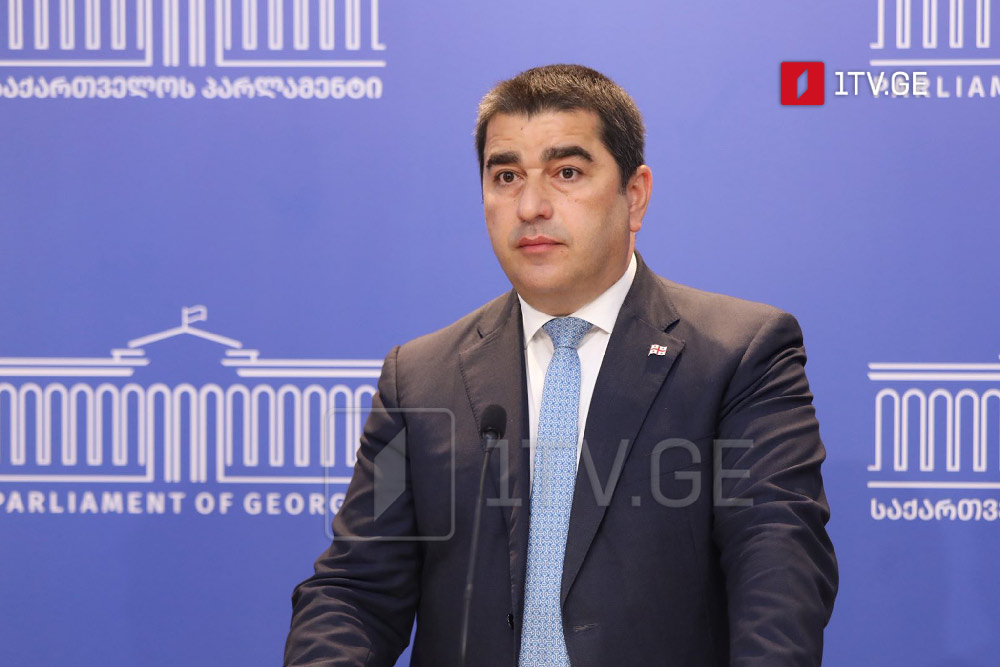
“A new Electoral Code will be tabled in Georgia’s Parliament today, which will systematise norms and refine technical aspects, clarify procedures, and eliminate duplication of provisions,” announced Shalva Papuashvili, Speaker of Georgia’s Parliament.
According to Papuashvili, the amendments will significantly improve the normative framework of the electoral process.
“The third block concerns the enhancement of democratic processes and a fundamental overhaul of the Election Code. The current Election Code was adopted in 2011 and has since undergone more than 100 amendments. As a result, the text has become difficult to comprehend, numerous provisions have been duplicated, much of the Code is contained in transitional clauses that are substantively obsolete, whilst the structure requires reorganisation. For this reason, a complete revision of the Code has been on the agenda for several years. The new version being tabled today addresses these problems.
Accordingly, a new Election Code will be introduced in Georgia’s Parliament today, which will systematise norms and refine technical aspects, clarify procedures, eliminate duplication of provisions, and render the Code a unified, easily comprehensible and functionally sound text. These changes are essentially technical in nature, but will significantly improve the normative framework of the electoral process.
One of the most significant changes to the Code concerns the voting procedure for non-resident citizens, that is, persons residing overseas. First and foremost, it must be emphasised that there are no changes to the electoral rights of Georgian citizens living abroad. As before, every Georgian citizen, regardless of their location or place of residence, retains full active and passive electoral rights.
At the same time, the change relates to the voting procedure and provides that voting in Georgian parliamentary elections shall take place only within Georgia’s state borders, similar to local self-government elections. This decision is essentially founded upon the obligation established for the state by Article 24 of Georgia’s Constitution: to ensure the free expression of will, which inherently implies the expression of will free from external interference.
Elections worldwide are becoming increasingly vulnerable to external interference. Accusations of foreign interference in elections are becoming increasingly common, whether in the United States or in a member state of the European Union.
The 2024 parliamentary elections clearly demonstrated how overt and blatant informational and political pressure on voters abroad can be. In this context, there are naturally specific risks of influence targeting non-resident citizens, that is, Georgian citizens living in foreign countries who are subject to foreign jurisdiction and political environments, where the state cannot prevent interference.
Moreover, in the case of non-resident citizens, the means of informational manipulation are considerable. Generally, a person receives information about the political or economic environment in the country and about public needs from two sources: one is the media, from which a person gets filtered information, with interpretation according to editorial policy; and there is so-called unfiltered information, which a person receives personally, through interaction with society or the state.
In an era of disinformation and false narratives, information received from these two sources may be radically contradictory. This circumstance increases the risk that a citizen physically detached from the country will make an uninformed choice.
Accordingly, establishing the practice of voting on Georgian territory enhances electoral resilience, reduces the influence of external actors, and ensures a more adequate and informed choice. This model fully complies with international standards and operates in such countries as Ireland, Malta, Israel, and Armenia. Let us emphasise once more: nothing changes in the electoral rights of citizens residing abroad. As before, every Georgian citizen will have the full right and opportunity to vote in elections. The sole condition is that once every four years, they come to their homeland and cast their vote in Georgia,” declared Shalva Papuashvili.