


Speaker: Segregation of countries by Brussels turns EU into union of “first-class” and “second-class” nations
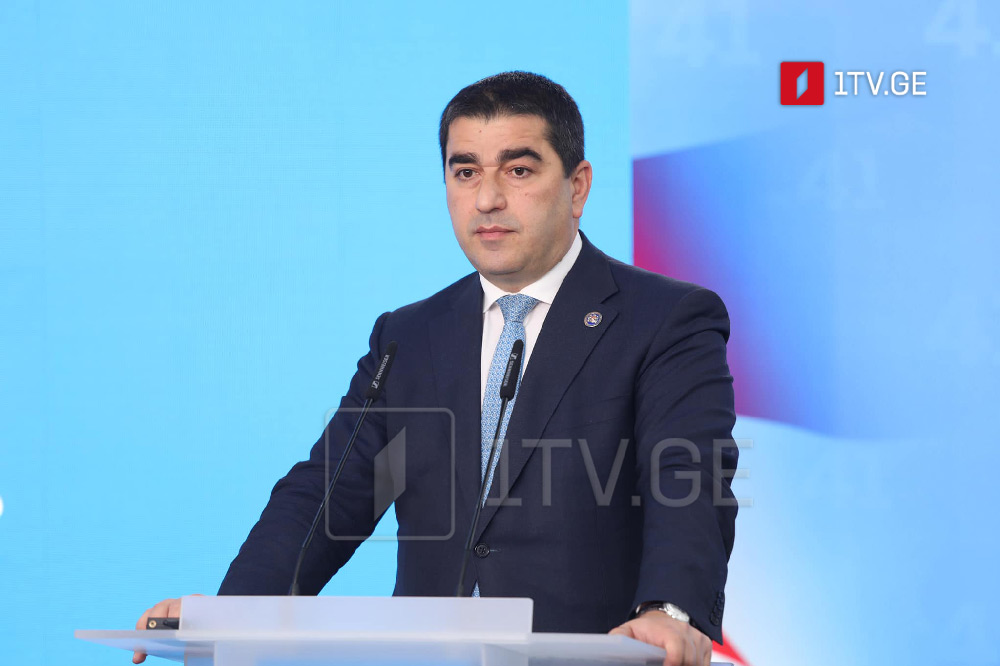
“The European Union has always been a rules-based project, which means that every member is equal by rules. Brussels’ idea of legal segregation of countries radically modifies the EU’s fundamental principle, turning the EU into a union of “first-class” and “second-class” nations,” wrote Georgian Parliament Speaker Shalva Papuashvili in his Facebook post.
According to the Speaker, the EU’s poster phrase “Unity is in Diversity,” in practice, is being replaced by the slogan “Do not deviate from this general path,” which means that you will be accepted into the club only if your voice serves only a decorative function.
“Yesterday, European Commissioner for Enlargement Marta Kos remarked that the EU is reviewing the idea based on which EU’s future members will not have the same right of vote as current members.
This means that after transitioning to the membership stage, Georgia, like other new member states, will still have obligations similar to those of other members of the European Union, although it will not be equal in rights to them. In practice, this means that the EU will be able to make decisions on issues of essential importance to Georgia’s national interests without Georgia.
In such moments, many will remember the phrase often repeated by Brussels: ‘No decision will be made on Ukraine without Ukraine.’ The idea being reviewed by the EU disregards this attitude not only toward Ukraine but also toward other candidate countries. Ukrainians saw that and declared that they would not agree to being a second-class nation.
Such trends demonstrate that the EU’s poster phrase ‘Unity is in Diversity,’ in practice, is being replaced by the slogan ‘Do not deviate from this general path,’ which means that you will be accepted into the club only if your voice serves only a decorative function. Indeed, such an approach would make decision-making even easier – there would be no need for difficult discussions, diverse positions, and that part of democracy that involves dissenting opinions.
The European Union has always been a rules-based project, which means that every member is equal by rules. Brussels’ idea of legal segregation of countries radically modifies the EU’s fundamental principle, turning the EU into a union of “first-class” and “second-class” nations.
Therefore, one thing must be said explicitly: If this idea is implemented, this will no longer be the union for which Georgia applied to join four years ago, nor is the pursuit of membership in such a union what is written in Article 78 of the Constitution of Georgia.
Georgia already has 70 years of experience as a nominal and unequal member of the Union, which we do not intend to repeat. If the post-Soviet member states of the EU allow such a change, it will turn out that their problem was not with the Soviet Union, but with who dominates such a union,” he wrote.
On June 15, European Commissioner for Enlargement Marta Kos confirmed to reporters that the EU’s new members will have their right of veto restricted.