


Speaker says no political neutrality towards terrorism exists; parties endorsing terrorism threaten democracy
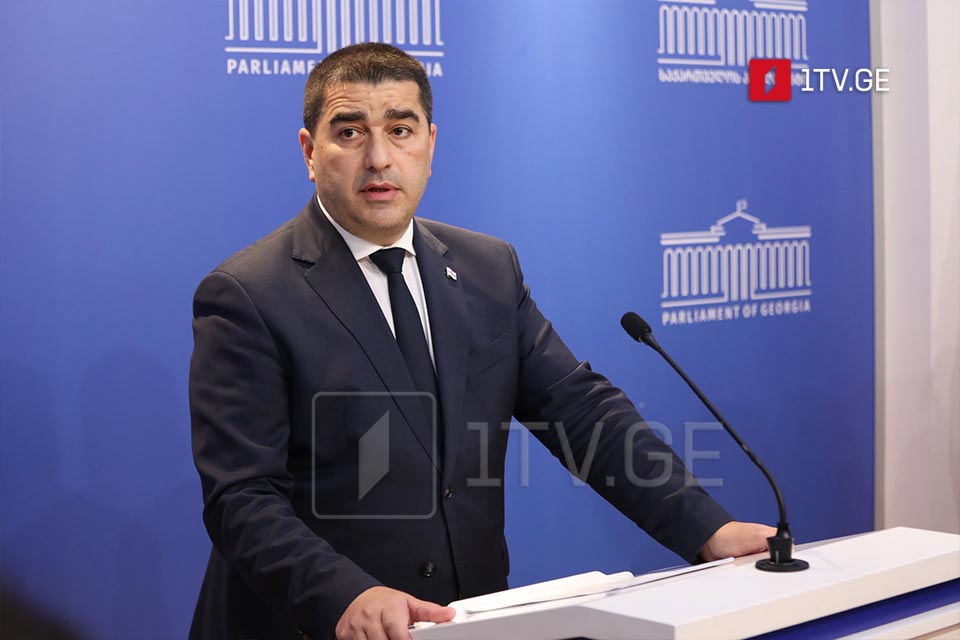
“It has been ten days since one of the leaders of the Strong Georgia-Lelo was detained on suspicion of committing a terrorist act. He has admitted to the crime and confirmed his political motive. In such circumstances, separating him from a terrorist should require neither a call nor any additional explanation,” wrote Shalva Papuashvili, the Speaker of the Parliament of Georgia, on social media.
According to Papuashvili, terrorism, as one of the gravest crimes with an international dimension, cannot be subjected to political interpretations, party loyalty, or ideological justifications.
“Against this backdrop, describing someone involved in a terrorist crime as an ‘ally’ by a political party raises serious legal and ethical concerns. This is no longer merely a moral dilemma; it signifies an inappropriate distancing from terrorism, which fundamentally contradicts the principles of a democratic state.
It is particularly noteworthy that Lelo is a member of the Alliance of Liberals and Democrats for Europe (ALDE). Within the European political sphere, justifying, indirectly supporting, or failing to sufficiently condemn terrorism is incompatible with the status of a democratic party.
In this context, responsibility extends beyond a single political party. It automatically encompasses the international political union to which this party belongs. Therefore, ALDE’s stance on this matter is not simply a question of party loyalty, but a test of European legal and political standards. Moreover, when the political family includes European Commissioners such as Kaja Kallas and Marta Kos, this issue transcends the internal Georgian context and assumes broader European political significance.
The EU Directive 2017/541 on combating terrorism explicitly prohibits the justification of terrorism, ideological support for terrorist acts, and granting public legitimacy to such acts. According to this directive, encouraging terrorism or expressing political solidarity with terrorists creates the basis for legal liability.
The conclusion is clear: there is no political neutrality towards terrorism. Parties that endorse terrorism or maintain ambiguous positions pose a direct threat to democracy,” emphasised Shalva Papuashvili.