


Speaker promises to reveal details about three-year-old meeting on demands related to war in Ukraine
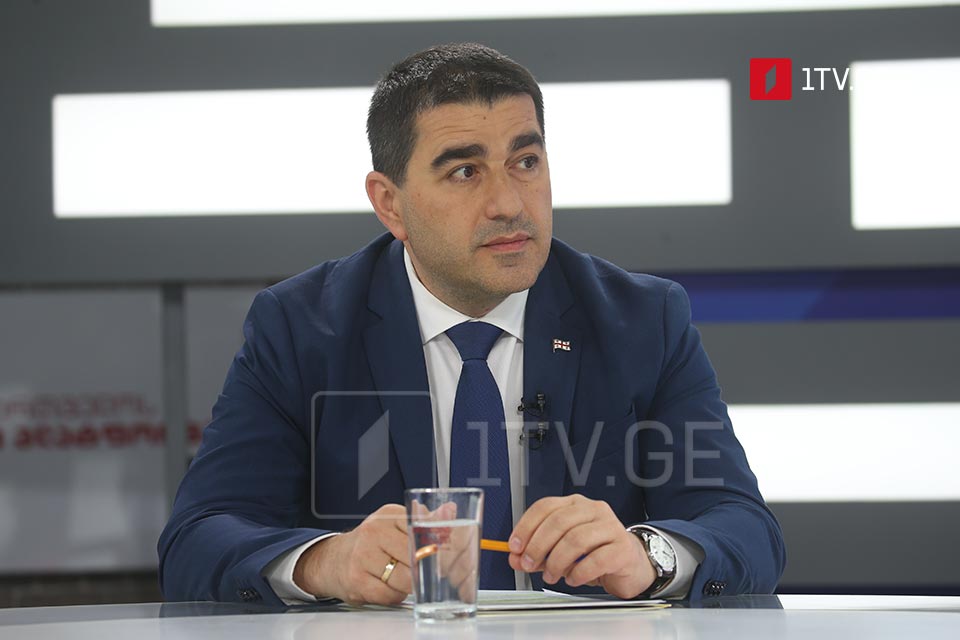
“February 28 will arrive soon, and three years after that date, I will definitely describe what meeting took place in my office and what demands were made then,” Georgian Parliament Speaker Shalva Papuashvili stated during his appearance on the GPB First Channel program “Actual Topic with Maka Tsintsadze.”
The host questioned Papuashvili regarding the ruling party’s consistent rhetoric about the potential threat of a “second front” opening in Georgia since the onset of the war in Ukraine. Maka Tsintsadze referenced pressure from various diplomats and international entities and inquired whether, with the Trump administration now openly discussing various matters, it might be time for the ruling party to address specific individuals involved.
Papuashvili responded that they had already discussed some details, and on February 28, he plans to describe in detail a meeting that took place in his office three years ago on that date.
“When February 28 comes, I will describe it, although I have already spoken about what we were dealing with. These days aren’t so distant that we can’t remember them. Let me remind you what demands came from the Ukrainian authorities immediately after the war began – that we should send volunteers. Three years have passed – has Zelenskyy’s administration demanded that any other country organize the sending of fighting volunteers? Why was Georgia specifically targeted?
Initially, it was communicated unofficially that they were ready to accept volunteers and allocate an aircraft for this purpose. They needed the Georgian government to organize this and provide consent. They received a refusal, emphasizing that they should understand Georgia’s situation, moreover, the request from the Ukrainian authorities at that time was not friendly. This initial communication came through diplomatic channels as a request, rather than a demand. It was a plea for the government to facilitate the deployment of volunteers, as they had information indicating that individuals were willing to go to war. However, the response was clear: if the government organized such flights and an aircraft filled with fighters departed from Tbilisi International Airport, it would undoubtedly signify direct involvement in the war, effectively making Georgia a side in the conflict,” Papuashvili stated.
According to Papuashvili, the Georgian authorities asked them not to make such requests anymore.
“In response, we saw a public post on social media from Ukraine’s Prime Minister Shmyhal, who is still Prime Minister today. He was calling on the Georgian people: ‘Go and demand that your government impose sanctions and send volunteers.’ The response to this was Zelenskyy’s address to his supporting Georgian radical opposition, saying ‘There are moments when people are better than their government.’ Because of this, he recalled the ambassador from Georgia on March 1. While Russia attacked Ukraine from the Belarusian side, he did not recall the ambassador from Belarus.
What was this if not pressure on the Georgian government? And in unison with them acted the radical opposition and foreign-funded NGOs. The same people who today hold protests at your television station and parliament, and who walk around Tbilisi streets wrapped in Ukrainian flags on the anniversary of the war. These exact people, exactly three years ago, during these very days, stood in front of the Georgian Parliament demanding that the Georgian government send volunteers to Ukraine, meaning Georgia’s involvement in the war; imposing sanctions on Russia, meaning Georgia’s involvement in the war and economic destruction of Georgia. This was demanded by exactly the same people who stand at your television station today and make claims against you, who stand at the Georgian Parliament today and make claims against us. This radical opposition, these NGOs, and these people – the same faces, the same names, and the same surnames stood there three years ago.
If the Georgian government had believed these people, Georgia would have plunged into another war, and today they would either be mourned or be mourners,” Papuashvili declared.
Shalva Papuashvili also remarked that as certain issues are being resolved and more information emerges, individuals who were directly involved in this war are beginning to speak more openly. He emphasized that these individuals should at least recognize the importance of prioritizing the interests of their own country and nation above all else.
“At that time, these people placed others’ interests above our country’s interests and, to some extent, allowed themselves to be used by others to act against Georgia,” Papuashvili stated.
When the host asked if he could elaborate on what he plans to discuss on February 28, particularly regarding whether there was a demand for Georgia to become directly involved in the war, Shalva Papuashvili responded that, as the Speaker of Parliament, he is not in a position to make executive decisions. Therefore, discussions with him differ from those conducted with the executive government.
“Everything has its time, and everything will be said. However, their calls for us to impose sanctions on Russia—calls they publicly denied, as if they had not made such requests—occurred behind closed doors,” Papuashvili stated.