


Speaker Papuashvili: Country that generates knowledge can independently determine its own development
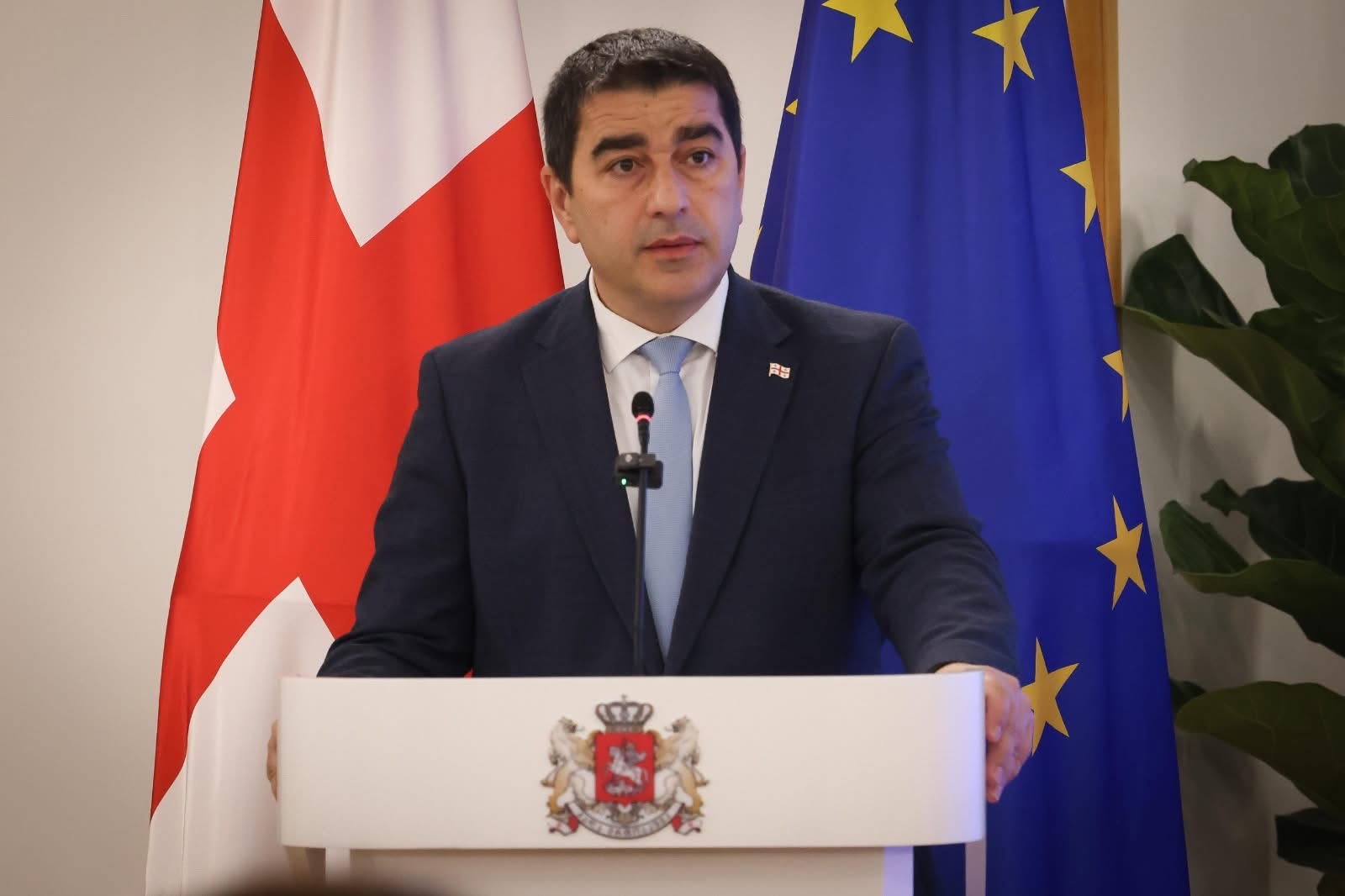
“A state that lacks its own scientific capacity ultimately becomes dependent on knowledge created elsewhere,” Speaker of the Parliament of Georgia Shalva Papuashvili said at an event marking the 85th anniversary of the founding of the Georgian National Academy of Sciences.
Papuashvili noted that despite difficult years marked by war, hardship and repression, Georgian talent and intellect had demonstrated their potential and established distinct scientific schools, even under Soviet rule.
According to him, a country capable of generating knowledge is better able to determine its own development path independently.
“Congratulations on the 85th anniversary of the founding of the Georgian National Academy of Sciences.
“While the history of the Academy begins in 1941, the history of Georgian science is, of course, far older. Gelati and Ikalto, those centres of Georgian monastic and educational life, and later Tbilisi State University represent different stages of a single, enduring intellectual tradition that ultimately led to the establishment of the National Academy of Sciences.
“It is no coincidence who stood at the helm of the Academy at its inception. Nikoloz Muskhelishvili, Ivane Beritashvili, Dimitri Uznadze, Akaki Shanidze, Arnold Chikobava, Giorgi Chubinashvili, Simon Janashia and their like-minded colleagues were not merely individual scholars; they established scientific schools and institutes whose influence extended well beyond a single generation.
“Despite difficult times marked by war, hardship and repression, Georgian talent and intellect managed to realise their full potential, establishing distinct scientific schools, a unique body of experience and significant achievements even under Soviet rule. They created institutions whose momentum and influence endure to this day.
“Every strong state needs its own body of knowledge—knowledge about itself and the world. It needs scientists who study its language and history, natural resources and biodiversity, society and economy, and who develop new technologies and advance fields such as medicine, agriculture, engineering and the natural sciences.
“A state that lacks its own scientific capacity inevitably becomes dependent on knowledge generated elsewhere. Conversely, a country capable of producing knowledge can chart its development path with greater independence.
“Science, therefore, is not merely a cultural or educational sphere; it is an integral component of a nation’s development, competitiveness and state capacity.
“For 85 years, the Georgian National Academy of Sciences has served this purpose. It has preserved and nurtured Georgian scientific schools, prioritised the study of the national language, history and culture, and at the same time connected Georgian science with the international scientific community.
“Today, science faces opportunities and challenges on an entirely new scale. Artificial intelligence, biotechnology, genetics, new energy solutions, quantum technologies and data science are already transforming the economy, medicine, security and the very fabric of daily life.
“The pace of scientific advancement is so rapid that, for successful nations, merely using existing knowledge is no longer sufficient. Active participation in the creation of new knowledge has become essential.
“Therefore, in this anniversary year, it is particularly important to focus on young scientists. The best way to honour the Academy’s legacy is not to replicate the past, but to foster an environment in which a new generation can establish its own scientific schools, make new discoveries and achieve international success.
“We must cultivate a large cohort of young Georgian scientists who have the opportunity to conduct research in Georgia, enjoy prospects for professional growth and feel that their expertise is truly needed by their country.
“The strength of Georgian science has always stemmed from its national foundations, combined with engagement with the world’s leading scientific centres. These are precisely the two things we must preserve in the future: a strong national scientific school and maximum openness to global science,” Papuashvili said.
According to the Speaker of Parliament, 85 years is an appropriate time to reflect on the past and look ahead.
“It is also a fitting time to look toward the future—a future linked to a state that is now independent, unified and sovereign.
“The Academy’s history was shaped by individuals who sought answers to the questions posed by their era. It is the responsibility of the current generation to address the questions of our own time.
“Therefore, today, as we express our gratitude to all those representatives of Georgian science who have shaped the Academy’s 85-year history, we also look to the future—to the scientists, research and discoveries that lie ahead.
“I congratulate you on the 85th anniversary of the Georgian National Academy of Sciences. Thank you, each and every one of you, for your service to Georgian science. I wish you new discoveries, a strong younger generation and even greater international success for Georgian science,” Papuashvili said.
Prime Minister Irakli Kobakhidze, President Mikheil Kavelashvili and Minister of Education, Science and Youth Givi Mikanadze also congratulated the National Academy of Sciences on its 85th anniversary.
The anniversary session was opened by Roin Metreveli, President of the Georgian National Academy of Sciences. Speeches were also delivered by Isa Habibbeyli, President of the Azerbaijan National Academy of Sciences; Asaf Hajiyev, Secretary General of the Parliamentary Assembly of the Black Sea Economic Cooperation (PABSEC); and Hirotake Maeda, a professor at the University of Tokyo.