


Speaker: Defensive democracy has no room for anti-democratic, democracy-hostile parties
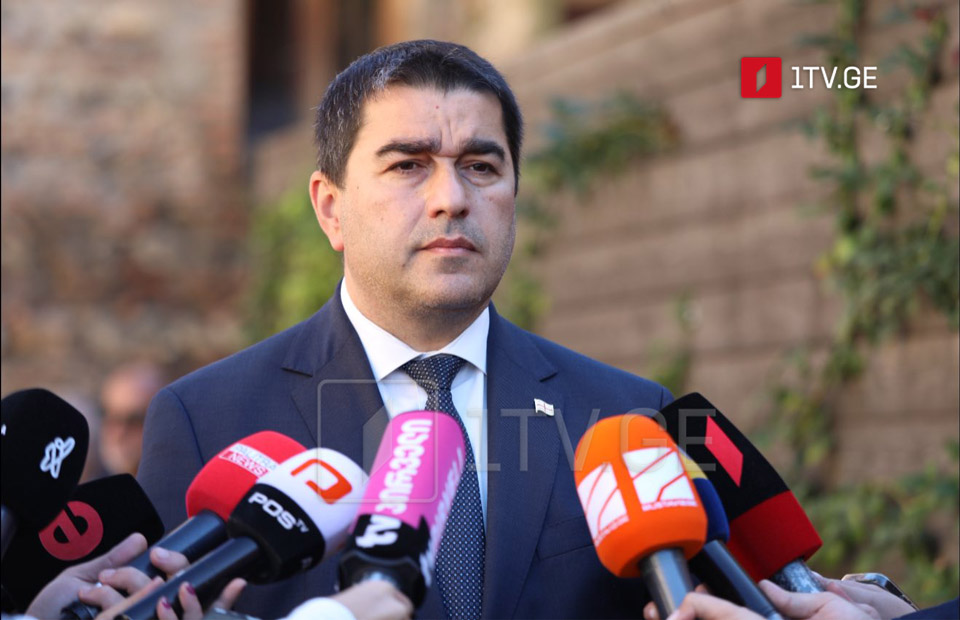
“The objective is crystal clear, and every country that claims to be a democracy ensures it has a defensive democracy, which means there is no place in the democratic process for anti-democratic, democracy-hostile parties. This is the very essence of defensive democracy,” declared Shalva Papuashvili, Speaker of the Georgian Parliament.
According to Papuashvili, if there is a desire for Georgian democracy to develop, no space should remain for radical, anti-constitutional forces.
“This is precisely what the constitutional petition serves, backed by 1,120,000 voters who supported exactly this idea in last year’s elections. Following that, a very thorough parliamentary inquiry was conducted, which worked for several months. The commission produced a 450-page report, based on which Parliament adopted a resolution assessing, on the one hand, the entire period of the United National Movement’s time in power and, on the other, the political crimes committed since 2012 by forces in political alliance with them, crimes against our Constitution.
Therefore, the objective is precisely this: to protect our democracy from radical, extremist, anti-constitutional forces. Extremists are extremists, and several political groups, including the United National Movement, have already placed themselves beyond the bounds of democratic opposition by refusing to participate in elections and planning to overthrow the government on October 4. Thus, the United National Movement and other similar groups in alliance with them are not opposition; they are extremist, anti-constitutional, radical groups,” Papuashvili stated.
According to him, the ruling party aims to approach the Constitutional Court with a petition backed by 1,120,000 people.
“This is our obligation, including one underpinned by the mandate given to us by the people, and then the Constitutional Court will adjudicate who is entitled to what, who is not entitled to what, who violated what or did not violate what. I call on everyone to read the 450-page conclusion of Parliament’s investigative commission or recall the commission’s work and proceedings. Everyone will clearly read the conclusion, and anyone who followed the investigative commission’s work could plainly see the conclusions it reached, the grievances concerning various political groups, and the reasons why we believe that one political group or another has violated the Constitution.
As for specific parties and the claims presented in our petition, you will see these in the next few days when the petition is submitted to the Constitutional Court and made public,” Papuashvili declared.