


PM: We’re curious about U.S. plans for EU; yet, more so in what informal forces influencing EU decisions have in store
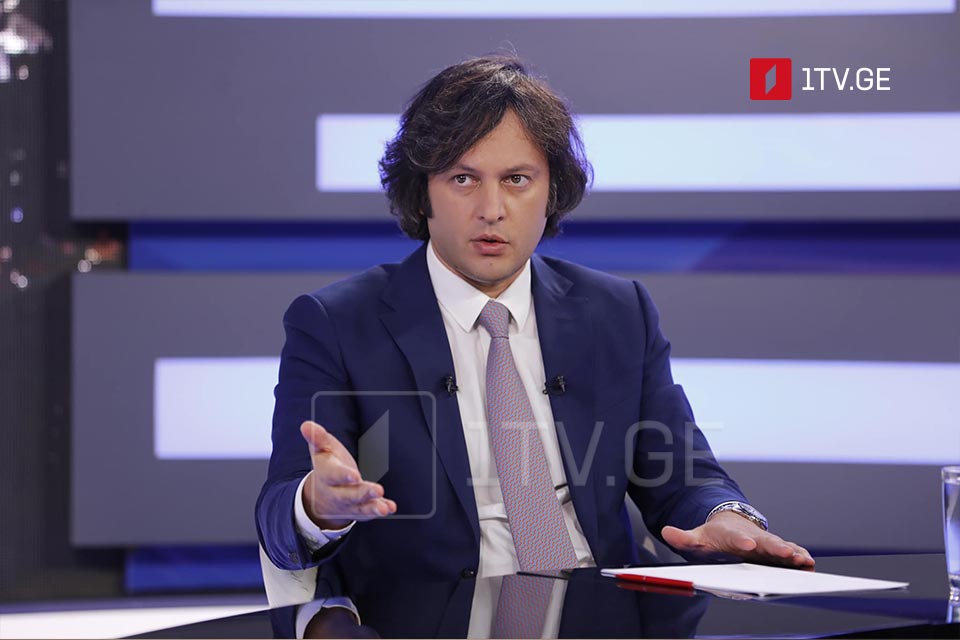
“We are interested in the United States’ plans for the European Union, but even more so in what those informal forces currently influencing European decision-making have in store for the EU,” stated Georgia’s Prime Minister, Irakli Kobakhidze, on the programme “Actual Topic with Maka Tsintadze” on GPB First Channel.
According to Kobakhidze, serious processes are unfolding within the European Union, and these are being directed from start to finish by the dictates of informal forces.
“Accordingly, whatever decisions they make will take effect within the European Union. The passages in the U.S. National Security Strategy concerning the EU do not inspire optimism, as they reveal fundamental criticism, criticism that was not previously apparent in American documents. The discussions we have had over the past three to four years are clearly reflected in this document. Some might interpret it differently, perhaps suggesting that certain forces may continue to promote these tendencies. We shall see. We cannot participate in this bargaining. As a small country, we can only observe how the major powers, the U.S. and the European Union, interact with each other.
It is simply in our interest to see the European Union strengthened. As stated in this document, it is in our interest that the negative tendencies that have developed within the EU are redirected towards positive outcomes. Achieving this is not only important for us personally, as we desire EU membership, but also because we feel a genuine concern for the European continent,” stated Irakli Kobakhidze.
According to him, Europe was distinguished from all other major global actors by two qualities: its high level of prosperity and a strong sense of identity.
“In 2008, the European Union was ahead, with a total gross domestic product (GDP) of over 19 trillion euros, compared to the United States’ 15 trillion and China’s 4 trillion at that time. Today, China has grown to around 18 trillion, the U.S. is approaching 30 trillion, while the European Union remains roughly at 19 trillion. These trends reflect current global developments.
The EU’s strengths were twofold: a high level of prosperity and a strong sense of identity. It was the only actor on a global scale distinguished by both of these qualities simultaneously: a high level of prosperity and a strong sense of identity. Yet, the European Union is losing both rapidly, year after year. This decline is again the result of the interests of informal forces that steer the EU’s development from start to finish. If this trend continues, Europe’s future will be increasingly challenging.
Our hearts ache not only for the European Union as a whole and as a political entity, but primarily for the European continent and the processes that threaten prosperity and weaken its identity. We must hold onto the hope that these trends within the European Union can be reversed. What role the United States will play in this remains to be seen.
It will be difficult for us to make a fully definitive forecast in this regard. Let us wait and hope that the United States will have a positive influence on the processes unfolding within the European Union. Even more important is the impact that informal forces will have on those same developments,” stated Irakli Kobakhidze.