


PM: Quality inequality among universities must be addressed under education reform
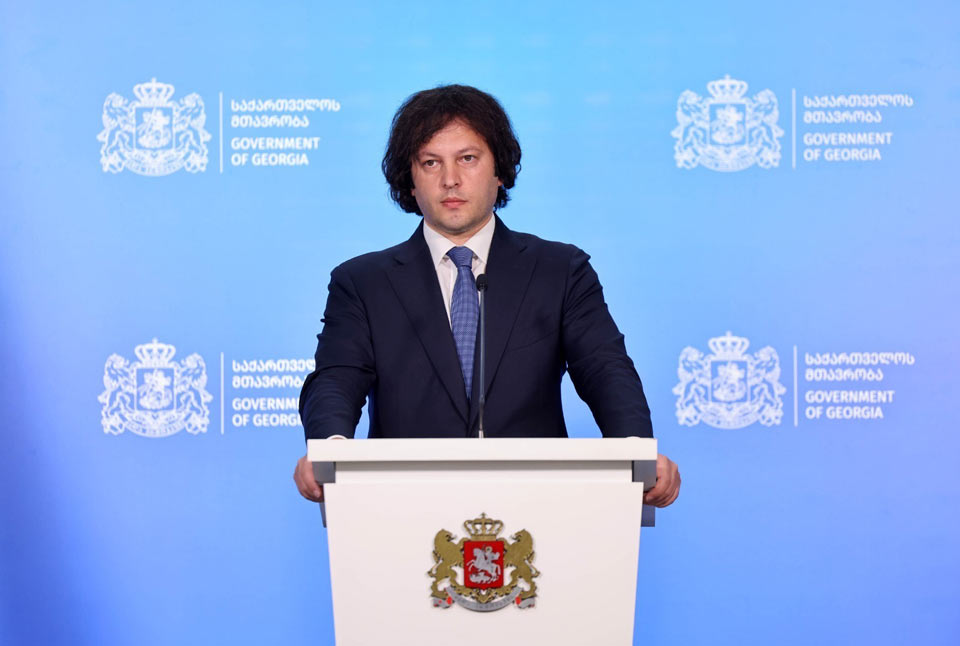
Prime Minister of Georgia Irakli Kobakhidze announced that the government plans to address inequality in the quality of higher education as part of a new education reform. Speaking at the reform’s presentation, Kobakhidze emphasized that while Georgia has 19 state and 45 private universities issuing diplomas of equal formal status, the quality of education—and therefore the real value of these diplomas—remains uneven.
“Each diploma carries equal rank, but due to differences in teaching quality, they are not truly equal in substance. This imbalance must be corrected,” Kobakhidze said.
According to the Prime Minister, one of the main challenges is the irrational and inefficient use of academic and material resources across universities, as well as the duplication of programs.
“When the state takes responsibility for a diploma, it must ensure its qualitative and substantive equality, which is not guaranteed today. In Tbilisi, for example, four state universities each have their own law faculty. This kind of duplication strains both human and infrastructural resources. Even in countries with long academic traditions, it’s rare for the same faculty to exist in multiple state universities within one city. In our case, this lacks any rational justification,” Kobakhidze stated.
Kobakhidze also criticized the growing trend among some state universities to prioritize profit by enrolling large numbers of foreign students. He stressed that the main mission of public universities should be to serve national interests and prepare Georgian students for the domestic labor market.
“Some state universities operate more like businesses, which is not their role. The principle should be clear: business belongs to the private sector, while the state sector should focus on fulfilling state objectives,” he said.
The Prime Minister also linked the shortcomings of the higher education system to broader social issues, including youth migration.
“These challenges lead to real problems, one of which is the outflow of young people seeking education abroad. The current situation in higher education encourages migration. It is crucial to improve and correct the system so that students have strong opportunities within Georgia. Despite the challenges, we believe that within a few years, tangible and meaningful progress can be achieved,” Kobakhidze added.