


PACE’s Edite Estrela: This 3rd report on Georgia in last 1.5 years demonstrates urgency we attach to unprecedented democratic backsliding in Georgia
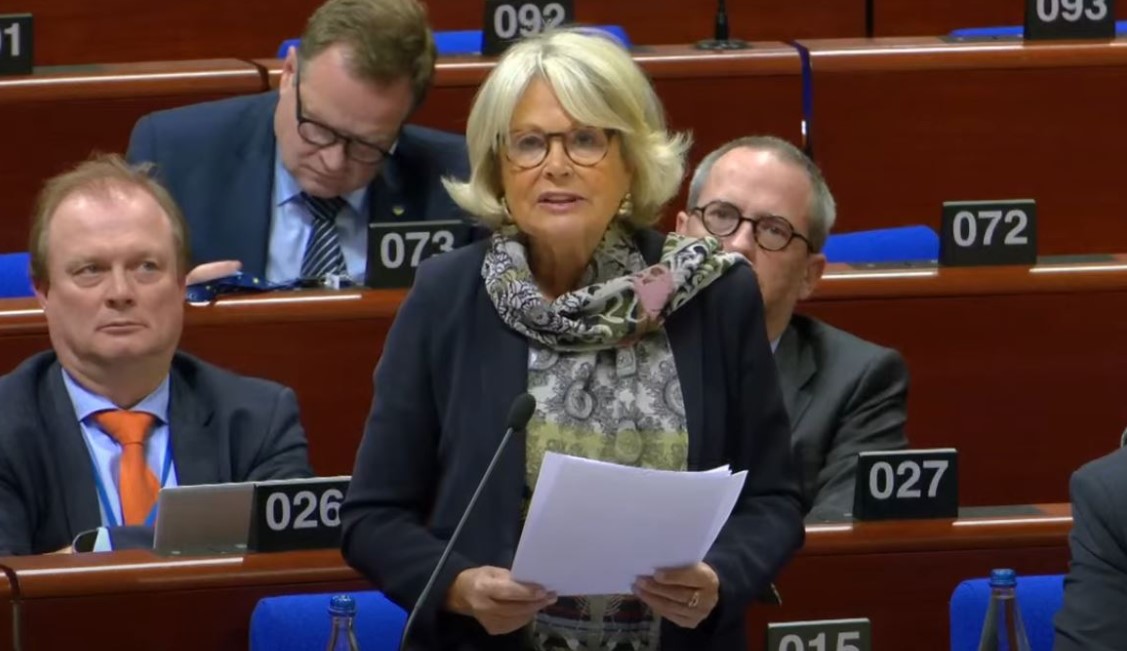
“This is the third report on Georgia that we have presented in the last one and a half years. This demonstrates the importance and urgency that we attach to the unprecedented democratic breakdown in Georgia. The previous two reports were presented under urgent procedure,” said Edite Estrela, Rapporteur on Georgian issue during the summer session of the Parliamentary Assembly of the Council of Europe (PACE).
At the Council of Europe meeting where the report prepared by the Committee for Monitoring the Commitments Assumed by the Member States of the Council of Europe and their Implementation on the Functioning of Democratic Institutions in Georgia is reviewed, Edith Estrela stated that the continuing breakdown of democracy in Georgia and the lack of response to the Assembly’s recommendations raise serious doubts.
“We therefore felt it was important to provide you with a report on the functioning of democratic institutions in Georgia, containing an explanatory memorandum outlining our findings and conclusions regarding the worrying developments in the country in detail.
Since the adoption of Resolution 2624, democratic backsliding has continued unabated, as has the crackdown on civil society, political opposition, and dissent. None of the urgent recommendations of the Assembly has been implemented. The continuing breakdown of democracy in Georgia and the lack of any response to the recommendations of the Assembly to address this raise serious doubts about the authorities’ willingness to abide by Georgia’s membership obligations and accession commitments to the Council of Europe.
As she noted, “regrettably and of, uh, great concern, the ruling majority’s initiative to ban almost all democratic, uh, parties of the opposition in Georgia remains very much on the table and has recently been widened in scope.”
“The criminal prosecution of almost the entire leadership of the democratic opposition on politically motivated and trumped-up charges is ongoing. In recent weeks, the prosecution’s efforts have intensified with several hearings organized by the prosecutor general in this so-called sabotage case. If these two developments are pursued, they would effectively establish a one-party system in Georgia, which is unacceptable and incompatible with Council of Europe membership. The relentless crackdown on freedom of expression and assembly continues, including through repressive legislation and the abuse of politically motivated legal proceedings against civil society, the independent media, opposition groups, and individual protesters.
These actions must be stopped, and the repressive legislation must be repealed. The Minister of Interior has recently set up a special division to combat hate speech. This division became operational on 1st June. However, independent journalists and civil society organizations have expressed concerns that its main objective will be to stifle any criticism of the ruling majority. The first fines issued and investigations opened by this new division have given some credence to these concerns. The politically motivated prosecutions, which have no other objective than to silence dissenting voices, raise the spectre of political prisoners. Such persecutions are incompatible with a democratic society and with Georgia’s membership obligations to the Council of Europe.
According to the Rapporteur, all these developments have had a profound impact on the country’s political environment.
“In our report and draft resolution, we refer to Resolution one thousand and nine hundred on the definition of political prisoner. This resolution provides important guidelines for dealing with this issue. All these developments have had a profound impact on the country’s political environment. Unfortunately, as a result of the relentless crackdown on democratic opposition, civil society, and independent media, as well as extreme social and political polarization in Georgia, we must conclude that the conditions for holding genuinely democratic elections no longer exist,” she stated.