


MP Kadagishvili: If storming state institutions makes someone a political prisoner, France has acquired thousands
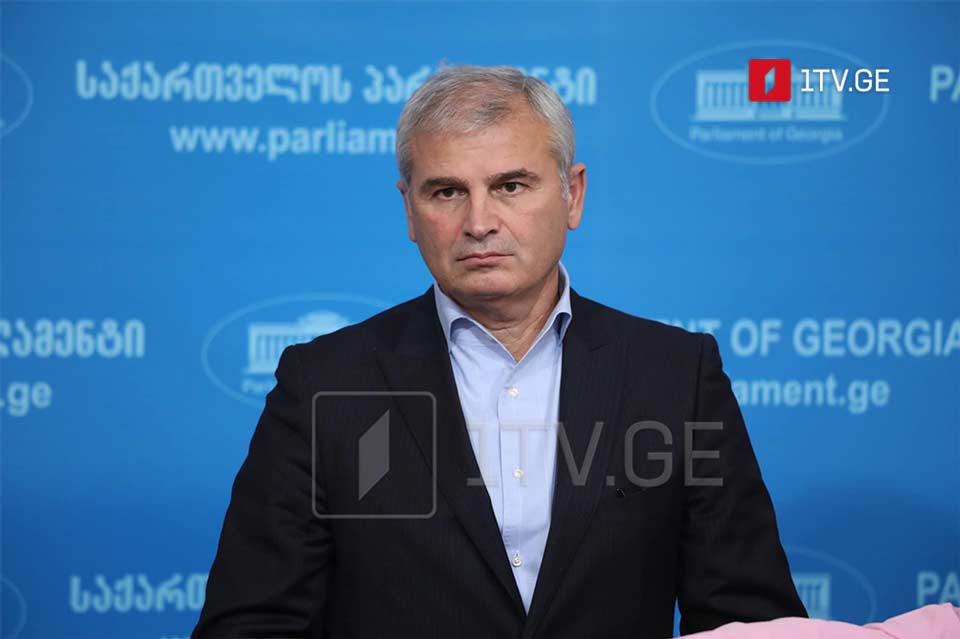
Georgian Dream parliamentary majority member Irakli Kadagishvili said the stance of certain political groups in the European Parliament toward Georgia has been known for years.
According to Kadagishvili, the goal of these groups is not to support democratic processes in Georgia, but to bring the “United National Movement cluster” to power by any means possible.
“As for the issues related to the resolution, it was precisely the local political opposition, encouraged and supported by such a policy, that threw the 2024 parliamentary elections into the streets, and they did not say a single word about it. Instead, they encouraged the October 4 coup attempt in every possible way. This is a series of revenge resolutions against Georgia by defeated foreign and domestic political actors, which have nothing to do with reality or Georgia,” Kadagishvili said in response to the European Parliament’s adoption of a resolution on Georgia.
Regarding what he called “political prisoners,” Kadagishvili said that anyone who attacks or storms a state institution or assaults police officers in Georgia would be considered a political prisoner under the opposition’s logic.
“If everyone who storms a state institution or attacks a police officer in Georgia is a political prisoner, then just a few days ago France acquired several thousand political prisoners during the protests there. But, of course, no resolution was adopted on that, and not a word was said about it,” he said.
Kadagishvili said the resolution serves only narrow political interests.
“As for the issue of political parties, everyone should bear in mind that Georgia is not a country without laws. Georgia has a Constitution and all the laws that are fully in line with international standards. It is not for individual MEPs to decide whether Georgia should have laws and a Constitution,” Kadagishvili said.
“Therefore, we are following only legal and constitutional procedures, including with regard to political parties whose activities are supported by objective evidence concerning our homeland. Just as they were grossly interfering in the elections, trampling on international law, relations between countries, democratic principles and the principles governing interference in elections, they are now trying to interfere in judicial processes as well,” he said.
“These are not resolutions based on justice; these are resolutions that serve only narrow political interests. There are usually 15-20 people in the 720-member Parliament who are actually interested in this, and they are the same names who have been ‘caring’ about Georgian democracy for years,” Kadagishvili said.
“Their only interest is to somehow harm Georgia because they are irritated, among other things, by the fact that Georgia has solid and sustainable economic progress. They cannot trigger a social explosion in the country, while the opposition has effectively been reduced to zero according to their own surveys. Therefore, they need to push through this type of resolution to give the non-existent opposition and certain media outlets inside the country an opportunity to create agitation,” he added.
The European Parliament adopted another resolution on Georgia, whose authors include Rasa Juknevičienė, David McAllister, Tobias Cremer, and Małgorzata Gosiewska. Among other issues, the resolution calls on the Georgian authorities to “immediately and unconditionally release all political prisoners, including Elene Khoshtaria, Mzia Amaghlobeli, Mikheil Saakashvili, Giorgi Baramidze and Nika Melia, as well as all those detained for peaceful protests.”