


Ivanishvili’s lawyer: Racketeering against Ivanishvili exemplifies use of financial leverage for political persecution
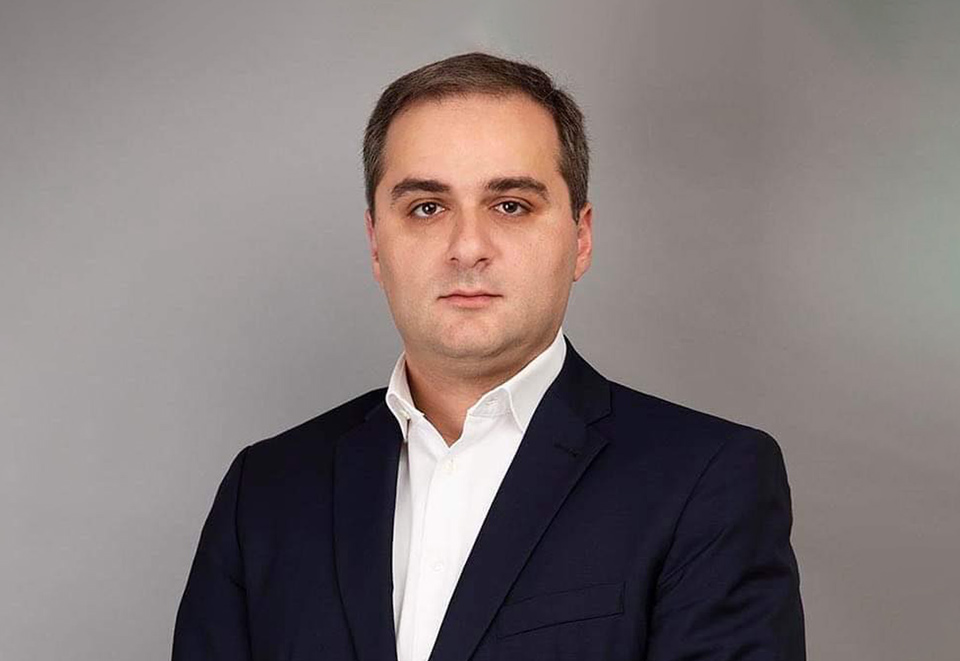
“For the past several days, opposition representatives and certain media outlets have been speculatively discussing a topic related to the court proceedings scheduled for November 24 in London. Specifically, on this date, the third and final instance will announce its decision on the case that began in Bermuda regarding Bidzina Ivanishvili’s claim, which has been ongoing for several years now. Every previous case has ended precisely in our victory,” Bidzina Ivanishvili’s lawyer, Teimuraz Tsikvadze, writes on social media.
As Tsikvadze writes, “whatever the outcome of the court proceedings, Bidzina Ivanishvili knows with certainty that given the political persecution and blackmail, the return of the frozen funds will not happen.”
According to Tsikvadze, Ivanishvili and his family will continue to protect the country’s peace and economic stability, as well as their charitable activities, even without these funds.
“Truth be told, we weren’t planning to make any statement or clarification on this matter at all, regardless of how the legal dispute concluded, but since politicians have made the topic a subject of political reckoning, we decided to briefly remind Georgian society once more of the intricacies of the issue, because the gangster-style racketeering carried out against Bidzina Ivanishvili is unprecedented and a classic example of using financial leverage for political persecution.
The political persecution of Mr Ivanishvili by foreign special services, the so-called ‘Deep State’, began in 2008. This was the time when the previous government, the United National Movement, rigged the elections and seized power, following which Bidzina Ivanishvili completely distanced himself from this political force. This decision was categorically unacceptable to the previous government’s external masters, which is why they purposefully began destroying the financial accounts held in Switzerland. They simply bribed a specific person, Patrice Lescaudron, a personal banker working at Credit Suisse, through whose hands they plundered Mr Ivanishvili’s accounts, and years later, this individual was found hanging from a tree in a forest, whilst the incident was classified as suicide and the case was closed.
The special services went so far as to completely undermine Switzerland’s banking system in their political persecution of Bidzina Ivanishvili. Once home to Credit Suisse, the world’s leading bank, the system was driven to the brink of collapse. The legal disputes we have been engaged in have now lasted over ten years. It is important to emphasise that, at its core, the case is remarkably straightforward—a clear scheme of deliberate theft orchestrated by an entire system targeting a single individual.
We successfully resolved the dispute in Singapore, secured victories in two instances before the Bermuda courts, and now the case awaits a decision from the third and highest court of appeal. Alongside these legal battles, Bidzina Ivanishvili’s political persecution has escalated to unprecedented levels of absurdity, culminating in the previous U.S. administration imposing sanctions against him under the false pretext of advancing ‘Russian interests’ in Georgia.
It is evident that the informal rulers, the so-called ‘Deep State’, are struggling to maintain control over the court system and legal processes, especially when there is not a shred of doubt in the case. However, they still possess several other levers of influence, including the sanctions I mentioned earlier. Aside from the fact that no one from the previous American administration explained explicitly why the sanctions were imposed or what specific ‘Russian interest’ Mr Ivanishvili claimed was at stake in Georgia, the unjustified and baseless sanctions were targeted precisely at those funds about which a decision will be announced in London on November 24.
This is one of the two largest assets that Mr Ivanishvili holds abroad. The imposition of sanctions on the funds, which my client has not yet recovered through legal channels, sent a clear message to us: “You may win in court, but we will still control the process of returning the assets.”
Furthermore, there is an even more cynical case, intricately woven by special services in Switzerland under their control, specifically at Bank Julius Baer. Even though the sanctions imposed by the previous U.S. administration bear no relation whatsoever to these funds, the bank brazenly froze Mr Ivanishvili’s assets and restricted access not only for him but also for his wife and children.
While the Swiss bank absurdly claims to be acting under the pretext of American sanctions in Mr Ivanishvili’s case, it remains silent about why the funds belonging to his wife and children are also frozen, offering no explanation at all.
The special services, under the influence of the previous administration, were unable to sanction Mr Ivanishvili’s wife and children for “advancing Russian interests,” as such actions would have gone too far even for the so-called ‘Deep State’. When they struggle to find formal grounds, they resort instead to crude, gangster-style methods.
This brief overview outlines the ongoing processes that have unfolded over several years, culminating in an unprecedented example of persecution, theft, and blackmail, targeting an individual solely because he prioritised Georgia’s national interests and refused to become a mere executor of the directives of the so-called ‘Deep State’.
To set aside other examples, the current U.S. President, Donald Trump, openly acknowledges that the previous administration was entirely controlled by individuals wielding informal influence, while he himself is fighting tooth and nail against these forces. The sanctions imposed on Bidzina Ivanishvili were also enacted precisely by these informal rulers, and in this context, Trump’s decision will serve as one of the key indicators of whether the President’s fight against the ‘Deep State’ is genuine.
Regarding the speculation by the opposition and the media influenced by them about the upcoming final court hearing in London, the frozen funds, and the alleged additional sanctions expected from Britain, it remains unclear what these discredited forces are so pleased about.
Bidzina Ivanishvili is certain that, regardless of the outcome of the court proceedings, and, presumably, having already prevailed in two instances, we will not see the return of these funds. We confidently and fully responsibly declare to society that we were entirely unaware that the final decision was scheduled for November 24; we only learned this from public sources.
The primary reason for this is that Mr Ivanishvili is entirely resigned to the fact that neither the funds related to the Credit Suisse case nor those accumulated at Julius Baer, regarding which he no longer maintains any correspondence with the bank concerning their alleged illegal actions, will be made available to him and his family.
This is again due to political persecution and blackmail. Mr Ivanishvili and his family will continue, even without these funds, to focus on protecting our country’s peace and economic stability, as well as engaging in charitable activities,” writes Teimuraz Tsikvadze.