


IMF Head: War in Middle East to lead to higher inflation, slower global growth
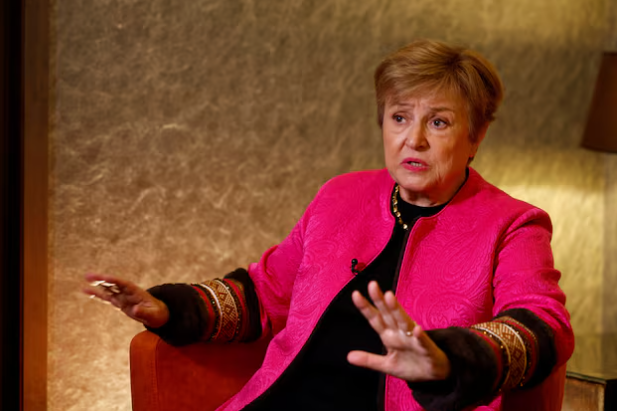
The war in the Middle East will lead to higher inflation and slower global growth, said Kristalina Georgieva, Head of the International Monetary Fund (IMF).
In an interview with Reuters, Kristalina Georgieva remarked that the war has triggered the worst-ever disruption in global energy supply, with millions of barrels of oil production shuttered due to Iran’s effective blockage of the Strait of Hormuz, crucial for shipping one-fifth of the world’s oil and gas.
According to Georgieva, even if the conflict is swiftly resolved, the IMF is set to reduce its forecast for economic growth and bump up its outlook for inflation.
The war has shrunk global oil supply by 13%, Georgieva said, with the impact rippling through oil and gas shipments and into related supply chains such as helium and fertilizers.
Even a rapid end to hostilities and a fairly rapid recovery will result in a “relatively small” downward revision of the growth forecast and an upward revision of its inflation forecast, she said. If the war is protracted, the effect on inflation and growth will be greater.
Without the war, Georgieva said the IMF had expected a small upgrade in its projection for global growth of 3.3% in 2026 and 3.2% in 2027 as economies continue to recover from the pandemic.
Poor, vulnerable countries with no energy reserves will be hardest hit, Georgieva added, noting that many countries had little to no fiscal space to help their populations weather the price increases caused by the war, which in turn also increased the prospects of social unrest.
The IMF is expected to release a range of scenarios in its upcoming World Economic Outlook due on April 14.