


Health Minister highlights evidence-based steps to benefit Duchenne patients
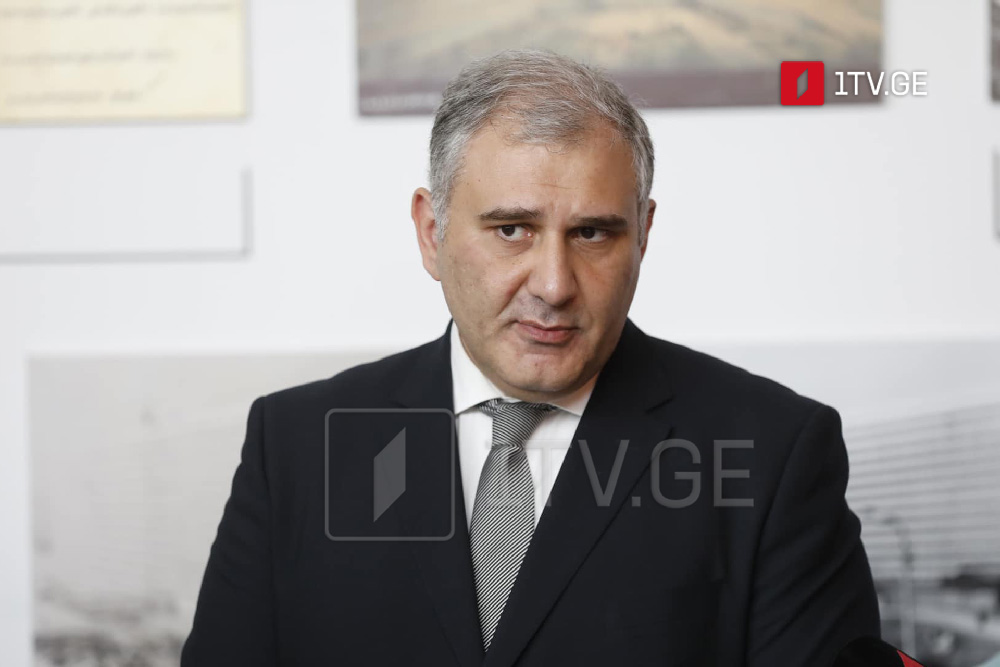
“Yesterday, for instance, I heard claims that specific medications, Vamorolone and Givinostat, for example, are already in use across every European country. I wish to state, with full responsibility, that this is not the case. The overwhelming majority of European states, as I have said from the very first day, are approaching these developments with great attentiveness and caution,” declared Georgia’s Minister of Health, Mikheil Sarjveladze, speaking to journalists on the subject of Duchenne muscular dystrophy treatments and medications.
According to Sarjveladze, European states are studying what each medication can offer, the extent of safety guarantees, and what other significant circumstances and factors bear on the matter, and intend to make decisions on that basis.
“Today, every European state is at precisely the stage of preparation and assessment. They are endeavouring to establish all the relevant details; that is their current position. They are not yet in a position to take decisions at this stage, just as is the case in Georgia. I have said this from the very first day, and it is the only correct approach to this matter.
When I say the situation is evolving, I also mean that certain negative signals have emerged. I have already spoken, for instance, about one particular medication, about the picture as it stood last year and how it has since changed in ways that have practically ruled out the possibility of using that drug. I can give you yesterday’s example as well. We continually follow developments in this area with the closest attention. There is, for instance, new information regarding the experience in the United Kingdom. As you may be aware, the UK is planning to take certain steps with regard to one of the medications. We are following this process with great interest. Specific information about that medication was published yesterday, and naturally we are familiarising ourselves with that too,” said Sarjveladze.
He also highlighted some very encouraging developments, particularly the emergence of new medications.
“This is genuinely very significant. At present, neither Georgia nor European states have clear answers in practice. This is why I mentioned that I was in Geneva a few days ago, where I met with senior officials, representatives of the medical sector, and clinical specialists from approximately fifteen countries. Every single one of them was speaking to precisely these question marks.
Everyone is hopeful, and everyone desires to find the relevant answers as quickly as possible; answers that will give European states, including Georgia, the ability to take decisions on incorporating these medications into state programmes. New options have emerged, and so it is entirely justified and logical that this process should proceed in exactly this manner.
As regards the process of work itself, the state has always maintained, from the moment public discussions on this topic began, and we have said so from the very first day, that we have never closed the door to any interested party, and above all to parents. We began working and deliberating on these matters together with them, so that something might improve daily, approximately two years ago. It is just over two years since we began actively working on this process,” said the Minister of Health.
He also stated that the state endeavours to ensure that every service it offers is as closely aligned as possible with existing needs.
“The state truly does not have modest resources in this direction; a considerable amount is being done that, according to evidence-based medicine, may prove beneficial for these patients. This process must without question continue. I repeat once more: medical evidence is constantly being updated, practically daily. It will be far better, and of far greater benefit to the patients themselves, if parents and other interested parties are actively involved in this work. This has been our call from the very first day; we continue our work in this spirit, and naturally we have no intention of ever closing that door,” said Mikheil Sarjveladze.
Sarjveladze was also asked about the assistance programme for children with Duchenne muscular dystrophy.
“As soon as we launched the programme and the relevant government decree was issued, we immediately met with representatives of both paediatric and adult clinics. We discussed with them how the process ought to be structured. Fortunately, the Zvania Clinic, the Tsitsishvili Clinic, and the Iashvili Clinic responded to our initiative, and each of them duly began delivering the relevant services. These are very important services. This involves a wide range of specialists working together to provide comprehensive and integrated monitoring of each patient’s condition. For example, once a year, they will assess the patient’s current health state, track the disease progression, and consider other important factors. All of this is crucial for developing a personalised and well-structured treatment plan for each patient. Naturally, this process also encompasses a very wide range of diagnostic investigations,” said Mikheil Sarjveladze.