


Government approves National Concept for general education system reform
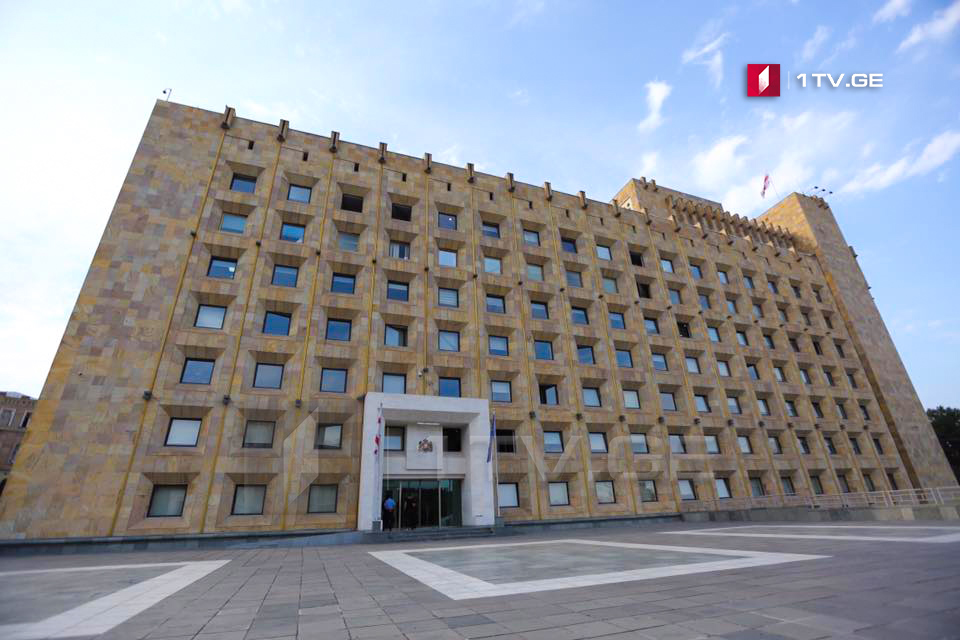
The Georgian government has approved a National Concept for reforming the country’s general education system, with Prime Minister Irakli Kobakhidze signing the relevant decree on January 27, 2026.
The comprehensive reform document identifies several key challenges facing Georgia’s education system, including overloaded curricula, insufficient connection between educational stages, inadequate resources for supporting students’ civic and personal development, and a disconnect between national examinations and school programmes that forces many students to rely on private tutors.
Key Reform Objectives
The reform plan focuses on strengthening fundamental subjects, particularly the humanities and sciences. Georgian language teaching will serve not only to develop linguistic skills but also to reinforce cultural thinking and civic consciousness. Mathematics, physics, chemistry, and biology will receive enhanced emphasis, addressing concerns that these core subjects have received insufficient systematic support compared to newer additions to the curriculum.
The school structure will be reorganised into three stages: primary (years 1-6) focusing on reading, writing, and mathematical foundations; basic (years 7-9) with better-balanced content replacing excessive academic pressure with interactive learning and diverse experiences; and secondary (years 10-11) offering profile-based education aligned with academic and professional requirements.
Major Structural Changes
From the 2027-2028 academic year, year 11 will become the standard final year, with mandatory in-school preparatory courses (repetitoriums) for national examinations, a significant move designed to eliminate the need for expensive private tutoring. National examinations will be fully synchronised with the national curriculum content, addressing a long-standing complaint from students and parents.
Year 12 will remain optional for students seeking additional academic preparation, with enrolment based on advance registration to allow schools to plan resources effectively.
The school starting age will be standardised at six years, with children eligible for enrolment only if they turn six by September 15. This change addresses concerns that younger children often lack sufficient socio-emotional development and concentration skills for formal schooling.
Curriculum and Resources
The Ministry of Education will develop unified textbooks for each subject, replacing the current multi-textbook system, to ensure equal access to quality resources and consistent educational standards nationwide. This aims to ensure equal access to quality resources, consistent educational standards nationwide, easier adaptation when students change schools, and stronger connections between educational stages and subjects.
Textbooks will be regularly updated and complemented by video resources, digital simulations, research tasks, virtual platforms, and other modern learning tools, moving beyond reliance on printed materials alone.
School Life and Culture
Non-formal education will be integrated as an organic part of school life rather than an add-on. Schools will systematically encourage and support school clubs, including values-based education initiatives, to develop students’ interests, creative abilities, and social responsibility.
Special emphasis will be placed on integrating sports and creative services within schools rather than relying on external providers. This will help ensure equal opportunities for all students regardless of family income or geographical location. This approach aims to address the current situation where many families are unable to afford extracurricular activities.
School camps, thematic gatherings, and projects will be systematically developed to deepen cultural diversity, tolerance, empathy, and historical consciousness.
Ensuring the continuity of education
Schools will establish professional orientation and career management systems to help students discover their interests and abilities. Integrated professional programmes will be expanded, with short-term vocational training courses offered as additional options.
The reform addresses the continuity gap between pre-school and primary education by updating early childhood education standards to define the minimum competencies needed for school readiness.
Teacher Support
A systematic model for teacher professional development will be created, based on accurate forecasting of which regions and subjects will need teachers over the next 5-10 years, using demographic data and labour market demands.
Teachers will have clear career progression pathways based on subject expertise, research activities, and management support. Professional development will be supported by online educational resources, allowing teachers to access services without interrupting their practical work. Teacher salaries will be increased.
Infrastructure and Safety
Schools will be equipped with modern baseline infrastructure, including fully equipped laboratories, functional sports facilities, libraries, dining facilities, well-appointed spaces for non-formal education, and fully adapted environments for students with special needs.
Rules for mobile phone use will be developed to strengthen student concentration, establish healthier communication patterns, and maintain continuity in the learning process.
Anti-bullying measures will be intensified through regular awareness campaigns for students and more intensive training for teachers to identify and respond to bullying situations. The number of security officers, psychologists, and social workers will be increased, with every school receiving appropriate services.
Inclusive Education
Inclusive education will become an integral part of teacher professional standards rather than a parallel direction. Every subject teacher, particularly primary teachers, will have competence in inclusive approaches, not just specialist teachers, enabling early identification of children’s individual developmental needs.
School Uniforms
From the 2026-2027 academic year, school uniforms will become compulsory for primary students (years 1-6). The measure aims to create a learning-focused environment, foster a sense of belonging to the educational institution, and reduce the visual expression of social and economic differences amongst pupils.
Governance and Funding
Educational resource centres will be institutionally strengthened to serve as professional support centres, providing directors, administrative staff, and teachers with consultation, mentoring, and practical problem-solving assistance.
Parent-school collaboration will be strengthened, with the Ministry planning direct meetings with parents from 2026 onwards to ensure greater transparency, openness, and development of flexible response mechanisms.
The current school funding model, which is primarily based on per-pupil vouchers, will be enhanced to reflect the individual needs and development opportunities of schools. This aims to address concerns that some schools operate with minimal resources and are unable to provide additional educational services, including non-formal education.