


Georgia joins small group of nations offering fully state-funded education across all levels, announces Education Minister Mikanadze
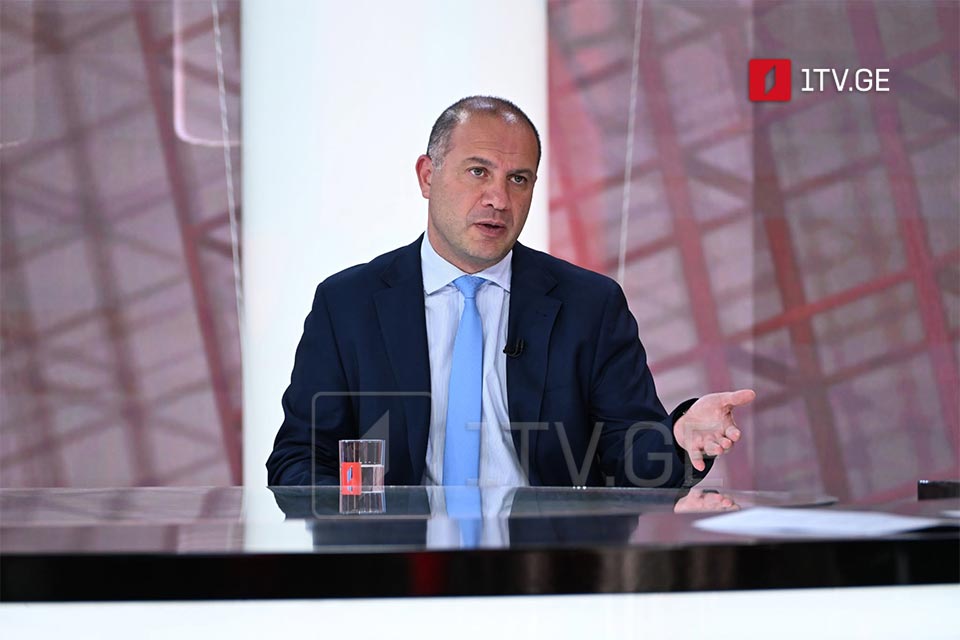
“This is a historic outcome and decision. The political council of the ruling party has made a decision that means, in effect, from September, when the new academic year begins, Georgia will join a select few countries worldwide where every level of education is provided completely free of charge by the state,” stated Georgia’s Minister of Education, Science and Youth, Givi Mikanadze, during a Discussion on Topical Issues on GPB First Channel.
Minister Mikanadze highlighted that early years education is already fully state-funded, in stark contrast to the pre-2013 system when fees were compulsory.
“When our political team decided to make kindergartens entirely free, enrolment surged by 30 per cent. To put that into perspective, before 2013, every third child was effectively locked out of early education simply because families could not afford it. Schooling is also free, with state school textbooks provided entirely free of charge since 2014. Vocational training is also covered via state vouchers in both public and private colleges. Now, tuition at state universities will be completely free as well. This ensures that the state guarantees maximum accessibility at every level of education. For anyone willing, having the ambition and the drive, we are offering the ultimate incentive to help them realise their potential. Indeed, the statistics bear this out,” the Minister noted.
The Minister further explained that out of more than 43,000 applicants registered for this year’s Unified National Examinations, over 79 per cent selected a state university as their primary choice.
“State universities received four times as many first-choice applications, even though only 19 out of the country’s 64 higher education institutions are publicly run. With over 79 per cent opting for state institutions and just over 20 per cent prioritising private ones, the public’s confidence, readiness, and overall sentiment towards both this political decision and our state universities is crystal clear,” Mikanadze stated.
Furthermore, the Minister pointed out that for the first time this year, applicants were allowed to select vocational pathways alongside university courses within the framework of the national examinations, an option taken up by more than 6,000 young people.
“We are seeing considerable growth in this sector. Contextually, our standard vocational college registration draws just over 5,000 applicants across two annual intakes (autumn and spring). This year, we introduced a new mechanism allowing applicants to choose at least three vocational paths alongside their university preferences during the national exams. Over 6,000 young people capitalised on this opportunity.
The figures speak for themselves. While we have allocated 21,600 fully funded places across state universities, we have built a parallel safety net for vocational education. Young applicants who clear the minimum threshold in the national exams but fall short of the scores required for university admission will automatically, without any further examinations, be enrolled in one of their chosen vocational tracks. Whether they continue their studies at a private or a public college, the state will cover their tuition fees 100 per cent,” Minister Mikanadze concluded.