


Georgia aims to increase installed generation capacity 2.5-fold by 2036, Economy Minister says
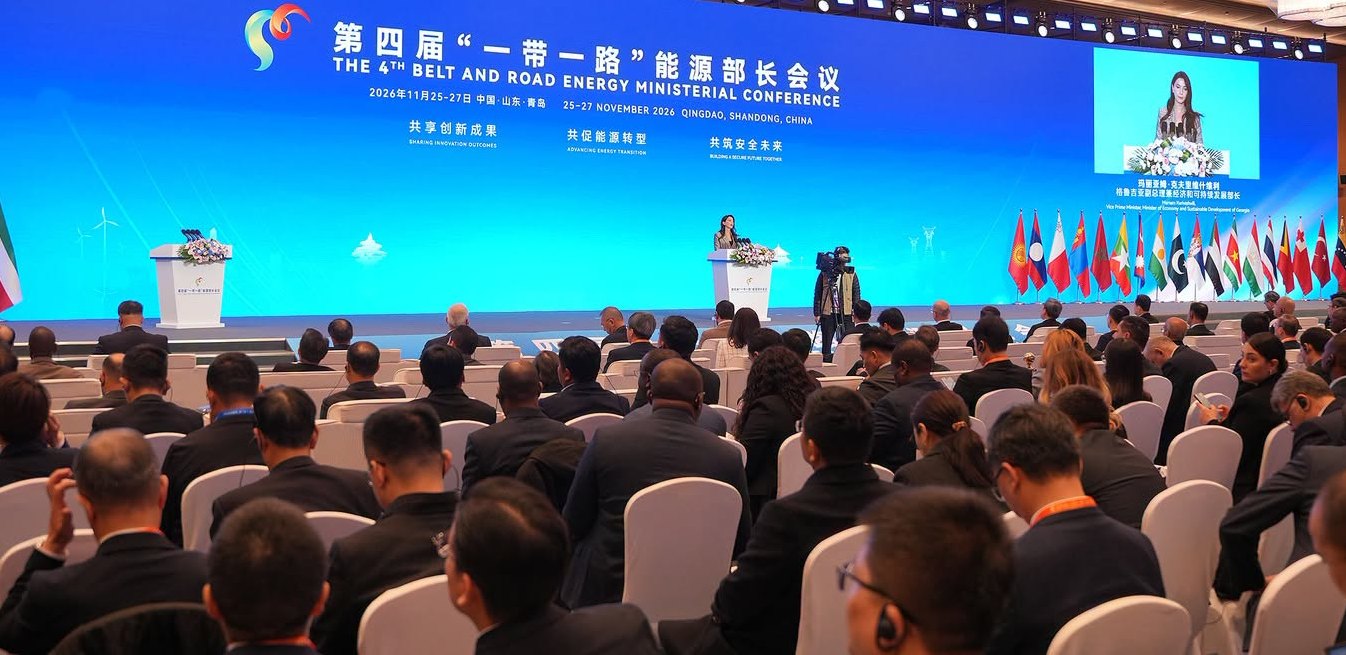
“Our long-term ambition is to increase Georgia’s installed power generation capacity 2.5-fold by 2036. Furthermore, we aim to substantially expand our electricity export and transit capabilities, an objective that will be supported by new international interconnections, energy storage systems and innovative technologies,” Mariam Kvrivishvili, Georgia’s Vice Prime Minister and Minister of Economy and Sustainable Development, said at the fourth Belt and Road Energy Ministerial Conference.
At the ministerial meeting, hosted by the Chinese city of Qingdao, Kvrivishvili discussed ongoing and planned projects. She noted that Georgia was working to strengthen its role as a regional energy hub, with a focus on expanding this role to include electricity transmission and transit.
“We consider regional energy connectivity to be the cornerstone of our energy security, making a significant contribution to the development of a broader regional energy space. Situated at the crossroads of Europe and Asia, Georgia has established itself as a reliable transit country for hydrocarbon resources. We are now working to expand this role to include electricity transmission and transit.
“In this regard, Georgia, together with its partners, is developing three strategic initiatives: the Black Sea submarine electricity cable project, the Green Energy Corridor and an overland green electricity corridor, which is being developed through cooperation among Azerbaijan, Georgia, Türkiye and Bulgaria,” the Vice Prime Minister said.
Speaking at the ministerial meeting, Kvrivishvili noted that tangible progress had already been made. The Black Sea submarine electricity cable project has been granted Project of Mutual Interest (PMI) status by the European Commission, the feasibility study for the Green Energy Corridor has been approved, and, most recently, Azerbaijan, Georgia, Türkiye and Bulgaria signed a strategic partnership agreement on clean energy aimed at developing a land-based green electricity corridor.
“Implementation of these projects will significantly expand regional electricity transmission and trading capabilities, diversify supply routes and strengthen energy security throughout the region. It will also further reinforce Georgia’s role as a regional energy hub,” Kvrivishvili said.