


Speaker: Georgian society has right to know where foreign aid ended and political influence sctivities began
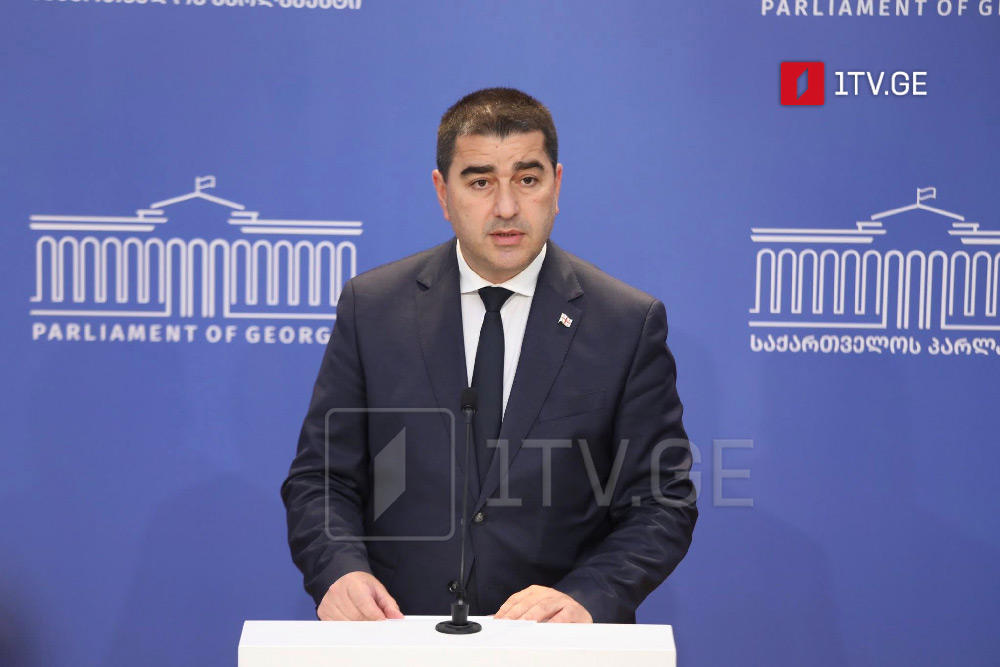
Documents recently released by the U.S. government shed light on how foreign information influence networks established by USAID in various countries were structured. They also reveal that companies with experience in cooperating with foreign security services and conducting covert information operations were involved in organising these networks, Georgian Parliament Speaker Shalva Papuashvili wrote on social media.
According to Papuashvili, the documents describe mechanisms for promoting preferred narratives, restricting the dissemination of information deemed undesirable, and removing specific pages from social media platforms.
He said that one of the organisers of such activities in Georgia was the British company Zinc Network, which established a unified network bringing together Georgian non-governmental organisations, media outlets and civil society activists.
“The documents reveal that one of the formal manifestations of this foreign information influence network was the ‘Coalition for Information Integrity’. The disclosed internal documents explicitly state that the objective of the network’s activities was ‘to change people’s attitudes, views, and behaviour’. Notably, even employees within the American agency itself questioned whether these activities fell within the scope of USAID’s mandate.
“It is in the context of these documents that the campaigns conducted by organisations involved in this network ahead of the 2024 parliamentary elections must also be examined. Who commissioned these campaigns, who carried them out, and what financial or organisational ties existed among the participants? Answering these questions is even more important today.
The Georgian public has the right to know where foreign assistance ended and where activities aimed at shaping the political choices of Georgian citizens began, especially given that some of the organisations operating with foreign funding were themselves involved in assessing the electoral process.
Attached to this post is a campaign video disseminated by this very network on October 24, 2024, just two days before the elections. On the one hand, it further confirms the participation of EU Ambassador Paweł Herczyński in election campaigning, which violates both international law and Georgian legislation. Even more scandalous, however, is that it confirms that the European Union used foreign information influence networks established by the previous U.S. administration to interfere in Georgia’s internal affairs.
“The Facebook page of this network (www.facebook.com/infointegritycoalition) provides sufficient evidence that, during the 2024 parliamentary elections, Georgia was the target of a hybrid attack involving foreign information manipulation and interference, and that Brussels, alongside USAID, stood behind this attack,” Papuashvili wrote.