


Foreign Relations Committee Chair: Political bias undermining OSCE’s credibility
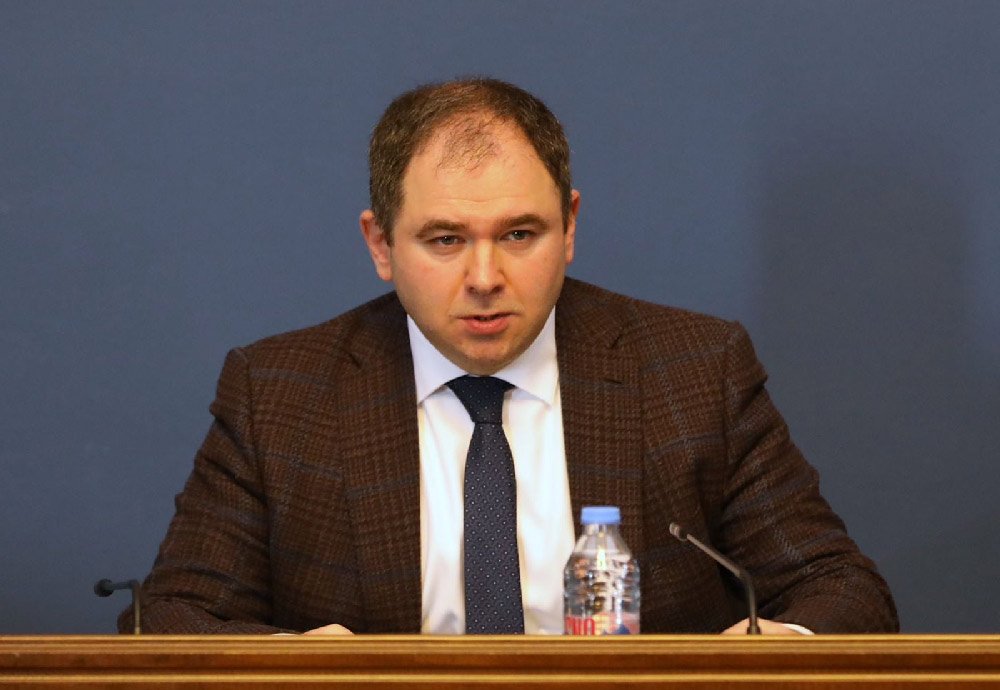
“This year has marked the 50th anniversary of Helsinki Final Act, a landmark accord designed to enhance security, uphold human rights and encourage economic, scientific and environmental cooperation in lieu of hostility between the rival geopolitical blocs,” said Nikoloz Samkharadze, Chairman of the Parliamentary Committee on Foreign Relations, in his address at the 23rd Autumn Session of the OSCE Parliamentary Assembly.
He noted that, “regrettably, half a century on, amid an era of uncertainty, protracted conflicts and emerging multipolarity, we witness a vivid recurrence of a disturbing historical pattern – that the initiatives conceived for benevolent purposes are proven vulnerable to ideological distortion and moral decay.”
“After a decades-long period characterized by aggressions, occupation of territories, Georgia being the first victim of Russian occupation, foreign interference, and the diversion of foreign aid to destabilise nations certain political groups and entities still refuse to heed the past mistakes. Let me outline several tendencies prevalent in the present political mainstream that border on hypocrisy, and perhaps – sheer audacity:
First and foremost is a total disregard for the will of the people, ironically, in the very name of democracy, a term which in its literal sense means “the rule of the people”. Some political forces consistently overlook not only the political will, but also the cultural and religious diversity of various nations, particularly those relatively smaller or moderate in quantity. On one hand, they refuse to acknowledge and respect the outcomes of legitimate elections if they do not like the election results, while on the other hand, they attempt to impose specific social or ideological norms that directly contradict the cultural values of those same nations.
The second concern is radicalisation and outright refusal to engage in dialogue, particularly with those deemed to be on the opposite end of the political spectrum. This attitude stems from an oversimplified “good versus bad” dichotomy in which some parties unilaterally assign themselves the former role, while simultaneously resorting to coercive measures, domestic interference and aggressive rhetoric. Such conduct stands in a clear contradiction to their own proclaimed commitment to equality, partnership and mutual respect.
Third and the most worrisome of all, when unable to assert dominance through legitimate means, they resort to violence. They provide financial, moral and rhetorical support to the radical groups that allegedly fight for “democracy” through explicitly undemocratic methods. The actions these forces condone are not directed merely against the political parties or individual opponents they resent, but against the safety and security of the state itself.
A recent example: We often say that crown jewel of the OSCE PA’s work is election observation. But as some of my colleagues mentioned today at the standing committee session, election observation has become way too politicised, political groups favour their ideological peers and make evaluations based on ideological and partisan friendship not based on the actual facts on the ground. This in its turn undermines the integrity and credibility of the work, our organisation has been doing for decades.
However, I remain optimistic and still hold hope that the common sense will ultimately prevail, and that we will witness return to the respect of the sovereign will of the people by domestic and international stakeholders alike,” Nikoloz Samkharadze stated.