


FM: Europe strengthens through a wide network of reliable partners, Georgia ready to contribute, Brussels’ attempt to respond to Georgia with isolation is a strategic mistake
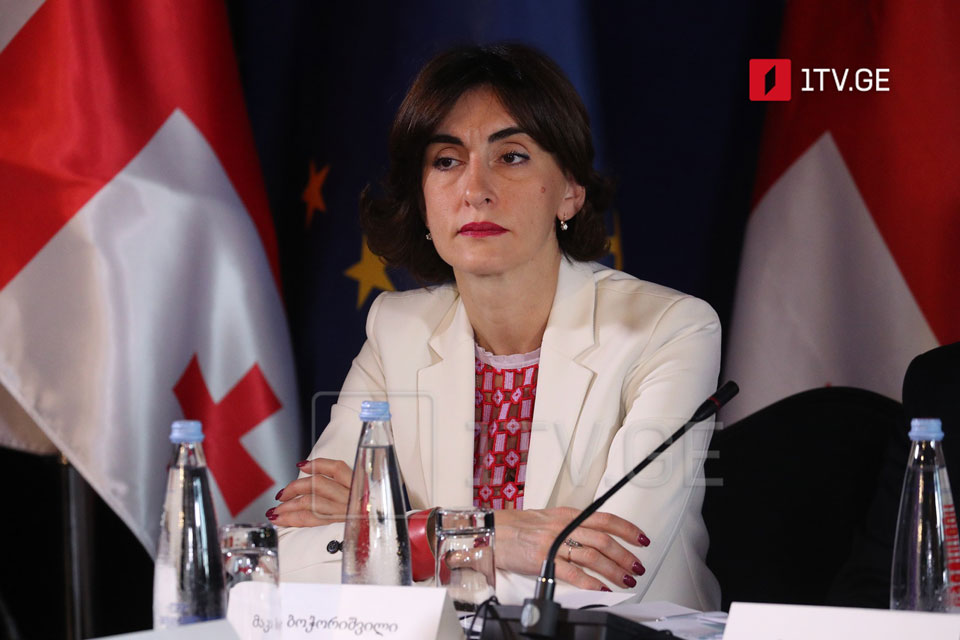
“I believe Georgia sets one of the excellent examples of what multivectoral diplomacy means in practice. Our history, geography, security environment and economic interests prompt us to seek a balance on a daily basis between principles and pragmatism, openness and security, national interests and international cooperation,” said Maka Botchorishvili, Georgian Minister of Foreign Affairs, addressing a panel discussion held within the 2026 Dubrovnik Forum.
Botchorishvili noted that different visions, interests, and strategic ambitions are emerging around Georgia, which requires special caution, precision, and responsibility.
“We often talk about the changing world, global transformations, and the formation of a new balance of power, as if from the role of spectators. In reality, none of us is an external observer of these processes. We ourselves are participants in these changes. We make decisions which shape not only our countries’ future but the international agenda that is being established in front of our eyes.
Therefore, I believe Georgia sets one of the excellent examples of what multivectoral diplomacy means in practice. Our history, geography, security environment and economic interests prompt us to seek a balance on a daily basis between principles and pragmatism, openness and security, national interests and international cooperation.
Georgia is at the crossroads. Various forces, different visions, interests and strategic ambitions emerge around us. Living in this reality requires special caution, precision, and responsibility. Geography is the provision, which throughout history put us face to face with many challenges, though taught us how to act not to miss opportunities amid challenges.
Today, as centers of power multiply and economic competition increasingly shapes international politics, special importance is attached to countries that serve the function of connectivity instead of division. Georgia has such a role. Today, when the world searches for new economic routes and the sustainability of supply chains has become a key element of global security, our country’s geographical location is taking on new strategic importance,” she said.
According to the FM, no economic project will be successful unless peace and security stand behind it.
“The Middle Corridor is more than a mere transport route. It is a new geopolitical space, which connects Europe, the South Caucasus, Central Asia and the East. This is a space where trade, energy, digital links, innovation, common ideas and interests intersect. Georgia’s aim is to be not only a geographic part of the process but its reliable, predictable and responsible partner. We should not forget that no economic project can be successful unless peace and security stand behind it.
A country with 20% of its territory occupied by Russia talks about peace more than others, not because it is weak, but because it knows the price of peace best. That is why one of the main tasks of Georgia’s domestic and foreign policy is to ensure peace and stability. It is exactly ensuring peace, macroeconomic stability and consistent economic growth that gave Georgia the chance to be established as one of the fastest growing economies in Europe and across the wider region with approximately 9% economic growth,” she said.
Maka Botchorishvili underscored that Europe is a space of values for Georgia and therefore, integration into the European Union is Georgia’s unwavering and strategic choice.
Botchorishvili noted that attempts by Brussels to respond to Georgia with isolation are both unfair and a strategic mistake.
“Throughout history, great changes have tested the wisdom, courage, and vision of nations. The world moves forward not when challenges disappear, but when societies find ways to overcome them together. At this moment, dialogue is a necessity and not a choice. Cooperation is the basis on which sustainable peace, stability and progress are built. We believe that in the modern world, those who can be open, competitive, and trustworthy will succeed,” she concluded.