


EU Delegation to UN: We welcome Georgian government’s efforts to provide housing for IDPs and support their socio-economic integration
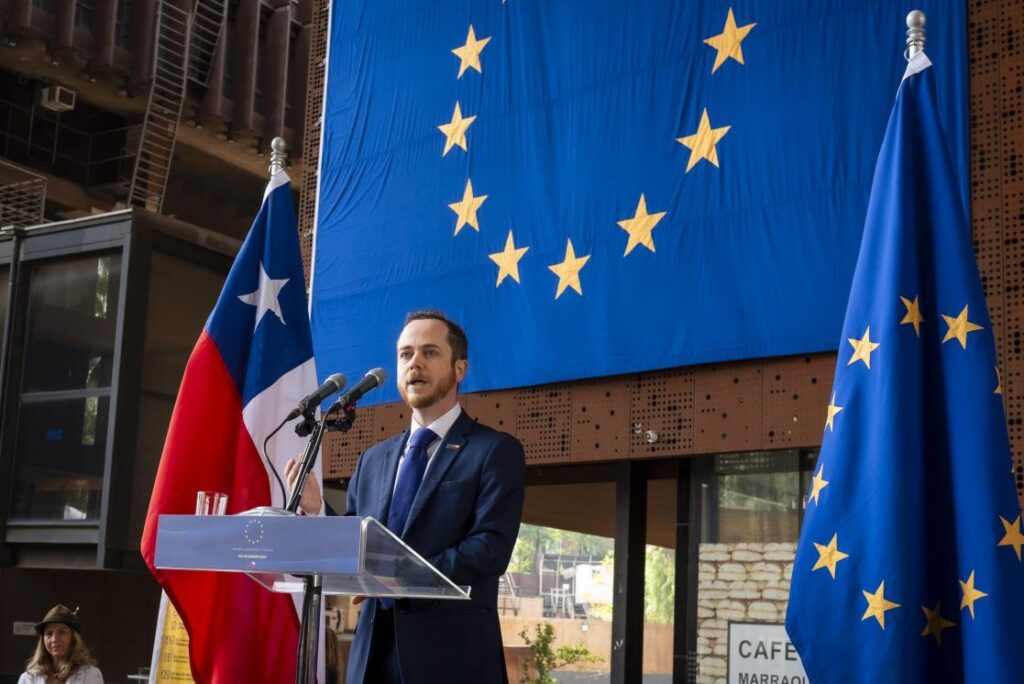
“The European Union has once again reaffirmed its unwavering support for Georgia’s sovereignty and territorial integrity within its internationally recognised borders,” Quentin Weiler, the EU Delegation’s representative to the United Nations, said at the UN General Assembly session.
He noted that the joint statement on support for Georgia within its internationally recognised borders was also aligned with by EU candidate countries, North Macedonia, Montenegro, Albania, Ukraine, Moldova and Bosnia-Herzegovina, as well as Andorra and San Marino.
“I have the honour to speak on behalf of the European Union and its member states. This statement is also backed by the EU candidate countries: North Macedonia, Montenegro, Albania, the Republic of Moldova, Ukraine, and Bosnia and Herzegovina, as well as Andorra and San Marino.
The European Union reaffirms its unwavering support for Georgia’s sovereignty and territorial integrity within its internationally recognised borders. The EU remains firmly committed to supporting peace-building and conflict resolution in Georgia, including through the work of the EU Special Representative, who co-chairs the Geneva International Discussions, and the EU Monitoring Mission (EUMM) on the ground. The EU expresses its deep concern over human rights violations in Georgia’s occupied regions of Abkhazia and South Ossetia, as well as over the persistent humanitarian challenges facing the conflict-affected population. The EU calls on all parties to ensure full, safe and unimpeded humanitarian access to assist that population, particularly in the occupied region of South Ossetia, and reminds all parties that humanitarian assistance is provided for under the Six-Point Agreement of August 12, 2008.
The EU continues to express concern about the various obstacles faced by NGOs and civil society representatives working in Georgia, many of whom are engaged in peace-building across the dividing lines of the conflict. The EU accordingly calls for the removal of these obstacles, so that civil society organisations may carry out their work freely and in full.
The EU underscores the right of refugees and internally displaced persons to choose their own durable solution, including return to their places of origin, and to enjoy their property rights in full. The EU regrets that no progress has been made on these fundamental rights and reminds all parties that the situation of refugees and internally displaced persons is the core issue of the Geneva International Discussions. The EU therefore calls on the participants of the Geneva International Discussions to engage in genuine dialogue on the various instances of forced displacement that have occurred over the past three decades, including on the question of the partial return of displaced persons. This dialogue should also explore ways to enhance the protection of returnees and to facilitate their reintegration.
The EU welcomes the Georgian Government’s efforts to provide housing for internally displaced persons and to support their socio-economic integration. The EU notes that genuine integration requires sustained, long-term commitment and the continued mobilisation of resources by the authorities, particularly to reduce the disparities persisting between the capital and the regions of Georgia. The EU accordingly calls on the Georgian authorities to more fully embed the integration of internally displaced persons into the national development plan, and to redouble their efforts to improve living conditions and livelihoods across the entire country,” said the EU Delegation’s representative to the United Nations.
The UN General Assembly adopted the resolution “On the Status of Internally Displaced Persons and Refugees from Abkhazia, Georgia, and the Tskhinvali Region/South Ossetia, Georgia.” The resolution received the support of 107 countries at the 2026 session.