


EU Commissioner says lessons Learned from UK and Georgia: We knew that Russian interference high in Georgia, we didn’t help
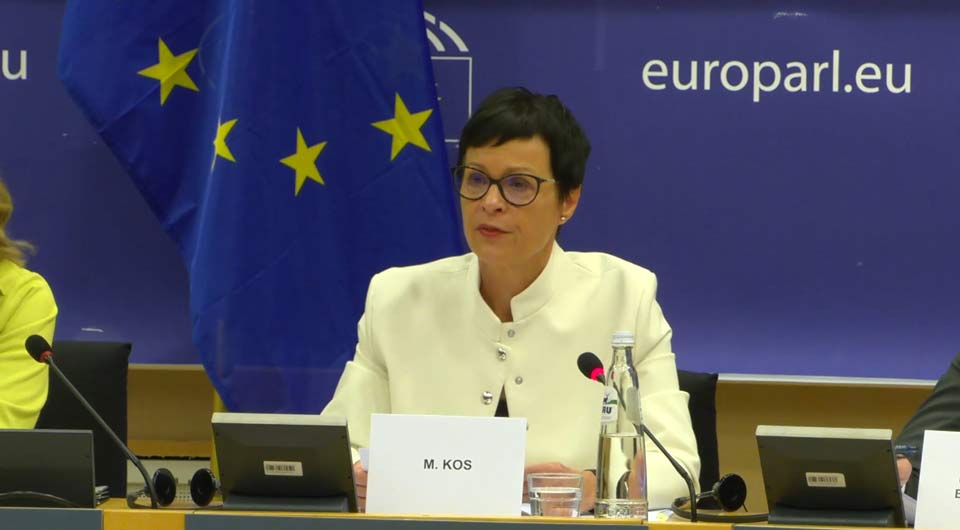
The EU has a “responsibility” to help candidate countries stay on their European path, EU Commissioner for Enlargement, Marta Kos, said week ahead of the release of the annual review of the accession process.
The EU has learnt from its mistakes with the UK and Georgia and is now prepared to be “more assertive” including by investing in candidate countries to counter fake narratives, Marta Kos said.
She noted that 2025 marked a turning point in the European Commission’s approach to enlargement policy.
“It was the first time that we invested resources, we have invested men and women power to help fend off foreign malign interference. This included for the first time the deployment of the EU’s rapid hybrid response team,” she said.
The commissioner highlighted that this approach had proven effective in Moldova, where President Maia Sandu had warned ahead of parliamentary elections held last month that Russia was spending “hundreds of millions of euros” to sway the vote away from pro-European forces. According to Kos, the EU’s rapid hybrid response team was sent to help counter that and Sandu’s party won a landslide victory.
Kos said this is proof that the EU is finally learning from its mistakes.
“When the UK decided to have a referendum, the attitude of the European Union has been it’s their internal affair, we don’t get involved. We didn’t even say: ‘Please could you stay?’ Like Georgia, where we already knew that the interference from Russia is high, we didn’t help,” Kos explained.
Additionally, she said this shows that when it comes to disinformation, the EU is finally taking Russia to task.
“We have studied their narratives, the Russian narratives well, we turned them around and use them in support of Europe. And in my opinion, this strategic communication, we should be more assertive to defend our offer and in a logic closer to domestic dynamics in our candidates. You know, once they get the status of candidate, it is also our responsibility to help them,” she said.
The EU’s enlargement chief will next week unveil the Commission’s annual review of the progress of candidate countries in the accession process.
Overall, Kos said “2025 was actually a good year for enlargement” with “more progress than in the last 15 years”. She nonetheless warned that “the road (ahead) has some hurdles”.
“Next year, 2026 will have higher stakes with one central question: can we deliver as the EU?” she added.