


EP adopts resolution on Georgia: In absence of unanimity at EU level, an increasing number of Member States introduced individual visa bans and other sanctions against Georgian officials; urges other Member States to follow suit
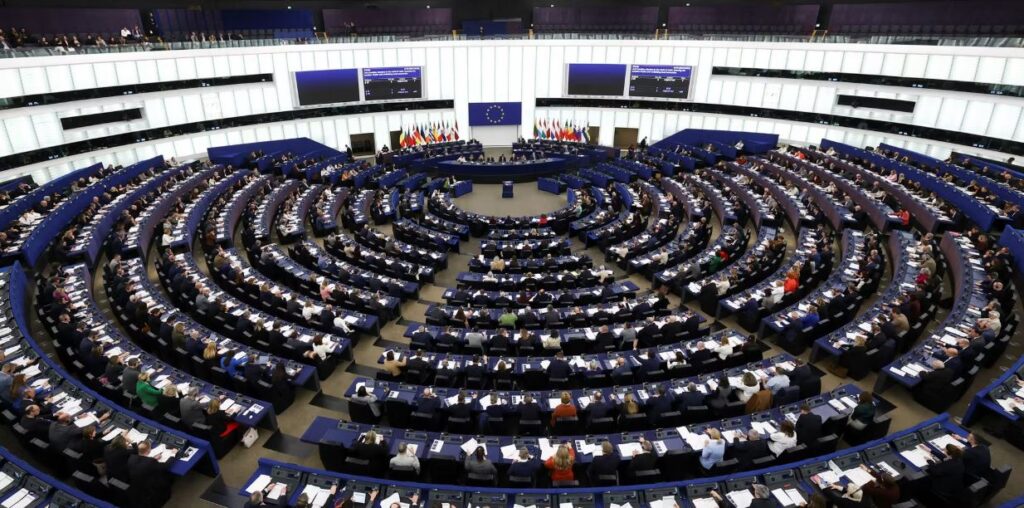
With 436 votes for and 145 against, the European Parliament adopted a resolution drafted by MEP and Rapporteur Rasa Juknevičienė.
According to the resolution, the European Parliament expresses its full solidarity with the Georgian people, who continue their struggle for a European and democratic Georgia in the face of democratic backsliding, growing repression, unlawful arrests, relentless hostile rhetoric, disinformation and threats; stresses that “nearly 75 % of Georgian people continue to support further integration with the EU; reiterates that the EU’s door remains wide open for the Georgian people to return to the European path.”
It notes with deep disappointment that “Georgian Dream has not only suspended but effectively reversed Georgia’s course of European integration; regrets the fact that there has been backsliding in the implementation of all nine priorities that were the conditions for granting Georgia candidate status; highlights the inconsistency of the claims by Georgian Dream that EU integration remains the main priority, while at the same time its highest officials and government-affiliated media run an orchestrated and systematic campaign spreading manipulative Russian-style narratives, disinformation and conspiracy theories against the EU, its officials and diplomats.”
“Deplores the fact that, since the rigged October 2024 parliamentary elections, Georgian Dream has further intensified its trajectory towards full authoritarianism; is dismayed at the rapid dismantling of Georgia’s democratic foundations through targeted attacks against its democratic institutions, fundamental freedoms and democratic pluralism, which is totally at odds with the democratic development required for EU membership; shares the Commission’s assessment that crucial institutions, such as the Central Election Commission, the Communications Commission, the High Council of Justice, the Constitutional Court, the Prosecutor’s Office, the National Bank, and law enforcement and security agencies, lack impartiality, independence and democratic oversight; stresses that Georgia cannot make any progress in the European accession process as long as it does not return to the path of democratic reforms and, inter alia, guarantee free, fair and competitive elections, protect the independence of official institutions, effectively address oligarchic control and improve the protection of human rights and media freedom,” reads the text.
Based on the resolution, the EP “stresses that targeted personal sanctions imposed by the EU and its Member States against Bidzina Ivanishvili, key Georgian Dream leaders, judges, prosecutors and other officials responsible for the continuous democratic backsliding in Georgia, electoral fraud, serious human rights violations and the persecution of political opponents and activists, and against complicit owners of companies and media outlets linked to Georgian Dream, would be an important instrument against impunity; welcomes the fact that, in the absence of unanimity at EU level, an increasing number of Member States have introduced individual visa bans and other sanctions against Georgian officials; urges other Member States to follow suit.
Reiterates its strong call for the EU and its Member States to introduce immediate and targeted personal sanctions against Bidzina Ivanishvili, his family members and his companies and calls for the EU to freeze his assets and to cooperate on this matter with other jurisdictions, in particular the United Kingdom and the United States,” reads the resolution.
Also, the resolution says that the EP “condemns the systemic impunity of officials and institutions responsible for political repression, harassment of journalists and human rights defenders, and persecution of opposition figures; emphasises that the EU response to date has been inadequate and belated in view of the accelerating authoritarian consolidation in Georgia; urges the Council and the Member States to urgently adopt coordinated, EU-wide restrictive measures against all responsible politicians, officials and enablers, including the expansion of sanctions lists, comprehensive asset freezes and visa bans targeting those responsible for state capture, repression and regime-sponsored propaganda; urges the incoming Hungarian Government to lift the blockade imposed by its predecessor on EU-wide targeted sanctions against Ivanishvili and the broader Georgian Dream leadership; calls on the Council to explore collective mechanisms when unanimity is not possible in order to ensure an effective and unified EU response.”
As said in the resolution, the EP “regrets that Georgian Dream has not taken any steps to reverse its anti-democratic and anti-European course; considers that engagement with the Georgian authorities should be strictly conditional on them taking tangible and verifiable steps reversing their current course of democratic backsliding, repression, restrictions and fierce Russian-style anti-EU disinformation; maintains, therefore, its previous positions regarding the non-recognition of the legitimacy of the parliament and the president appointed by it; regrets the fact that the parliament of Georgia is a de facto one-party parliament that is rubber-stamping legislative initiatives aimed at dismantling the foundations of a pluralistic parliamentary democracy; notes with concern the fact that the de facto parliament of Georgia has declared its temporary withdrawal from the EuroNest Parliamentary Assembly;
Reiterates its call for the EU’s and the Member States’ representatives and members of parliament to refrain from holding meetings with representatives of the regime, starting with the current de facto president, as long as the Georgian authorities continue their democratic backsliding and repression; calls on the Member States to consolidate a united and coordinated approach regarding limiting political contacts with the Georgian Dream authorities to matters of strict necessity, while maintaining and strengthening engagement with Georgian civil society, independent media, and academic institutions; condemns the persistent aggressive rhetoric against the EU and Member States’ diplomats, politicians and officials; stresses the importance of continuing to promote European norms, democratic values and the European path among the Georgian population and political forces committed to democratic principles; Notes with concern the aggressive rhetoric against the United States, the United Kingdom and other allies;
As said in the resolution, the EP calls on the Georgian authorities to restore merit-based civil service safeguards, reinstate effective legal protection against politically motivated dismissals and ensure effective implementation of the right to access public information;
Points out that the municipal elections of 4 October 2025 were boycotted by the majority of the opposition parties, reflecting the deep mistrust that the majority of society has in the independence of the electoral process; regrets that the amendments to Georgia’s Electoral Code made in December 2024 and March and April 2025 further strengthened the dominance of the ruling party and introduced new restrictions on registration for local observers, media and electoral subjects; reiterates that the Georgian authorities ignored calls by the Venice Commission to repeal the changes made in 2024; stresses that the lack of observation missions from the OSCE/ODIHR owing to a late invitation and from local observer organisations owing to restrictions seriously affected the transparency of the electoral process and the credibility of its results; reiterates its call for an improved electoral environment established by an independent and impartial election administration, for future elections under diligent observation by international and national non-governmental organisations (NGOs); expresses its deep concern about the amendment of the Electoral Code of December 2025 that prohibits Georgian citizens from voting from abroad; stresses that participation in elections is a fundamental constitutional right of every citizen and has to be made possible regardless of one’s place of residence;
Condemns the adoption of unprecedented and increasingly restrictive legislation aimed at making it practically impossible for international support, including financial means, to reach civil society and media, and at cutting them off from any independent funding; highlights the most recent amendments to the Law on Grants, which came into force on 5 March 2026, which significantly broaden the scope of what is considered a ‘grant’ and make receiving grants or funding from abroad without prior government authorisation a criminal offence punishable by up to six years’ imprisonment; notes that this is a direct violation of the EU-Georgia Association Agreement; calls for the protection of political foundations, international NGOs, and development agencies; reminds the Georgian authorities that any harassment of EU Member State organisations will lead to direct consequences;
Notes that these amendments follow those made to the Law on Grants adopted in April 2025, which already significantly narrowed options for international financial support and introduced the requirement for international donors to seek pre-approval for grants from state authorities and restrictive monitoring and punitive administrative liability for recipients, aimed at deterring organisations from accepting international assistance, including funding from the EU; stresses that the broad definition of a ‘grant’ can cover wide-ranging transactions subject to prior approval and can make any citizen a potential target of persecution by the government; notes with concern the prohibition of party membership for eight years for any person ever employed by an organisation that has relied on foreign funding, thus banning a large number of socially active individuals from participating in party politics; strongly urges the EU and its Member States to take immediate action to safeguard and sustain the remaining independent media and civil society organisations in Georgia,” it reads.
The resolution states that the EP “deplores the continued attempts by the ruling Georgian Dream party to persecute political opponents, including through illegal arrest and detention, threats and physical attacks; condemns the imprisonment of political opponents for refusing to appear before the Temporary Investigative Commission of the de facto parliament of Georgia, which was used by Georgian Dream as a form of political show trial aimed at opening the way for the further persecution of political opponents and the banning of opposition parties; stresses that the existence of political prisoners is incompatible with Georgia’s obligations under the EU-Georgia Association Agreement; calls for the immediate and unconditional release of all those imprisoned on political grounds, including opposition politicians and former officials; notes that two opposition politicians were pardoned by the de facto president ahead of the municipal elections to ensure a semblance of competitive elections; strongly reiterates its demand for the immediate release of former President Mikheil Saakashvili on humanitarian grounds for the purpose of him seeking the necessary medical treatment abroad; calls, furthermore, on the Georgian Dream authorities to ensure that Members of the European Parliament are granted unhindered access to Mikheil Saakashvili and other political prisoners;
Notes that, despite a guilty plea and the existence of credible public evidence of corruption, the imprisonment of former Prime Minister Irakli Gharibashvili raises serious concerns as to whether the proceedings met fair trial standards; stresses that the case reflects broader concerns about politically influenced justice, informal power structures and internal divisions within the ruling Georgian Dream party, including the role of Bidzina Ivanishvili.”
The EP calls on the Georgian Parliament to “rescind the Law on Family Values and the Protection of Minors, whose provisions starkly violate human rights, including the rights to equality, non-discrimination, education, health, freedom of expression, peaceful assembly and association, as well as privacy, liberty and security; stands with the LGBTIQ+ community of Georgia and views with deep abhorrence the law’s false equivalence between consensual same-sex relationships and incest; recalls that similar laws in Russia under the Putin regime have paved the way for the expansive repression of minorities and, ultimately, an atmosphere of intimidation and discrimination in Russia;
Expresses serious concern about the situation in Georgia’s Chiatura region as a consequence of the mining of manganese for the EU market and calls for the implementation of the CSDDD, as the EU carries a responsibility for the well-being of local residents and for the protection of the environment affected by the damage caused.”
The resolution reiterates its opposition to the “backsliding on labour laws and labour rights in Georgia, as seen in the 2024 amendments to the Law on Public Service; calls on the Georgian authorities to abide by labour law standards and refrain from restricting labour rights; recalls that the EU acquis includes alignment with International Labour Organization conventions, the European Social Charter and EU legislation on working conditions.”
The resolution says that the EP “Strongly condemns the role of Georgian Dream-aligned media outlets, including Imedi TV, PosTV and Rustavi 2 TV, in disseminating systematic disinformation, smear campaigns and hostile propaganda against the EU and its institutions and representatives, in particular the Head of the EU Delegation to Georgia and EU Member State diplomats;
Notes the recent decision by the United Kingdom to impose sanctions against Imedi TV and PosTV; calls for the EU institutions to review the accreditation of such media outlets within the EU institutions and encourages the EU Member States to follow the United Kingdom’s example and adopt appropriate and proportionate restrictive measures against individuals and entities responsible for orchestrating and financing these disinformation campaigns, including under the EU Global Human Rights Sanctions Regime; calls for the inclusion on the EU sanctions list of members of the leadership of the Georgian National Communications Commission and the Georgian Public Broadcaster.”