


Education Minister: National general education concept gained unconditional support from stakeholders
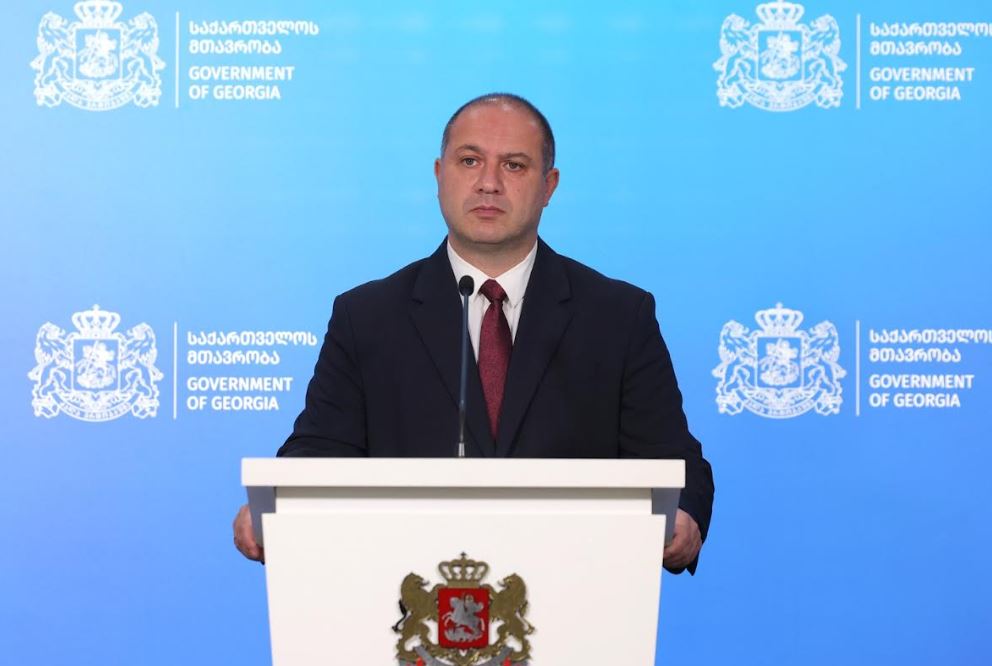
According to Georgia’s Minister of Education, Science and Youth, Givi Mikanadze, the National Concept for the general education system reform was actively discussed with target groups, and there is clear support for implementing this reform.
According to Givi Mikanadze, the concept for the general education system reform addresses all needs and demands.
“The National Concept for the general education system reform was approved by government decree. It was actively discussed with target groups for over a month and a half. In total, with my direct involvement, 13 meetings were held with the school community nationwide, attended by teachers, school administrators, resource centre representatives, and parents. We received unequivocal, unconditional support for implementing this reform, as it addresses all the needs and demands facing the teaching and learning process, as well as the school community as a whole today.
This reform is based on the new National Goals of General Education document, which Parliament approved in June 2024, and through which the teaching and learning process, methodology and all components related to school life are based on instilling what are called national values, traditions, preservation of cultural heritage, patriotism, and direct connection to the homeland and state symbols. These values were, regrettably, entirely removed from the previous document, which was adopted in October 2004.
Accordingly, this underscored that this issue was not a priority for the government of the time. It was precisely based on this document that we decided to implement a fundamental reform, the aim of which is to ensure in-depth knowledge of the fundamental core subjects, such as humanities subjects, Georgian language and literature, Georgian history, geography, as well as to place particular emphasis on subjects such as exact and natural sciences, where there are skills shortages, based on demand from economic projects and the need to train specific professionals,” Givi Mikanadze stated.
Moreover, according to the minister, an 11-year education system will ensure the provision of complete general education for young people, whilst the option of a twelfth year will remain for those who wish.
“It is important that we are moving primarily to an 11-year education system, which fully ensures the provision of complete general education for young people. The eleventh year will be narrowly specialised, which will be fully compatible with the national examinations programme, making it possible for the knowledge acquired at school to be sufficient for a child to overcome the national examinations barrier and secure a deserved place in higher education institutions.
Accordingly, in the eleventh year, we are introducing a programme called the repetitorium, allowing pupils and school leavers to select three or four subjects to study in greater depth throughout the year, with increased hours, in preparation for national examinations. For those who wish, we will also offer the option of a twelfth year. Each March, a registration period will open, allowing all eleventh-year pupils who wish to continue into the twelfth year to register. At the end of March, when the registration results are available, we will assess how many young people have registered and their geographical distribution. Based on this, in schools within the relevant cities or municipalities that have received approval from the ministry for a 12-year educational programme, we will open the appropriate classes.
We will also ensure that in the final year, with an even more comprehensive revision course, their preparation continues, providing them with the opportunity to obtain a 12-year school certificate upon completion of their studies,” noted Givi Mikanadze.
According to the minister, one of the main challenges that the reform aims to address is the issue of textbooks.
“Today, each subject at the same level has multiple textbooks, which is inefficient from a quality perspective, causes significant issues with pupil mobility, and is generally ineffective in terms of measurability. Furthermore, the material in these textbooks is not always comprehensive; it is often fragmentary and, particularly in graduating classes, does not align with the content required for the national examinations programme.
This is precisely why, with this concept, we are committed to ensuring that by September 15, 2028, new textbooks in all core subjects will be developed by expert groups and piloted gradually in general education schools. It is important that all schools, including private ones, use the same standardised textbook for each subject at a given level. This will allow us to teach a specific subject consistently across classes, ensuring quality, measurability, and compatibility with the national examinations programme.
This is precisely why, with this concept, we are taking responsibility for ensuring that by 15 September 2028, new textbooks will be developed in all fundamental subjects by expert groups, which will be piloted in stages in general education schools. It is important that all schools, including private ones, use the same standardised textbook for each subject at a given level, allowing us to teach a specific subject with a single textbook across the same classes. This will ensure quality and, of course, ensure the measurability of this quality and its compatibility with the national examinations programme.
It is also important to emphasise non-formal education components, which means greater integration of the pupil into school life and ensuring additional, sectional activities at schools. This will enable pupils to participate in various activities outside the classroom, while still remaining within the school environment.
Here, it is important to strengthen parental involvement in school life. As part of this reform, we have already started holding meetings with parents to discuss the significance of the reform and, more broadly, the importance of their involvement in school activities. There is full support, rooted in the fact that we are talking about the most precious people, our children, the future generation of this country,” stated Givi Mikanadze.
According to Mikanadze, an essential part of the reform is the introduction of school uniforms at the primary level, from first to sixth grade. Givi Mikanadze says it is also important to develop special regulations regarding the use of communication devices, and this process has already begun.
“This is important both aesthetically and in teaching children from a young age about certain rules and standards of lawful conduct. It is especially significant in terms of the principles of unity and equality. Numerous studies conducted both in Georgia and abroad indicate that a key factor in school bullying is the absence of a school uniform and the freedom of dress. From the perspective of equality, this can provide grounds for bullying.
In response to these challenges, it is important for us that the issue of uniformity remains a priority. Therefore, we are introducing a uniform component, and it is also crucial to develop specific regulations regarding the use of communication devices to ensure full concentration and engagement in the educational process. This process has already commenced within the ministry.
The discussion mainly centres on mobile devices, specifically, that pupils should not have access to mobile phones during lessons, which hinders their full integration into these activities. There will be certain exceptions, such as for communication with family or for health reasons. Naturally, all of this will be properly documented.
As soon as the regulation is developed, we will discuss it with relevant groups and present the final document to the public, which will be approved by ministerial order and will become mandatory from the 2026-2027 academic year,” Givi Mikanadze stated.