


Economy Minister: Georgia and Uzbekistan pledge deeper ties
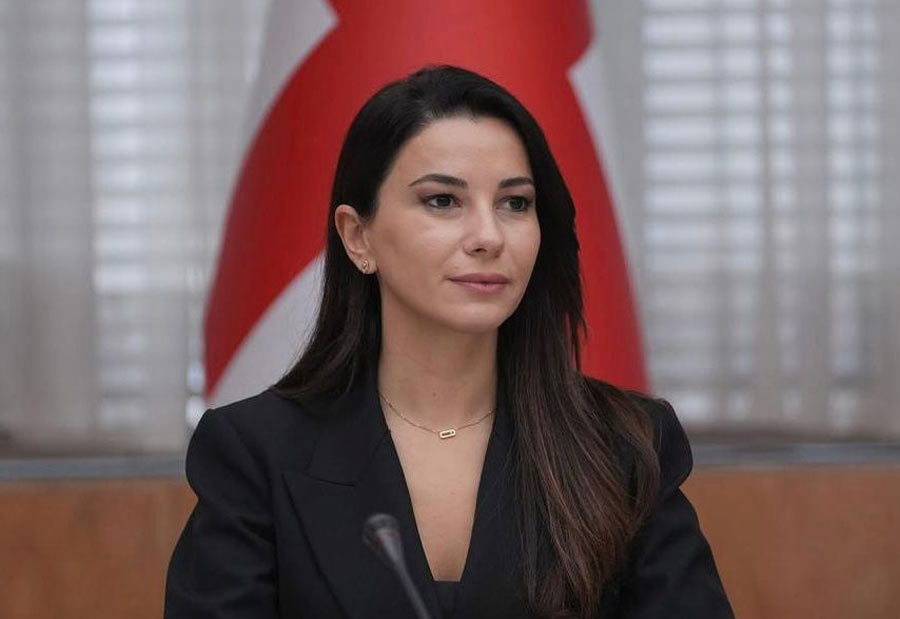
Bilateral relations between Georgia and Uzbekistan have experienced rapid expansion over recent years. This momentum is deeply valued by both nations, which have committed politically to strengthening these ties even further. This was the central theme of an address by Mariam Kvrivishvili, Georgia’s Minister of Economy and Sustainable Development, at the ongoing Georgia-Uzbekistan Business Forum in Tbilisi.
The Minister emphasised that the timing of the forum is particularly momentous, as Georgia prepares to welcome the President of Uzbekistan for an official state visit tomorrow, July 2.
“I am delighted to welcome my close friend and esteemed colleague, Minister Kudratov, who is visiting Georgia for the very first time. I sincerely hope our country leaves a lasting impression on you and that we shall welcome you back many times in the future. I also extend my warmest greetings to all our distinguished guests: the Deputy Minister of Economy, the Foreign Minister, our respected Ambassadors, and the heads of the Chambers of Commerce. I am immensely grateful to the Chamber of Commerce team for organising such an important event.
Our bilateral relations with Uzbekistan have flourished for years. We hold this partnership in high regard, and both sides have made a firm political commitment to solidifying these bonds. It is, of course, a momentous occasion for our country to host His Excellency, the President of Uzbekistan, on an official visit tomorrow. Initiatives of this nature, which seamlessly bridge G2G and B2B relations to help our private sectors forge tighter links, are absolutely vital to ensuring that we deliver increasingly tangible economic growth quarter upon quarter,” the Minister of Economy has stated.
Mariam Kvrivishvili underlined that a core priority for the Georgian government is ensuring that national economic growth is not only sustainable but deeply diversified.
“When we discuss diversification, we always look to our premier strategic partners. In Central Asia, Uzbekistan is invariably at the forefront of our minds as a priority partner. Happily, our trade, economic ties, transport, and tourism links are expanding almost month by month. Following several previous meetings, it is a privilege to co-sign a one-year development roadmap during this visit, setting a clear framework for our future connectivity.
A substantial component of this plan is aimed at driving trade, reinforcing transport and logistics, expanding hospitality and attracting targeted investment across these sectors. I am confident that the discussions taking place today and tomorrow will lay the groundwork for invaluable new business connections,” the Economy Minister added.
Mariam Kvrivishvili noted that a thriving economy depends fundamentally on a robust private sector, meaning the state’s most critical role is to support business-to-business relations.
“Before diving into our current momentum, allow me to outline how the Georgian economy has been expanding. We take immense pride in the fact that Georgia maintained an exceptional average economic growth rate of 9.3 per cent between 2021 and 2025. This success is built squarely upon good governance and transparency. Predictability and a sound investment climate are precisely what drove that 9.3 per cent average.
Frankly, 2026 is turning out to be remarkably successful as well. We opened the year with a growth rate of 7.8 per cent, heavily propelled by the transport, logistics, and IT sectors, education, hospitality, and robust Foreign Direct Investment (FDI). We are equally proud that international expectations for Georgia continue to rise. According to short- and medium-term forecasts from the IMF, Georgia will be one of the fastest-growing economies across the region and Europe between 2026 and 2030, averaging 5.4 per cent growth.
Furthermore, thanks to the business environment we have cultivated, FDI is rising sharply. I must highlight last year’s phenomenal achievement, where we attracted USD 8.7 billion in FDI. Notably, Georgia’s FDI-to-GDP ratio remains among the highest globally, averaging well over 6 per cent between 2021 and 2025.
As a nation, we remain fiercely committed to the evolution of our key strategic sectors. We have had extensive discussions today, particularly regarding transport and logistics. To put it briefly: between now and 2032, the Georgian government will invest approximately USD 7 billion into our transport and logistics infrastructure. This includes the modernisation and construction of major motorways, the delivery of our most strategic infrastructure asset, the Anaklia Deep Sea Port, and the comprehensive overhaul of Georgian Railway, which includes adding 45 new locomotives and nearly 1,500 carriages. Finally, we are building a brand-new international airport in the capital with a capacity to serve 20 million passengers.
This means we are not just preparing for increased cargo volumes, particularly within the context of the Middle Corridor, but we are investing heavily to transform our regional positioning entirely. We do not want to be a mere transit corridor; we intend to be a dynamic hub capable of accumulating cargo, manufacturing goods, and remaining an unshakeably reliable ally for our partners in connecting East and West. The current dynamics in our transport and logistics sectors are incredibly promising,” Kvrivishvili has said.
The Minister concluded by noting that partnerships with Central Asian nations are currently yielding some of the fastest-growing cargo volume statistics for the country.
“We must highlight the growth in both container and bulk cargo, and we must be fully prepared for it. We must prepare for the fact that Uzbekistan, Kazakhstan and Azerbaijan are growing, and we are growing right alongside our partners. That is why we must invest heavily in our core infrastructure today. This will allow you, the business community, to move more freight, build better logistical networks, and command greater capacity within both current operations and future infrastructure. This collective effort ensures that our region and the Middle Corridor become not just highly competitive, but the premier, most reliable trade route on the map,” Mariam Kvrivishvili concluded.