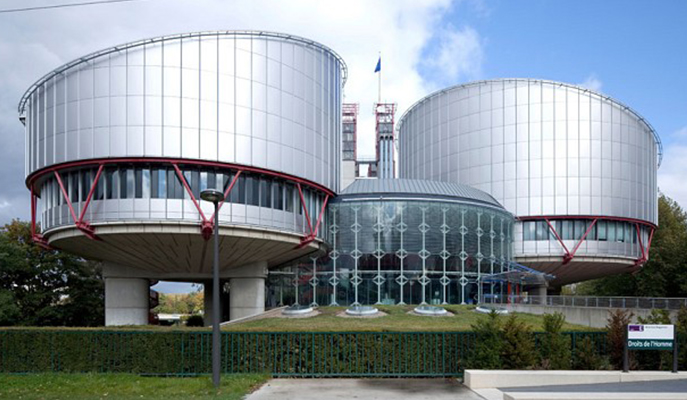
In today’s Chamber judgment in the case of Georgia v. Russia (IV) (application no. 39611/18) the Strasbourg-based European Court of Human Rights ruled on the question of just satisfaction (Article 41).
The Court decided that Russia must pay Georgia over 253 million euros for breaches of human rights caused by hardening of boundary lines after 2008 conflict.
The case concerned the human-rights toll caused by the hardening of boundary lines after the 2008 conflict between the two States. In particular the armed conflict had led to a process, which had started in 2009 and was known as “borderisation”, blocking people from crossing the administrative boundary lines freely between Georgian-controlled territory and the Russian-backed breakaway Georgian regions of Abkhazia and South Ossetia.
In its judgment of 9 April 2024 the Court found that there had been a pattern or system of violations of the European Convention on Human Rights by Russia: including excessive use of force; ill-treatment; unlawful detention; unlawful restrictions on day-to-day movement across the administrative boundary line and on access to homes, land and families; and, denial of the right to education in Georgian.
In today’s judgment the Court, unanimously, awarded in total 253,018,000 euros (EUR) in respect of non-pecuniary damage suffered by more than 29,000 victims of that pattern or system of violations, for which Russia had been found responsible in the 2024 judgment. The Court left it to the Georgian Government to set up an effective mechanism to distribute the sums awarded to the individual victims, within 18 months of payment by the Russian Government.
The Court noted that the Committee of Ministers continued to supervise enforcement of the Court’s judgments against Russia, which was still bound under Article 46 (binding force and implementation) to implement judgments against it concerning facts which had occurred before 16 September 2022, the date on which it had ceased to be signatory.