


CoE’s CPT publishes its post-visit report on Georgia
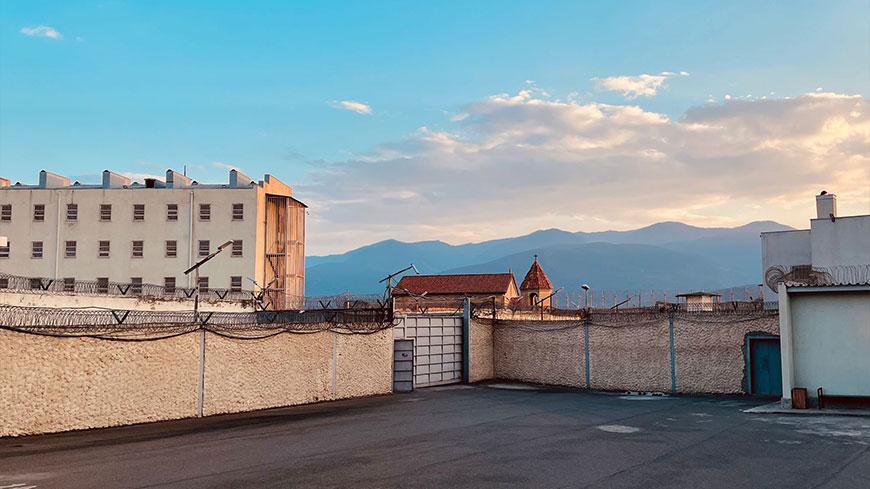
On February 18, 2026, the European Committee for the Prevention of Torture and Inhuman or Degrading Treatment or Punishment (CPT) published a report on its periodic visit to Georgia, conducted from 18 to 29 November 2024 and from 21 to 22 January 2025, along with the response of the Georgian authorities.
According to the report published on the Council of Europe’s (CoE) website, during its visit, the CPT assessed the treatment and safeguards afforded to persons in police custody, including those recently detained in connection with the public demonstrations which had been ongoing in Tbilisi since 29 November 2024. The delegation also examined the conditions in several prison establishments and three psychiatric hospitals, focusing on treatment, living conditions, and the legal safeguards for involuntary hospitalisation.
“Up to 28 November 2024, the overwhelming majority of interviewed detained persons who were or had recently been in police custody stated that the police had treated them correctly. By contrast, the CPT was inundated with allegations of ill-treatment when it interviewed numerous persons detained in connection with the demonstrations in Tbilisi on 29 November 2024. Most of the persons interviewed bore visible injuries, some of them severe and having required urgent medical attention. They described what appeared to be a clear pattern of police behaviour during the demonstration: masked and hooded, unidentifiable police officers reportedly made arrests in groups, punching and kicking detained persons indiscriminately all over their bodies, threatening them. Further, the beatings were allegedly carried out repeatedly, by several officers at a time, including whilst the persons had their hands cuffed behind their backs. In nearly all cases, the violence stopped once persons were handed over to non-masked police officers.
The CPT reiterates its long-standing recommendation that steps be taken by the Georgian authorities to ensure that, when apprehending persons, the police use only the force that is absolutely necessary and proportionate. There can never be any justification for any form of violence in respect of persons who have been brought under the control of police officers. The Committee emphasised the urgent need for training in crowd control techniques, and for all masked law enforcement personnel deployed at demonstrations to display visible identification,” reads the report.
The CPT report notes that the recent abolition of the Special Investigation Service (SIS) and the transfer of its functions to the Prosecutor’s Office are cause for concern.
“The establishment of an independent mechanism to investigate allegations of ill-treatment by law enforcement officials has been a long-standing recommendation by the Committee. Abolishing an independent investigation body, rather than strengthening it, appears to be a move in precisely the opposite direction,” the report says.
As for prisons, the Committee remarked that the prison system was not generally overcrowded, though localised overcrowding persisted. The report urges the Georgian authorities to ensure that all prisons remain within set capacities, based on a standard of 4 m2 of living space per prisoner in multi-occupancy cells.
“No progress had been made toward closing semi-open prisons (so-called “zonas”), which continued to suffer from chronic problems such as overcrowding, absence of a proper prisoner allocation policy, inter-prisoner violence, influence of the informal prisoner hierarchy, insufficient activities, and very low staffing. The CPT stressed replacing these establishments with smaller, modular prisons focused on rehabilitation and individualised activities, and with more staff,” the report reads.
The Committee stresses that “absence of any real progress in the development of prison regimes in Georgia represents a real failure of the authorities.” Based on the report, prisoners typically lacked organised out-of-cell activities, with many locked in their cells up to 23 hours daily, with very limited human contact, and often under permanent CCTV surveillance.
“This is not acceptable. The Georgian authorities must develop and introduce purposeful activity programmes for all prisoners, and ensure the full implementation of the risk assessment and individual sentence planning measures as provided by the Penitentiary Code.
Prison healthcare services were generally good, with thorough entry medical screenings and appropriate recording of injuries. However, the provision of mental healthcare remained inadequate, and the approach to prisoners with addiction was limited mainly to detoxification, with insufficient access to maintenance therapy such as MOUD (medication for opioid use disorder),” it said.
The Committee added that in their response, the Georgian authorities provided information and outlined measures taken in response to the recommendations made by the CPT.