


Arrest of Gia Baramidze is political revenge based on twisted interpretations, claims UNM’s Pavlenishvili
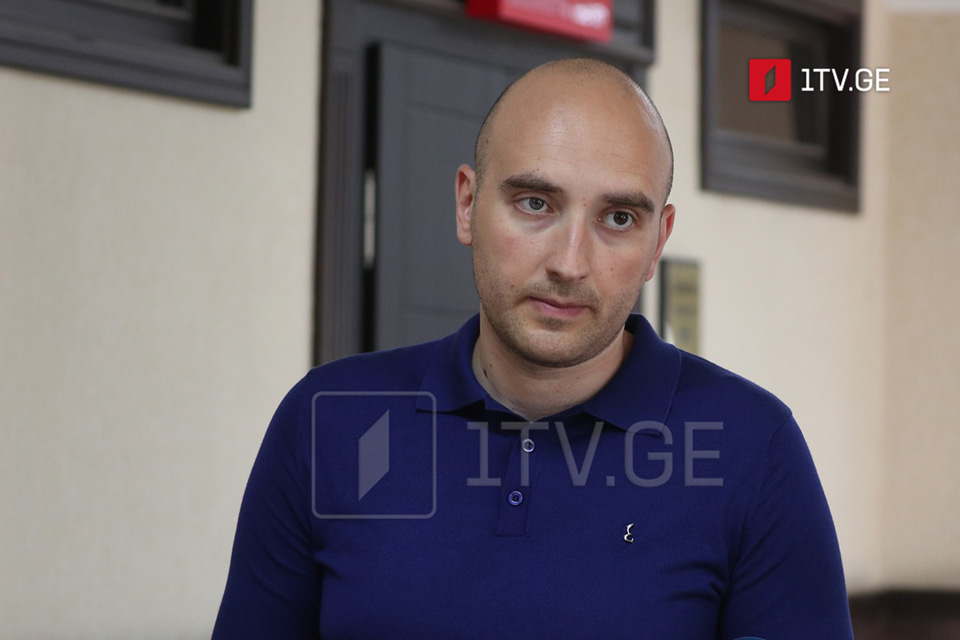
“The pretext for Gia Baramidze’s arrest is not his political statement, but rather the deliberate interpretation placed upon it,” declared Irakli Pavlenishvili, a member of the United National Movement (UNM), speaking outside the Prosecutor’s Office where opposition leaders had gathered.
Pavlenishvili framed the detention as a raw political vengeance targeted directly at the party and one of its principal figures.
“We have witnessed yet another act of political retribution against the United National Movement and one of its leaders, Gia Baramidze. Throughout his entire adult life, Gia Baramidze has fought for a free, strong Georgia. He fought with a weapon in hand in Abkhazia for our territorial integrity, and ever since, he has campaigned relentlessly in politics, implementing structural reforms that established strong Georgian state institutions. His goal was always to serve the nation.
His political statement is not the true pretext for his arrest; the pretext is the spin engineered around it. He clarified that he did not intend the meaning inferred by certain sections of the public.
He was arrested regardless, and why? Because the order to arrest Baramidze was issued by the Russian Empire a year ago, when he was effectively sentenced to imprisonment by Russia. Just as they copy everything else, they have faithfully executed the instructions of Putin’s regime, mirroring Russia by placing Gia Baramidze under arrest here on Georgian soil,” Pavlenishvili stated.
The Prosecutor’s Office of Georgia arrested former Minister of Internal Affairs and Defence (2003–2004) Gia Baramidze pursuant to a court warrant on charges of state treason, specifically manifested through sabotage, which carries a sentence of up to four years’ imprisonment.
According to the official statement from prosecutors, during a July broadcast of Iago Khvichia’s program ‘The Birth of Georgia’, Baramidze alleged that during the initial phase of the 1992–1993 War in Abkhazia, Georgian forces did not take prisoners and executed them on the spot, thereby accusing the national armed forces of violating international humanitarian law and committing grave war crimes.