


Anatomy of weaponised sanctions
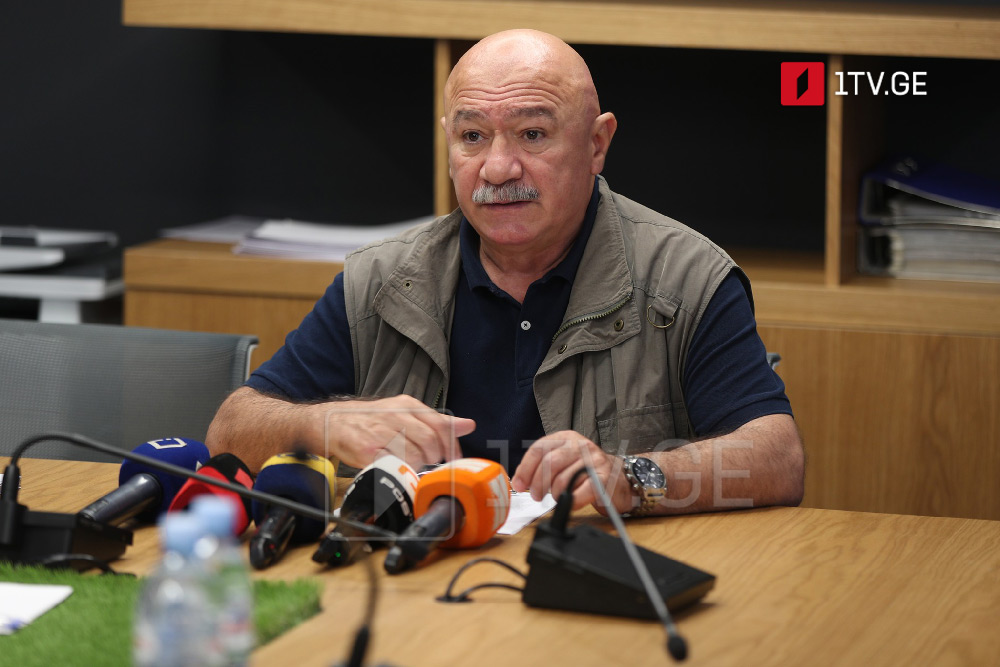
The Chairman of the Board of Trustees of the Georgian Public Broadcaster (GPB), Vasil Maghlaperidze, held a press conference today regarding two Members of the European Parliament (MEPs) who have proposed to impose sanctions on the heads of GPB’s First Channel.
Specifically, we are referring to MEPs Mariusz Kamiński and Małgorzata Gosiewska.
According to Maghlaperidze, the calls to place the Georgian Public Broadcaster’s leadership on a sanctions list are being made by MEPs who have themselves been implicated and suspected of various criminal offences in their own countries.
Maghlaperidze presented specific information regarding the MEPs Mariusz Kamiński and Małgorzata Gosiewska, clarifying that the said information is based on rulings by Polish courts, findings of Polish investigative bodies, and reports circulated in the Polish media.
Several days ago, the European Parliament’s Foreign Affairs Committee adopted a report on Georgia, submitted by MEP Rasa Juknevičienė, which, amongst other matters, calls for sanctions to be imposed on Imedi, Rustavi 2, and PosTV.
Furthermore, MEPs Mariusz Kamiński and Małgorzata Gosiewska registered an amendment to the aforementioned document, demanding that the top figures of the Georgian Public Broadcaster also be added to the list of those to be sanctioned.
This development was, predictably, welcomed with delight by the political activists operating within Georgia, who assured the public that any accusation levelled by MEPs ought to be received with reverence, and that their every directive must be carried out without question.
However, before we pour ashes upon our heads, let us examine who Mariusz Kamiński and Małgorzata Gosiewska actually are, and what reputation they enjoy in their own homeland, the very individuals who have seen fit to pass stern judgement upon us in the name of Europe.
The information presented is based on rulings by Polish courts, findings of Polish investigative bodies, and reports circulated in the Polish media, and is freely obtainable to any member of the public.
Mariusz Kamiński
A member of the Polish Sejm across several parliamentary terms. Head of Poland’s Central Anti-Corruption Bureau (CBA) from 2006 to 2009, Minister-Coordinator of Special Services from 2015 to 2023, and Minister of Internal Affairs and Administration from 2019 to 2023. Currently a Member of the European Parliament.
In Poland, his name is associated with several scandalous cases, and criminal proceedings are currently underway against him.
On April 1, 2025, at the request of Poland’s Prosecutor General, the European Parliament stripped Mariusz Kamiński of his parliamentary immunity. The case relates to the so-called land plots affairs.
On April 27, 2026, European Parliament President Roberta Metsola announced that the Polish Prosecutor General was seeking the withdrawal of Kamiński’s immunity in connection with a second case, too. The prosecution alleges that, in his capacity as head of the Anti-Corruption Bureau, he had exceeded his authority in actions taken against former President Kwaśniewski.
Drawing on the Polish media, we present several of these cases below.
The Land Plots Affair (Afera gruntowa)
In 2007, Poland was governed by the party Law and Justice (PiS) in coalition with Self-Defence [Polish: Samoobrona Rzeczpospolitej Polskie], whose leader, Andrzej Lepper, served as Deputy Prime Minister and Minister of Agriculture. Due to mounting tensions within the coalition, the Law and Justice’s leadership resolved to weaken and remove Lepper’s influence.
At the time, Mariusz Kamiński was one of the leading figures of Law and Justice and, simultaneously, head of the Anti-Corruption Bureau (CBA). It was he who devised a covert operation to establish that Lepper was accepting bribes in exchange for reclassifying agricultural land – a land upon which luxury villas were subsequently to be built. CBA agents found two individuals and handed them three million złoty for their supposed role as intermediaries; however, Lepper himself refused to meet with these individuals and accepted no money. The operation collapsed.
The prosecution examined the CBA’s conduct in relation to Lepper, and the court concluded that Kamiński and his deputies had acted unlawfully, establishing that:
- The CBA had itself fabricated a crime where no prior signs of corruption had existed.
- The CBA had unlawfully forged municipal documents and seals to create the illusion that a land reclassification process had already been initiated.
- Agents had employed surveillance and operational methods without proper judicial authorisation.
Despite the operation’s failure, Kamiński’s agency presented Lepper not as a suspect, but as a criminal already exposed. In the public eye, an accusation frequently carries the same weight as a verdict, particularly when the head of a special service makes it. As a consequence, Lepper’s career was destroyed, and in 2011, he took his own life.
In 2015, the District Court for Warsaw-Centre found Mariusz Kamiński guilty in connection with the Land Plots Affair on charges of abuse of authority, entrapment, and the politically motivated selection of his target, sentencing him to three years’ imprisonment and a ten-year ban from holding public office.
Kamiński appealed against the verdict; however, before the appellate court had concluded its review of the case, the newly elected President Andrzej Duda granted him a pardon.
The majority of Polish legal experts argued that the President had no right to issue a pardon before the sentence had become final and binding.
After years of legal dispute, the Polish Supreme Court ruled in June 2023 that the 2015 pardon had been unlawful and that Mariusz Kamiński’s case must be reheard.
The Warsaw Court of Appeal upheld the original verdict and definitively found Mariusz Kamiński guilty. The judge stated that Kamiński’s special operation had not served to combat crime but, on the contrary, had been designed with the commission of a crime in mind.
Mariusz Kamiński was sentenced to two years’ imprisonment and a five-year ban from holding public office. It was based on this verdict that his mandate as a deputy in the Polish Sejm was revoked.
On January 9, 2024, Mariusz Kamiński and his former deputy, Wąsik, who had been convicted in the same case, went to the presidential palace to shelter with their fellow party member, in an attempt to evade arrest.
Police apprehended them on the premises of the presidential palace and transferred them to prison.
Kamiński declared a hunger strike whilst in custody. Several days later, the court ruled that he was to be force-fed. Because his health was deteriorating, the President pardoned him a second time.
Mariusz Kamiński escaped prison, but was unable to reclaim his seat in the Polish Sejm. He nevertheless stood for election to the European Parliament and currently sits as an MEP.
The Pegasus Programme – “A Story of Great Evil”
Yet another high-profile and scandalous affair is linked to Mariusz Kamiński. In 2017, whilst Kamiński was serving as Minister-Coordinator of Special Services, the Polish authorities acquired the Pegasus spyware from Israel, paying 25 million złoty from the Justice Fund and a further 8.4 million złoty from the Anti-Corruption Bureau’s own account. The purchase was subsequently declared unlawful by both the Senate’s parliamentary commission and the Supreme Audit Office, because funds from the Justice Fund were to be spent solely on the needs of crime victims.
The parliamentary investigative commission and the Polish Prosecutor General established that:
Between 2017 and 2022, surveillance via Pegasus was carried out against at least 578 individuals. The investigation confirmed that the system was used not only to combat terrorism and organised crime, but for political purposes as well. Opposition politicians, independent prosecutors, and journalists were among the victims, whose personal data was subsequently weaponised against them for propagandistic ends. The commission stressed that surveillance on this scale had called into question the fairness of the 2019 parliamentary elections, as access to the phone of the opposition campaign manager had afforded the ruling party an inequitable advantage.
One such case: Krzysztof Brejza, the head of the opposition’s electoral campaign, had his mobile phone hacked via the Pegasus system, with his correspondence, photographs, and whatever else was deemed useful, stolen. These messages were then doctored, and the material was supplied to the Polish public broadcaster.
“They downloaded ten years’ worth of data from my life, 80,000 messages from my phone. They examined my entire life in minute detail. They found nothing, and so they were compelled to resort to fabrication. This is a story of great evil,” said Krzysztof Brejza.
The Polish public broadcaster was charged with broadcasting and repeatedly airing on its channels, TVP Info and TVP 1, what was described as “falsified content from Krzysztof Brejza’s private correspondence.” Statements were attributed to the politician that were not in fact his own, having been written by the senders of those messages. The material presented by the public broadcaster created the impression that Brejza had been “engaged in unlawful activity.”
Krzysztof Brejza won his court case, and the Polish public broadcaster was ordered to pay 200,000 złoty in his favour. The court’s ruling stated: “The defendant must also acknowledge that the published materials were ‘false, falsified and distorted,’ as a result of which Telewizja Polska ‘violated Krzysztof Brejza’s personal rights, including his dignity, the right to privacy, and the confidentiality of his correspondence.'”
The investigation into the Pegasus scandal is ongoing, and the MEP Mariusz Kamiński is considered the principal person responsible in this affair, which makes it all the more remarkable that this same individual today presents himself as the driving force behind an initiative to impose sanctions on Georgian media. Several individuals have been recently arrested in connection with the Pegasus case, whilst the former Prosecutor General has, for the time being, managed to extricate himself by fleeing to the United States.
Other Cases
Mariusz Kamiński and other senior officials faced legal proceedings over many years on charges of abuse of authority. Witnesses testified that Poland’s Minister of Internal Affairs and Administration, Mariusz Kamiński, and his deputy, Maciej Wąsik, had given instructions for classified materials to be handed over to journalists sympathetic to Law and Justice (PiS), to be used in discrediting political opponents.
Mariusz Kamiński is a central figure in one of the most scandalous episodes in modern Polish politics. Beata Sawicka, who in 2007 was a member of the opposition Civic Platform party, became the target of a special operation run by the Anti-Corruption Bureau under Kamiński’s direction. The presiding judge stated that the methods employed by the special services were unlawful and degrading to human dignity. This case laid the groundwork for the legal proceedings against Mariusz Kamiński.
On charges of abuse of authority, Kamiński’s name is also associated with unlawful special operations targeting the well-known television presenter Weronika Marczuk and former Polish President Kwaśniewski.
The Polish media also reports rather unbecoming conduct by the MEP in question while under the influence of alcohol, though, it must be said, this merely adds little to an already sufficiently damning picture.
Małgorzata Gosiewska
A member of Law and Justice, the same party as the now well-acquainted Mariusz Kamiński, she served as a member of the Polish Sejm and its Deputy Speaker from 2019 to 2023, before being elected to the European Parliament in 2024. She makes no secret of it; she states openly that she aims to have as many Georgian citizens as possible placed under sanctions.
At a plenary session of the European Parliament in November 2024, she declared: “I call upon you, Commissioner, to place Georgia’s current government in complete isolation through the freezing of European assistance, the introduction of a visa regime, and the creation of an international cordon sanitaire around representatives of the regime.”
Gosiewska was actively involved in the campaign in support of Mikheil Saakashvili and demanded that he be transferred to Poland for medical treatment. From early 2023, she repeatedly asserted that Saakashvili’s health had reached a critical threshold, declaring her wish to have the former president transferred to a Polish hospital.
In July 2023, a group of European doctors visited Saakashvili in custody. During this visit, Polish medical personnel covertly collected biological samples from him in breach of protocol. It subsequently emerged that Artur Zaczyński, Deputy Medical Director of the Central Clinical Hospital of the Polish Ministry of Internal Affairs and Administration, had attempted to remove samples of Saakashvili’s hair and nail clippings from Ward 501, concealed in a sock.
Artur Zaczyński admitted to stealing the biological material, yet faced no professional consequences for doing so. As already noted, Zaczyński was an employee of the Ministry of Internal Affairs, and his minister was none other than Mariusz Kamiński, the very individual charged with human rights violations in Poland, who now sits as an MEP and, together with Gosiewska, is calling for the broadening of sanctions against Georgia.
Małgorzata Gosiewska, so solicitous of Georgia’s well-being, faces difficulties with investigative authorities in her own country, just as her fellow party member Mariusz Kamiński does.
In early 2026, Poland’s National Revenue Administration (KAS) concluded a large-scale audit which uncovered irregularities exceeding 100 billion złoty across various state institutions. Among the cases identified is that of Małgorzata Gosiewska, Sejm deputy, former Deputy Marshal of the Sejm, and current MEP, which is being treated in Poland not as an isolated incident, but as a textbook example of “the misappropriation of parliamentary resources.”
The parliament reimbursed Gosiewska one hundred thousand złoty in fuel costs for the use of her personal vehicle. According to the deputy, over approximately three years and nine months between 2011 and 2015, she covered 240,000 kilometres by her own car in the course of her parliamentary duties, which would mean she had circumnavigated the globe six times over.
She will also need to explain how, if she were genuinely travelling such distances by car, she ever found time to attend sessions and carry out her parliamentary work at all. She is further accused of renting vehicles in various cities at parliament’s expense for her family’s personal use, and of having her son’s telephone bills paid from parliamentary funds.
Małgorzata Gosiewska also holds something of a record for air travel. In 2023, she visited eleven countries in the space of ten months, with the cost of flights alone amounting to 106,000 złoty.
The current Justice Minister, Adam Bodnar, describes all of this as part of “restoring the rule of law.” Gosiewska’s activism in the European Parliament, particularly on matters concerning Ukraine and human rights, is widely perceived in Poland as an attempt to bolster her international standing to offset and obscure the mounting legal difficulties she faces at home.
As of May 2026, the Polish prosecution service continues to gather materials, and it cannot be ruled out that in the coming months the European Parliament will be asked to lift Gosiewska’s parliamentary immunity.
The charges against her rest principally on Article 231 of the Polish Penal Code (abuse of authority) and Article 286 (fraud for the purpose of obtaining material gain).
Gosiewska is also linked to a scandal in Ukraine. At seven o’clock in the morning on December 26, 2014, she arrived late for check-in at Kharkiv Airport. According to eyewitnesses, she was intoxicated at the time and was insisting loudly that she be allowed to board the aircraft. According to the Polish media, the incident was subsequently confirmed by the Ministry of Foreign Affairs.
Vasil Maghlaperidze states that the talk of sanctioning the Georgian Public Broadcaster’s leadership is no accident; it amounts to a certain indirect signal that if the top figures hand over the television station, then all will be well; if not, there is the example of three television channels to consider.
“I say this not because anyone is afraid of sanctions, they are not, but simply because I wanted the public to be aware of this. What is happening these days is a single scheme, in which they are advancing step by step in this direction. Let us ask ourselves a rhetorical, yet deeply principled question: what kind of society and country do we wish to live in?! One where people of this sort issue us commands as though we were second-rate human beings, and we stand to attention because we have been told to do so, or one where we remain an independent society,” declared Vasil Maghlaperidze.
He further stated that the facts surrounding the sanctions demand to be examined within a broader common context.
“We are monitoring this process closely. There are people in Georgia who learn of impending sanctions not through any prophetic gift of their own, but because, as a rule, they are told in advance. Nobody tells them about the grand scheme. Note that the mention of specific leading figures is no coincidence. Sanctioning the Public Broadcaster is a heavy step, even for them. I am convinced that when Kamiński was calling for sanctions, he probably knew where Georgia is on a map, and nothing more. He was told, and he did it. I heard, before these two MEPs were ever mentioned, words to the effect of: ‘if you don’t do as you’re told, sanctions are coming your way.’ We, too, have our contacts, our friends, our channels of communication, and so forth. All of this is in the open. We shall see in the days ahead,” declared Vasil Maghlaperidze.
He added that it is a matter deserving separate investigation as to what has prompted MEPs, individuals implicated and suspected of various criminal offences in their own countries, to take such a keen interest in Georgia.
“A question also arises concerning representatives of European structures in Georgia: how far is it consistent with European values when MEPs of questionable repute, acting in Europe’s name, attempt to intimidate the media and bring it under their own control through the threat of sanctions,” observed Vasil Maghlaperidze.