


UNM’s Bezhashvili: Anti-Corruption Bureau abolition to increase ambiguity in fight against corruption
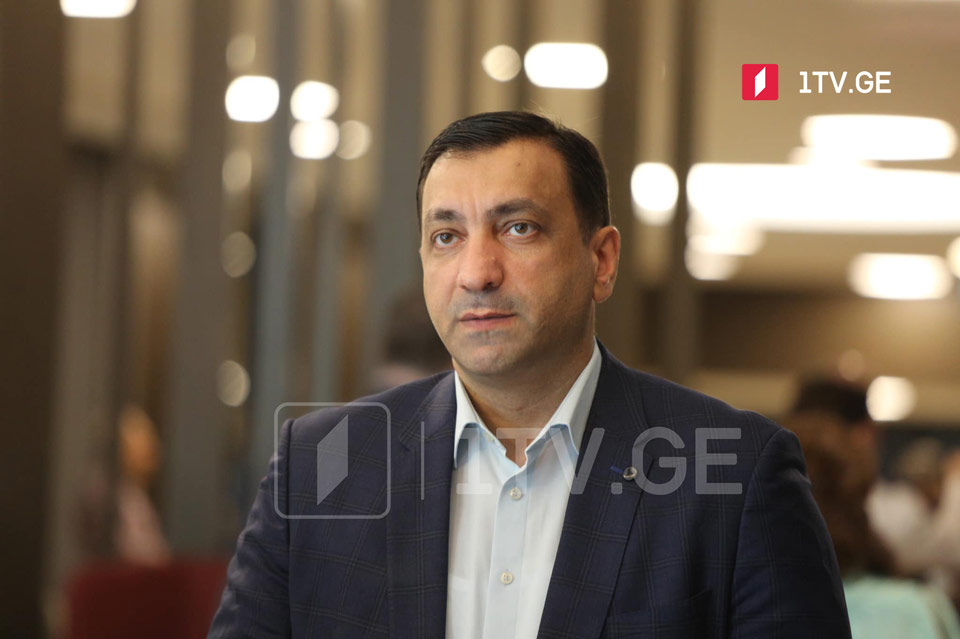
Levan Bezhashvili, a member of the United National Movement, asserts that for the Georgian Dream, any institution, even those formally tasked with combating corruption, is deemed unacceptable.
He emphasises that this decision once again underscores the fact that corruption remains the foundation of the Georgian Dream’s reliance.
Commenting on the Georgian Dream’s plan to abolish the Anti-Corruption Bureau from March 2, 2026, with its functions to be fully transferred to the State Audit Office (SAO), Bezhashvili said:
“Razhden Kuprashvili was considered a figure aligned with Garibashvili [former PM]. As a result, the Georgian Dream has decided to settle the ongoing power struggle between clans through legislation and to abolish this service. Moreover, this decision is unjustified, given that the functions of the Audit Office are constitutionally distinct, and international standards dictate that the Anti-Corruption Bureau should operate as an independent body with investigative and judicial authority. In short, this is not about corruption or implementing reforms in that field; rather, it’s about creating even greater ambiguity in the country’s fight against corruption.”
Additionally, Bezhashvili responded to the decision to abolish the administrative-territorial administration established within the former South Ossetian Autonomous Region:
“‘The Georgian Dream’ only recently discovered the existence of this service after thirteen years. They began assessing its activities on its thirteenth anniversary, despite having made no decisions regarding it during that entire period, regardless of the arguments they present today. This again suggests that the Georgian Dream is pursuing a Russian policy in relation to the separatist regions.
The body was established with the support of the state, involving both Georgian and Ossetian communities in the Tskhinvali region. They participated in elections and enjoyed legitimacy on the international stage, recognised as a negotiating party. The administration had clear goals and functions. Today, those goals and functions are unacceptable to Russia. Consequently, the Georgian Dream, as a continuation of the so-called ‘Russian Dream,’ is now abolishing this administration and pursuing policies aligned with Russian interests in this area,” Bezhashvili concluded.