


Speaker: We filed the party ban lawsuit only once Georgia was strong enough to withstand the pressure
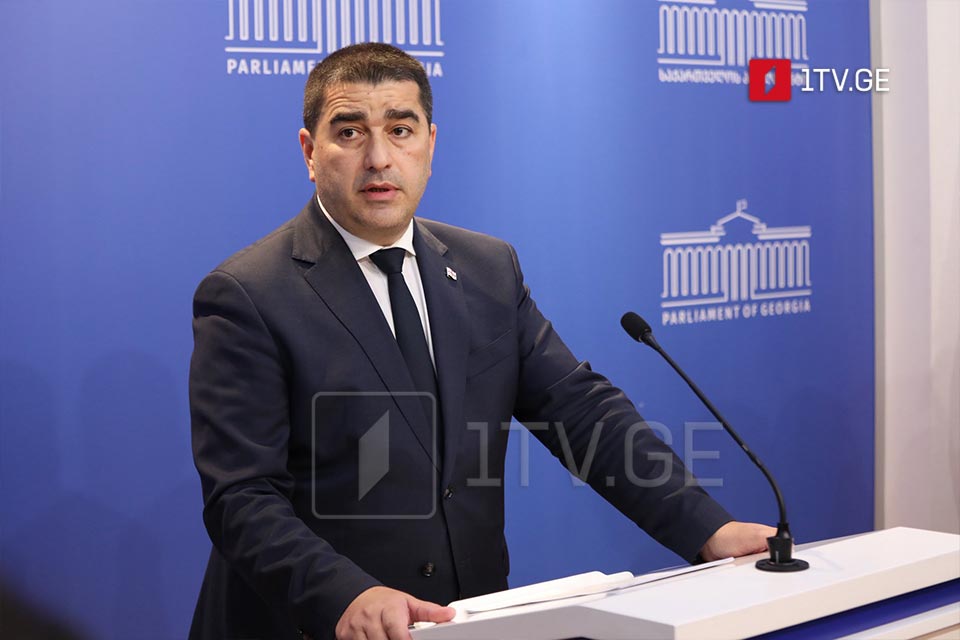
“Georgia, both its people and the government they elected, is now more independent in its decisions than at any time in the past 35 years, and yet we see furious pressure simply because MPs have used their constitutional right to file a lawsuit with the Constitutional Court,” said Shalva Papuashvili, Speaker of the Georgian Parliament.
He said one could only imagine the attacks Georgia would have faced in 2012–2013 had the government brought the same case then.
“At that time, the Georgian government tried to avoid the damage that attacks from abroad could inflict. Foreign actors, the patrons of the collective Nats Movement, had very different tools back then. In effect, they forced so-called cohabitation on Georgia. They taught us this French word and introduced it themselves; to this day we haven’t quite worked out whether to say ‘cobitation’ or ‘cohabitation’. They forced it on the country so that they could keep Mikheil Saakashvili in office to the very end. Imagine what might have happened if the Georgian government had filed a lawsuit over unconstitutionality back then. When the moment was ripe for us to file a lawsuit with the Constitutional Court and withstand the pressure that would follow, as it indeed has, we filed it. Over 14 years, the collective UNM was given countless chances to return to the constitutional fold, and for 14 years it has remained outside the Constitution,” Papuashvili said.
He said the collective National Movement had refused to recognise not only the elections held after 2012, but also the 2012 elections.
“Mikheil Saakashvili had no intention of a peaceful handover. Two senators, Shaheen and Risch, who were his patrons and handlers, pressured him. They went into his office and told him that if he didn’t concede defeat, the people outside would sweep him away. His masters made him accept the election result. They had no intention of accepting it. In 2016, they declared a boycott of the elections and only entered Parliament at the last moment, when they realised the attempt to topple the government would fail. In 2018, they refused to recognise the presidential election and tried to disrupt the inauguration in Telavi. On 20 June 2019, there was the storming of Parliament and an attempt to overthrow the government. The 2021 local elections were subject to a deliberate attempt at disruption, triggered by Saakashvili being smuggled back into the country. In June 2022, they joined forces with NGOs to try to topple the government and form a technical government. In 2023, when Parliament was stormed over the transparency law, they tried to overthrow the government. After the 2024 elections, which they did not recognise, they tried to overthrow the government. On 4 October 2025, they tried to storm the Presidential Palace. Year after year, the collective National Movement did not take a single chance; they remained outside the Constitution. Now the time has come for the Constitutional Court to decide which of the two, Georgian Dream or the collective National Movement, is unconstitutional and illegitimate,” Papuashvili said.