


Speaker condemns double standards: What’s unacceptable in Berlin is acceptable in Tbilisi
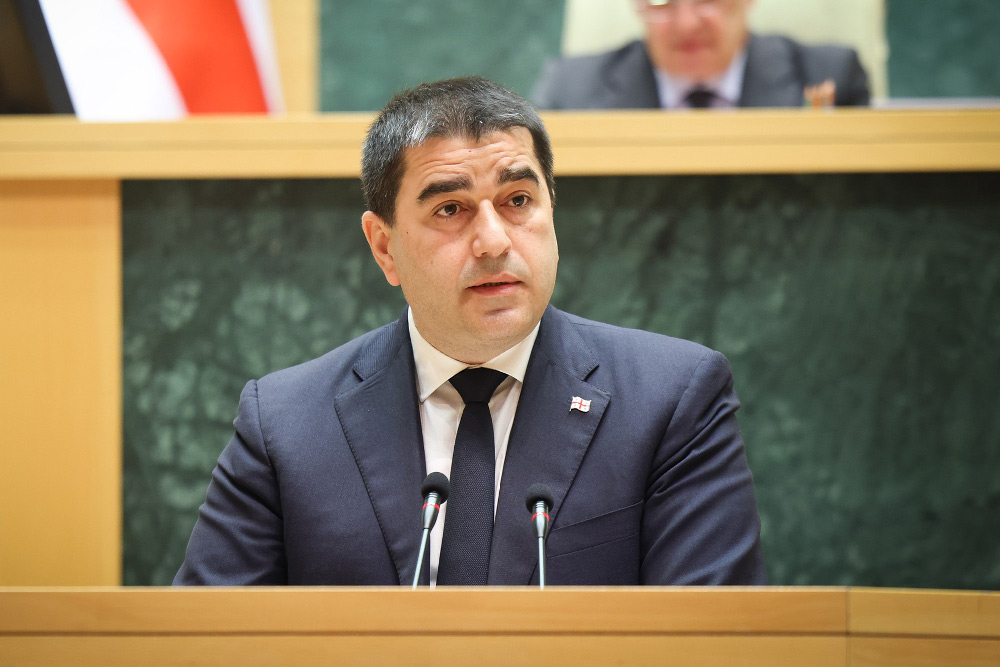
“Some have divided countries into categories – there are ‘A-class’ countries, ‘B,’ ‘C,’ and so forth,” Parliament Speaker Shalva Papuashvili declared, adding, “In some people’s eyes, the world is still divided into categories, and remnants of 20th-century thinking linger in the minds of certain political groups. However, after the adoption of the UN Charter and the European Declaration of Human Rights, such categorizations should be a thing of the past.”
“Some continue to categorize countries—labelling them as ‘A-class,’ ‘B-class,’ ‘C-class,’ and so on. This flawed perspective leads to double standards: what is unacceptable in Berlin becomes permissible in Tbilisi. I even shared a video comparison illustrating this. In Berlin, when someone threw a flare at a building, they were swiftly criminally prosecuted. Meanwhile, in Tbilisi, when explosives were thrown at the Parliament building—an institution with higher security measures—the response was described as a ‘peaceful protest.’ In the minds of some, the world remains divided into these categories, and outdated, 20th-century thinking still lingers among certain political groups. However, after the adoption of the UN Charter and the European Declaration of Human Rights, such categorizations should belong to the past,” Shalva Papuashvili stated.
He also cited a compelling example: when an ambassador defends someone who physically assaulted a police officer, asserting that no persecution should be pursued against them. Meanwhile, in the same context, when another individual verbally offended the ambassador, we are told that criminal prosecution is necessary.
“Embassies and donors here often do not condemn attacks on MPs by those they fund. When it comes to administrative violations, they claim enforcement is excessive. It is outright cynicism that an ambassador travelled to Batumi to defend a person who assaulted a police officer, stating they should not be punished. Yet, when that same ambassador was verbally provoked, he demanded criminal prosecution. This inconsistency exposes the hypocrisy at the heart of this process,” Shalva Papuashvili declared.
According to him, the Georgian state addresses and responds to all issues.
“The Ministry of Internal Affairs questioned that individual within their legal authority. It is cynical and infuriating that they are turning someone who physically assaulted a police officer into a hero. The German ambassador sat in front of a ‘Freedom for Mzia’ poster, effectively glorifying someone who attacked a police officer, while at the same time insisting that anyone who verbally bothered him should face criminal prosecution. Law enforcement agencies are responsible for responses. I want to highlight the political dimension here — how blatant the hypocrisy can be,” Shalva Papuashvili declared.