


Public Defender: 8,200 violations recorded amid increased use of assembly restrictions
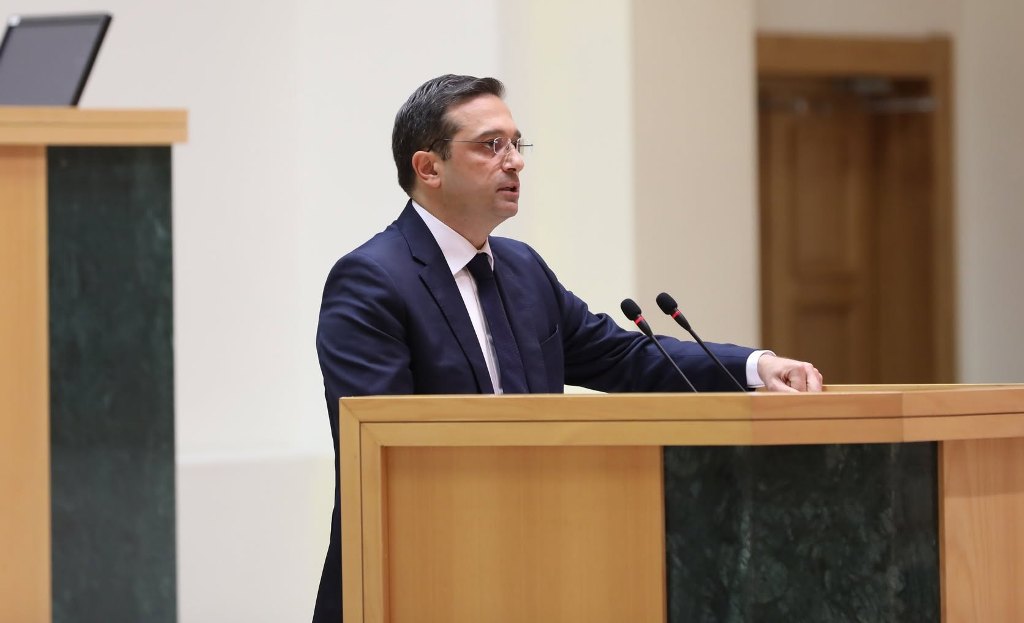
Public Defender Levan Ioseliani, while presenting the 2025 Report on the State of Human Rights and Freedoms, highlighted the tightening of legislation and the introduction of new restrictive regulations in the area of civil and political rights, including additional restrictions on the location and form of public assemblies.
According to the Public Defender’s Office, Ioseliani noted that in 2025 the weakening of legislative guarantees protecting these rights was accompanied by the introduction of disproportionate sanctions for offences related to the exercise of freedom of assembly.
“In this regard, it is particularly alarming that certain peaceful actions by participants in assemblies have become subject to administrative detention without alternative sanctions, while repeated violations may now entail criminal liability.
It is also noteworthy that the obligation to provide prior notification of an assembly has been extended to cases where a gathering takes place in a ‘public passage area’ or ‘obstructs public movement.’ At the same time, the Ministry of Internal Affairs has been granted the authority to issue binding instructions, creating the risk of introducing a permit-based system.
The Public Defender has challenged a number of legislative provisions restricting freedom of assembly before the Constitutional Court of Georgia,” the report states.
According to the report, the legislative amendments restricting freedom of assembly were actively enforced during the reporting period, as evidenced by the high number of cases identified under Article 174¹ of the Code of Administrative Offences. Between November 1, 2024, and October 31, 2025, authorities recorded 8,200 violations under this article.
The report also identifies the dismissal of public servants from their positions as one of the most serious issues in 2025, noting that these dismissals were allegedly linked to the employees’ publicly expressed political and civic views.
“Given the importance of the principle of equality, dismissing public servants because of their openly expressed civic positions or opinions, or pressuring them to resign voluntarily, is unlawful and unacceptable. Freedom of expression extends to the workplace, and any personnel decisions must comply with constitutional guarantees protecting this right and must not be arbitrary,” the report says.
The Public Defender further noted that amendments to the Organic Law on Common Courts had a negative impact on the effective exercise of freedom of expression by restricting the principle of open court proceedings and limiting the transparency and publicity of the judiciary.
Under the new rules, photography, filming, video recording, live broadcasting and audio recording are prohibited inside court buildings, courtrooms and court premises, except when conducted by the court itself or a person authorized by the court.
“In this case, the court’s direct institutional obligation to make a full audio and video recording of proceedings and provide it to the parties upon request may be considered a compensatory mechanism,” the Public Defender’s report states.