


PM: Georgia and South Caucasus remain only route connecting Europe with East, maintaining strong ties with Georgia is important for Europe
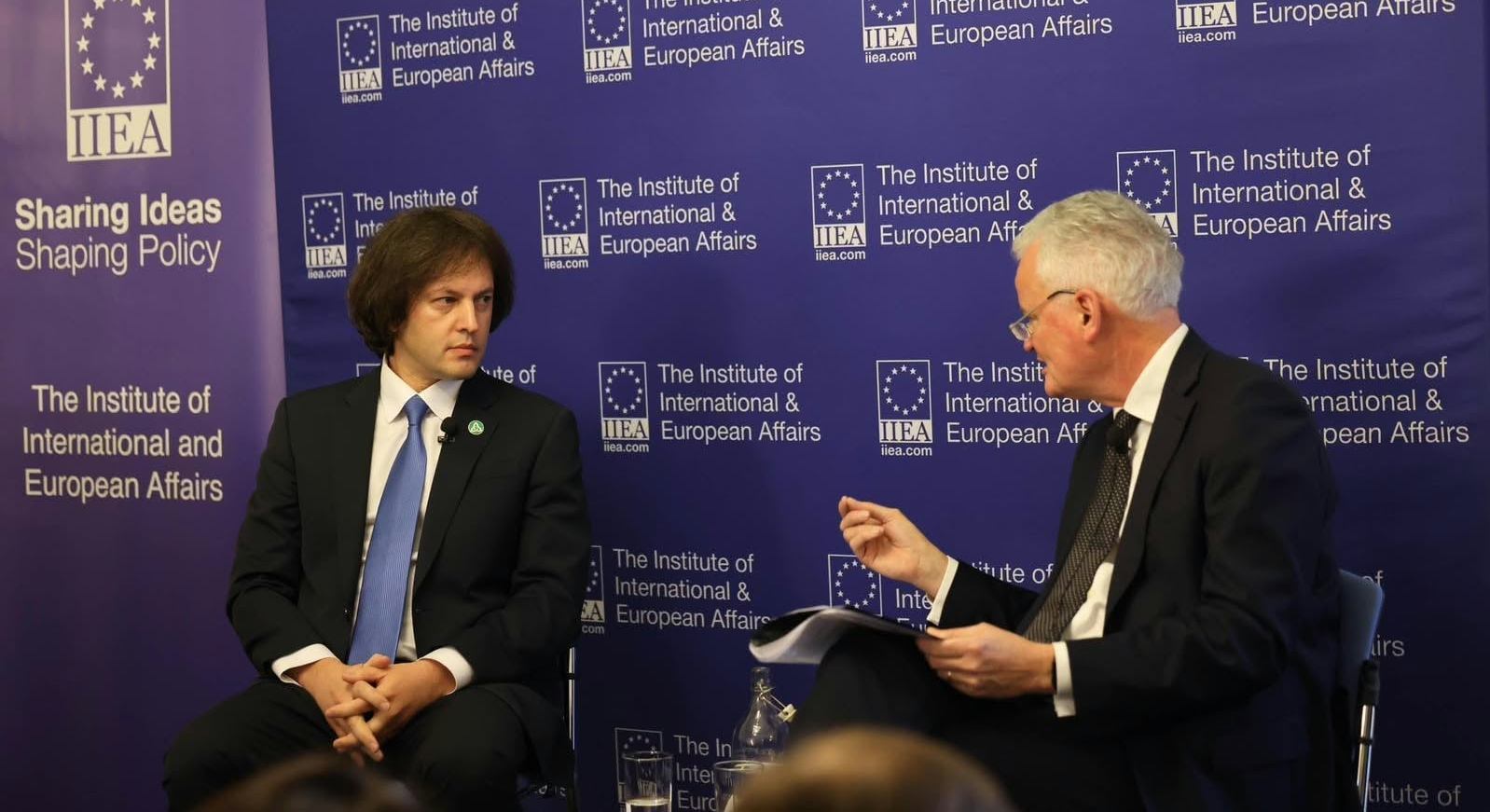
“Georgia and the South Caucasus region remain the only route connecting Europe with the East. This is precisely why, from an economic perspective, maintaining close cooperation and strong ties between the European Union and Georgia is of paramount importance not only for Georgia but also for Europe itself,” Georgian Prime Minister Irakli Kobakhidze said during his address at a discussion held at the Institute of International and European Affairs in Dublin, whose main topic was Georgia’s role in the European architecture, according to the Government Administration of Georgia.
As the Head of Government noted, Georgia connects seven landlocked countries to the Black Sea and, consequently, to the Western world and Europe.
“I would like to emphasise is Georgia’s strategic role, particularly in terms of connectivity. Here, too, we are observing unfavourable trends for Europe that are negatively affecting its economy. Europe has lost certain transport and economic routes towards the East. At the same time, connectivity between Europe and Asia is of particular importance for strengthening Europe’s economic potential.
Following the outbreak of the war in Ukraine, Europe and the European Union in particular, lost access to the Russian market, which had played a significant role in the European economy. Europe also lost access to inexpensive natural resources.
Meanwhile, we see that the ongoing conflict in the Middle East continues to adversely affect Europe’s connectivity with the East.
Under these circumstances, Georgia and the South Caucasus region remain the only route connecting Europe with the East. This is precisely why, from an economic perspective, maintaining close cooperation and strong ties between the European Union and Georgia is of paramount importance not only for Georgia but also for Europe itself,” stated Irakli Kobakhidze.
The Prime Minister noted that Georgia provides seven landlocked countries with access to the Black Sea and, consequently, to the Western world and Europe.
The Head of Government of Georgia also highlighted strategic infrastructure projects that already connect the region with Europe, including the Baku-Tbilisi-Erzurum natural gas pipeline and the Baku-Tbilisi-Ceyhan oil pipeline.
The Prime Minister further underscored Georgia’s strategic importance to Europe and addressed the challenges currently affecting the country’s relations with the European Union.
“Georgia’s role for Europe could be extremely important. It is already significant today and its importance may increase even further in the future. Naturally, the ties between Georgia and the rest of Europe are of strategic importance to both sides.
We remain firmly committed to deepening cooperation with various European countries and the European Union.
However, we face certain specific challenges in this regard.
In March 2022, Georgia submitted its application for EU candidate status, but in June 2022, a negative decision was made regarding our application.
Georgia was subsequently granted EU candidate status. However, following this, the European Commission rejected our request to open EU accession negotiations. Later, in June 2024, the European Commission even decided to suspend political dialogue with Georgia.
Today, the state of our relations is, to put it mildly, not satisfactory enough.
We are very interested in changing this situation. However, it is of utmost importance that cooperation between the two sides be based on shared values,” noted Irakli Kobakhidze.