


Patriarch Shio III: Losing ability to feel pain of sin is extreme spiritual fall
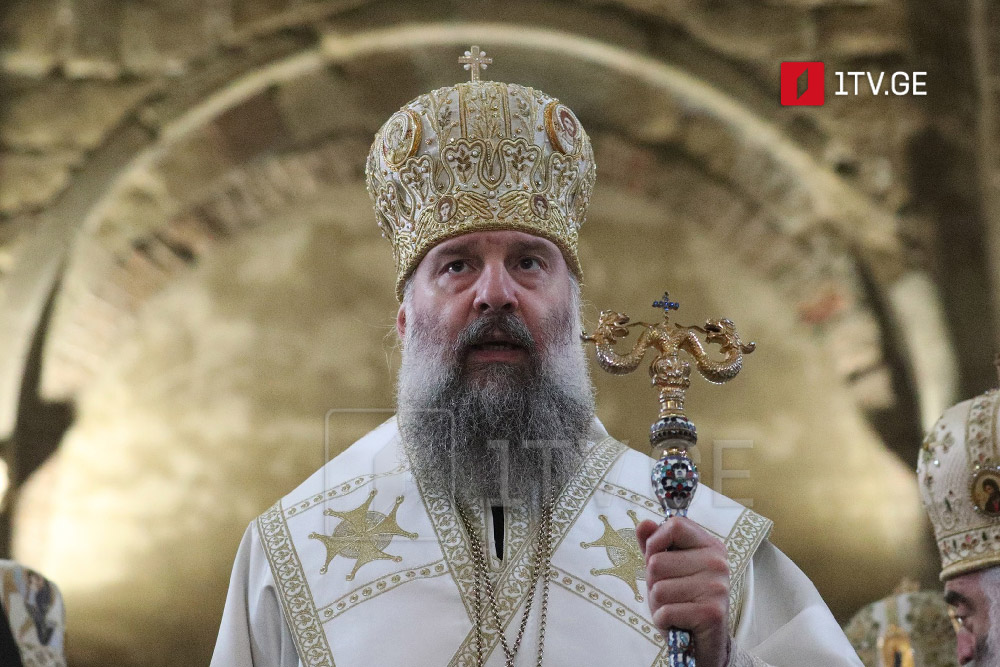
“An extreme spiritual fall occurs when a person can no longer feel the pain of their sins and loses the fear of God. When a person can no longer feel the spiritual pain caused by their sins, it is a very serious condition, and we should reflect on it,” Catholicos-Patriarch of All Georgia Shio III said during a sermon in Adjara region.
The Patriarch congratulated the congregation on the Feast of the Nativity of the Mother of God and blessed them.
“I congratulate you on the glorious Feast of the Nativity of the Mother of God and on the feast day of this beautiful church. In Georgia, we always celebrate the feasts of the Most Holy Mother of God with particular joy, including her Nativity, because our nation is under the special protection of the Mother of God.
“We glorify her, thank her and venerate her for having chosen our homeland and our nation to be under her protection. Glory and thanks be to the Lord that throughout our history the Mother of God has protected us and our country. There are many examples of this in our history, and her protection continues today. She protects our Church, our nation and each of us.
“Today heaven and earth rejoice, and the Holy Church sings of this joy. The troparion of the Nativity of the Most Holy Mother of God says that her birth proclaimed joy to the whole world. This joy is proclaimed to the entire world. It is the joy that the Lord sent the Mother of God into this world, who became the mother of the incarnate Son of God, the Savior of the world.
“Dear brothers and sisters, when we hear such a call to joy and such an announcement of joy during church feasts and prayers, we should always examine ourselves. What makes us happy and what saddens us? Do we rejoice with this spiritual joy? Often, the things that make us happy are unworthy of Christian life. We often rejoice over more earthly values.
“If the Nativity of the Mother of God and her coming into the world are a source of our joy, then this is what the Lord calls us toward. But we often have the wrong kind of joy, arising from earthly events. What does this mean? It reflects our spiritual condition. What is our spiritual condition if we cannot feel this joy, this true spiritual joy?” Shio III said.
The Patriarch said people should rejoice and grieve in a way that is consistent with Christian spiritual life.
“You have probably noticed that when we allow an improper shame about our faith to enter our hearts, or express it, or become cold and indifferent, this joy within us disappears and suddenly fades, as if grace is leaving us.
“Perhaps priests will agree that sometimes people come to confession and confess their sins with such indifference and coldness that it is very far from true repentance and a Christian disposition. We have often heard people say, ‘I do not remember my sins,’ or, ‘I do not commit any serious sins.’ They do not feel their sins.
“The Holy Fathers teach us that this insensitivity is a very serious condition. For example, St. Ephrem the Syrian wrote that we should beware of this hardened insensitivity, because it is an extreme fall. It is when a person can no longer feel the pain of their sins and loses the fear of God.
“When a person experiences physical pain, what are we like? We always remember that pain and try to recover as quickly as possible. But when a person can no longer feel the spiritual pain caused by their sins, this is a very serious condition, and we should reflect on it. We should ask ourselves whether we have this kind of insensitivity.
“If the Feast of the Nativity of the Mother of God is a personal source of joy for us, then we are on the right path. If we do not have this condition and cannot feel this spiritual joy, then we should come to our senses, correct ourselves, and pray to the Lord and to the Mother of God to deliver us from this hardened insensitivity and teach us to rejoice and grieve in a way that is consistent with Christian spiritual life,” Shio III said.
During his sermon in Adjara, the Patriarch also said that the people of Adjara had endured many trials and that enemies had repeatedly sought to separate Adjara from Georgia and from Christianity. However, he said, the people of Adjara had preserved both their Georgian identity and faith at the cost of their blood and lives.
“Today it is a great joy for us, dear bishops, dear Metropolitan Dimitri, to be here and serve on the blessed land of Adjara. His Holiness and Beatitude Catholicos-Patriarch Ilia II once said that Adjara is the enlightener of Georgia, the gateway to our spiritual life, because the preaching of the Gospel began here and the words of the Gospel were first heard here in Georgia.
“The apostles preached here — Andrew the First-Called, Simon the Canaanite and Matthias, whose grave, according to tradition, is located nearby, on the territory of Gonio Fortress. That is why Adjara is a particularly holy land for all of Georgia.
“The people of Adjara have endured much pain, trial and persecution. The enemy repeatedly sought to separate Adjara from Georgia and from Christianity, but the people of Adjara preserved both their Georgian spirit and their faith at the cost of their blood and lives.
“We see how the people of Adjara have turned toward the Lord, toward Christ and toward the true faith in recent decades. His Holiness and Beatitude Catholicos-Patriarch Ilia II made a particularly significant contribution to this process. He served as the bishop of this diocese for approximately seven years, when it was known as the Batumi-Shemokmedi Diocese. He traveled on foot throughout almost all of Adjara, met with people and preached the faith.
“As a result, hundreds and thousands of people began returning to the faith of their ancestors and were baptized into Orthodoxy. We see that this process continues today. What tremendous development there has been since Catholicos-Patriarch Ilia II’s ministry here — how this development continues, how many churches and monasteries have been built, how many more people have been baptized, and how much educational and social work is being carried out. All of this is led by His Eminence Dimitri, Metropolitan of Batumi and Lazeti,” Shio III said.
The Patriarch thanked Metropolitan Dimitri for his work.
“Dear Metropolitan, you have been serving here for 30 years with such dedication and energy, continuing the work of His Holiness and Beatitude in Adjara. On behalf of the Holy Synod and personally, I would like to thank you for your faithful service and zeal.
“I would particularly like to highlight your charitable and educational work. In the charitable institutions and educational facilities, our young people receive a very worthy education, while children and elderly people in need of care receive comfort and assistance. This is the result of your great heart, energy and care, and I would once again like to thank you for this with great love.
“Thank you all. As you know, this year we are marking the 1,700th anniversary of the proclamation of Christianity as the state religion in Georgia. It is particularly symbolic that we have gathered here today, in Adjara, in the heart of Adjara, the enlightener of Georgia, where Christianity began in our country, to conduct our service and prayers.
“Dear Metropolitan, as a sign of my love, our great brotherly relationship and respect, I would like to present you with an icon of the Most Holy Mother of God. May the Mother of God be your protector and intercessor.
“May God bless and strengthen you. Once again, I congratulate you on the glorious Feast of the Nativity of the Mother of God. Through the intercession and prayers of the Mother of God, may the Lord bless Adjara; may the Lord bless the Batumi and Lazeti Diocese; may the Lord bless Metropolitan Dimitri, the clergy of this diocese, the monastic community, the congregation and each of you.
“Through the intercession and prayers of the Mother of God, may God save, unite and strengthen all of Georgia. Amen,” Shio III said.