


Patriarch Shio III: All people are expected to strive equally for spirituality and holiness, not only monks
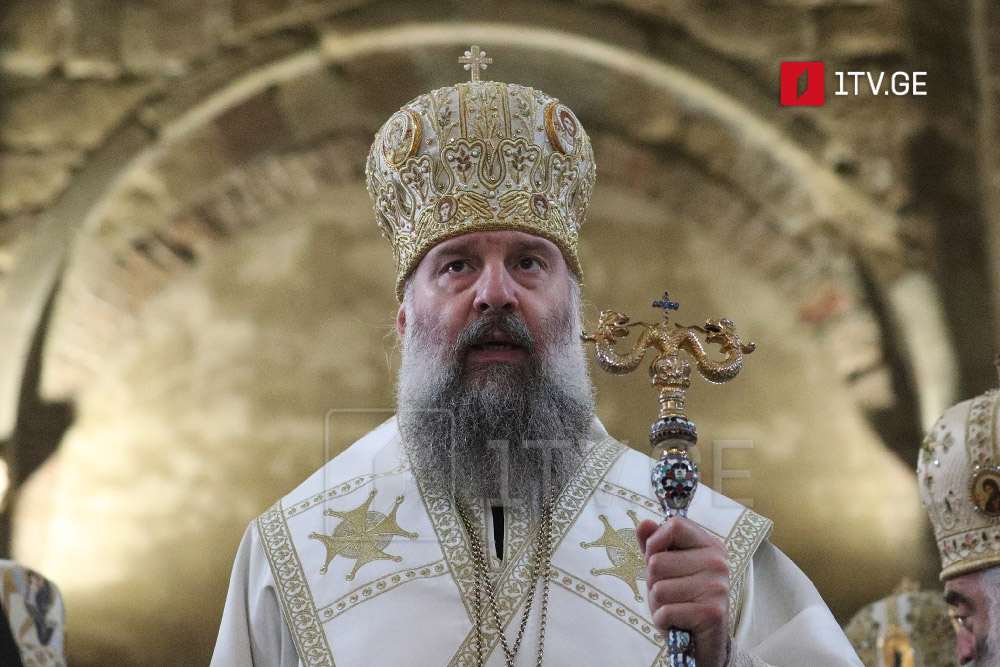
“It is precisely this that has corrupted the entire world: we think that only monks need to lead an austere life, while others are allowed to live carefree lives. Absolutely not! Each of us is expected to show the same love of wisdom and strive equally for spirituality and holiness,” Catholicos-Patriarch of All Georgia, Archbishop of Mtskheta-Tbilisi and Metropolitan of Pitsunda and Tskhum-Abkhazia Shio III said during a sermon at the Holy Trinity Cathedral.
“Today, a passage from the Gospel was read about the healing of a demon-possessed man by our Lord Jesus Christ, who was possessed by an entire legion of evil spirits. One detail in this episode draws particular attention: when the evil spirits realized that the end of their domination over this unfortunate man had come, they asked the Lord to allow them to enter a herd of pigs (Luke 8:26-33).
This shows that they could not do so without God’s permission. It also demonstrates that their power is not genuine, as they have no authority even over animals. But the question arises: why did the Lord allow them to enter the pigs? As soon as they entered, they destroyed them. The herd rushed down the steep bank into the water and drowned.
As the Holy Fathers teach us, the Lord did this for our spiritual benefit, so that we might understand how much evil spirits hate every creation of God. Their hatred is so great that, having been granted this power, they could think of nothing other than destroying these unfortunate animals. It also teaches us that they hate human beings even more. If they had the opportunity, they would treat people in exactly the same way and destroy all humanity in an instant. The only thing preventing them from doing so is the power of God.
And so, when the inhabitants of that city heard what had happened, instead of giving thanks, rejoicing and inviting Him into their city, they came out to meet the Lord and asked Him to leave their territory. They were afraid that if He entered the city, He would disrupt their accustomed way of life. They thought: ‘We have already suffered such a great loss with the destruction of the herd of pigs, even though He has not yet entered the city. What will happen when He does?’ That is why they asked Him to leave (Luke 8:34-37).
This, dear brothers and sisters, is an example of fear rooted in greed. Such a thing happens when a person is afraid to let God into their soul and life. For example, we may consider someone who says (we have heard such statements): ‘I am not a nun or a monk, so why should the same be expected of me as of monastics – the same spiritual fervor and aspiration? I am a layperson; how can the same be demanded of me?’ When a person insists that nothing should disturb their inner spiritual world and refuses to undertake any spiritual struggle or obligation, they become very much like the people of the Gadarenes, who asked the Lord to leave their city.
In this regard, the great Church Father Saint John Chrysostom offers a remarkable reflection. Today, I very much wanted to read you a short excerpt from his writings on this subject. He writes:
‘You are greatly mistaken and deceive yourself if you think that one standard is required of a layperson and another of a monk. The difference between them is that one is married, while the other is not. In all other respects, however, they bear equal responsibility. For example, whoever becomes unjustly angry with their brother, whether a layperson or a monk, equally offends God. Whoever looks at a woman with lust, whether a layperson or a monk, is equally condemned for fornication. The same applies to all other great commandments.
For example, when the Lord says, “Blessed are the poor in spirit,” “those who mourn,” “the meek, the merciful, the pure in heart, the peacemakers, those who are persecuted for righteousness’ sake,” and so on, He makes no distinction between laypeople and monks. This division was introduced by the human mind (referring to the distinction in terms of responsibility), but Scripture does not recognize it. Rather, it wishes everyone to live like a monk, even if they have wives.
Thus, Saint John Chrysostom concludes, laypeople are also expected to meet the same standards as monks, and every person must ascend to the same spiritual heights. It is precisely this that has corrupted the entire world: we think that only monks need to lead an austere life, while others are allowed to live carefree lives. Absolutely not! As the Apostle Paul says, each of us is expected to show the same love of wisdom and strive equally for spirituality and holiness.’
These are truly remarkable words, dear brothers and sisters! Therefore, let us reflect on the teaching we have heard today and do our utmost to fulfill God’s will. Through our lives and deeds, let us glorify the Most Holy Name of God, so that we do not become worse than the healed demon-possessed man of the Gadarenes, who, immediately after being healed, demonstrated such wisdom that he became a truly worthy example for everyone. Amen!” Shio III said.