


Pashinyan outlines Armenia’s multi-vector policy: Deepening ties with Georgia and Iran while engaging Baku and Ankara
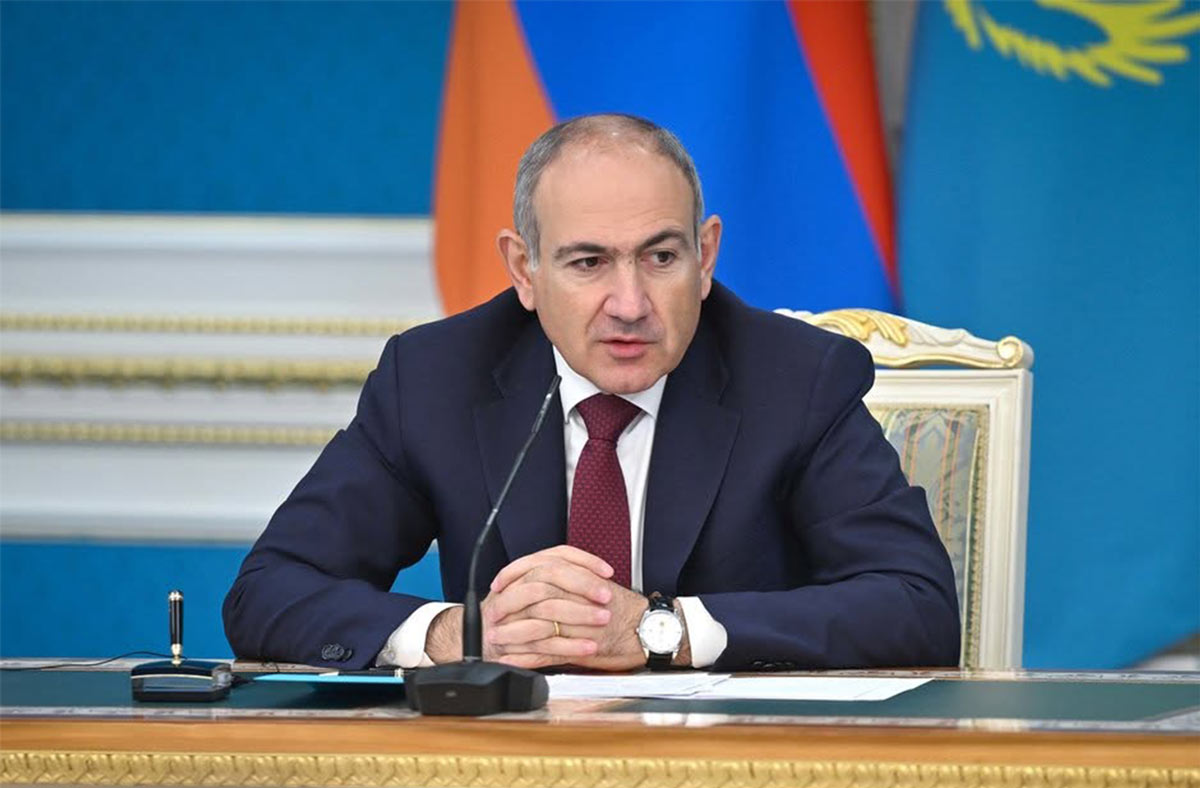
“Armenia conducts a multi-vector foreign policy, which we define as a balanced diplomatic approach,” stated Prime Minister of Armenia Nikol Pashinyan during his address at the Shanghai Cooperation Organisation (SCO) summit.
Pashinyan explained that the core rationale of this policy is straightforward. When the gravitational pull of one geopolitical pole grows so overwhelming that it threatens national independence, Yerevan actively engages another pole with sufficient counterweight to preserve equilibrium on the precarious path of sovereignty and self-determination.
“The overarching objective of this strategy is to safeguard and reinforce our national sovereignty and independence. In shaping these strategies, we concluded that living in a state of perpetual conflict renders true independence and sovereignty unattainable. In this sense, multipolarity must first manifest in the very region where a nation resides.
“This is precisely why, alongside deepening friendly relations with our neighbours Iran and Georgia, we are establishing inter-state relations with our two other neighbours—Azerbaijan and Türkiye. This initiative has naturally gained concrete momentum following the peace agreement achieved between Armenia and Azerbaijan on 8 August last year, mediated with the support and involvement of US President Donald Trump.
“We are currently working alongside Azerbaijan and Türkiye to unblock inter-state communications, including through the implementation of the Trump Route project, with practical ground operations set to commence in the coming months. This initiative will unlock new transport opportunities along the East–West corridor, connecting the Caspian Sea to the Mediterranean, and also the North–South corridor, bridging the Persian Gulf with the Black Sea. Consequently, the execution of this project will deliver tangible benefits to every nation across the region,” Pashinyan noted.