


Parliament approves amendments to Law on Grants in first reading
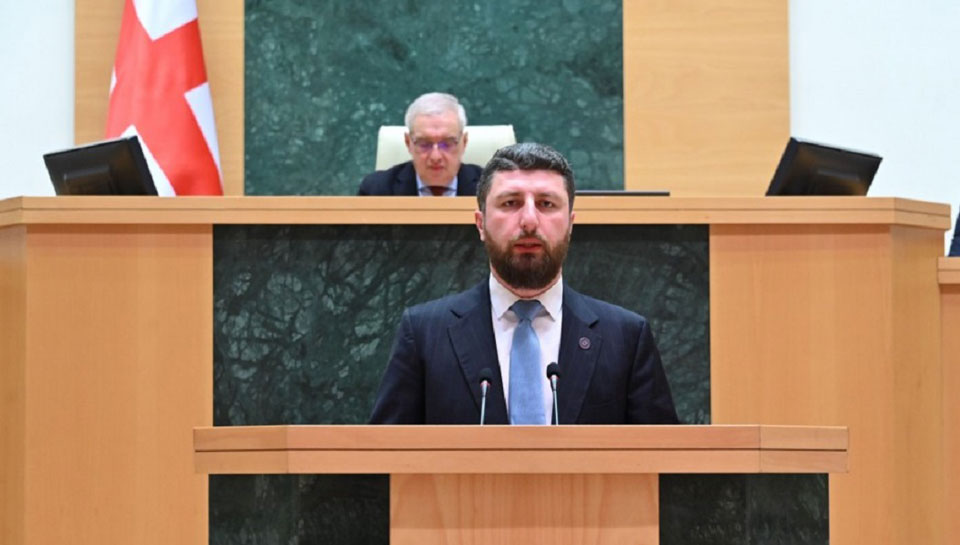
On 3 February 2026, the Georgian Parliament approved, in first reading, amendments to the Law on Grants and related legislative proposals, with 82 votes in favor and 10 against.
The amendments clarify the concept of a grant, defining it as funds transferred in monetary or in-kind form that are used or intended for activities aimed at influencing the Georgian government, state institutions, or any part of society. These activities may involve forming, implementing, or changing Georgia’s domestic or foreign policies and may also address political or public interests associated with a foreign country or political party.
Archil Gorduladze, the Chairman of the Legal Affairs Committee and rapporteur, stated, “This initiative continues the legislative amendments that the Georgian Parliament has implemented multiple times, aiming to guarantee a high level of protection for our country’s sovereignty.”
According to the rapporteur, organizations registered abroad that engage in activities related to Georgia must obtain government consent before receiving a grant, as stipulated by the Law on Grants. This requirement applies whether the organization is registered in Georgia or another country.
“If an organization’s core activities pertain to Georgian issues, it must secure consent from the Georgian government prior to receiving a grant. Consent will be granted if there are no risks of violating the country’s sovereignty,” he clarified.
Additionally, a grant is defined as the transfer of funds or resources by a foreign state, citizen, or legal entity to a Georgian citizen or resident if the intent is to influence society or change, implement, or form policies.
Gorduladze further explained that branches of foreign funds operating in Georgia and their representatives must also seek government approval before receiving funds from their own organizations. This requirement does not apply to for-profit entities but is specifically focused on organizations involved in financing political activities.
As a transitional provision, the draft law states that if a grant was awarded before the law took effect, and if the individuals or organizations were previously exempt from requiring government consent, they must obtain consent within one month after the law’s enactment if they have not yet utilized those funds.
The amendment also introduces changes to the Criminal Code of Georgia. Notably, it adds to Article 194, which pertains to money laundering, stipulating that money laundering related to political activities involving Georgia will carry a penalty of 9 to 12 years in prison.
Furthermore, the law establishes that violating the provisions outlined in the Law on Grants—specifically receiving and using a grant without government consent—will result in criminal liability in the form of a fine, community service (between 300 to 500 hours), or imprisonment for up to 6 years.
The amendment also includes provisions that would impose criminal liability for payments made for lobbying and political activities abroad.
Failure to file a declaration required for political entities, or providing incomplete or incorrect information, will lead to penalties including fines or community service (120 to 200 hours), and may result in the loss of the right to hold a position or engage in activities for up to three years.
The amendment clarifies that individuals or entities with a declared political purpose must adhere to the same regulations as political parties. This includes prohibitions on income from abroad, restrictions on donations from legal entities, and the obligation to declare income within the timeframe specified by law.
Finally, the planned amendment to the Organic Law on Political Unions of Citizens prohibits individuals employed under a contract in an organization that receives more than 20% of its annual income from a foreign power from being members of a political party for eight years.
The State Audit Office will oversee the financial activities of political party members.
The legislative package introduces a new offense for entrepreneurial entities that engage in public political activities unrelated to their primary business operations. According to Archil Gorduladze, this action will incur administrative penalties for the first offense, and if it is repeated, it could lead to criminal charges.