


NBG President: Georgia’s economy is highly resilient to global shocks; IMF highlights this at every meeting
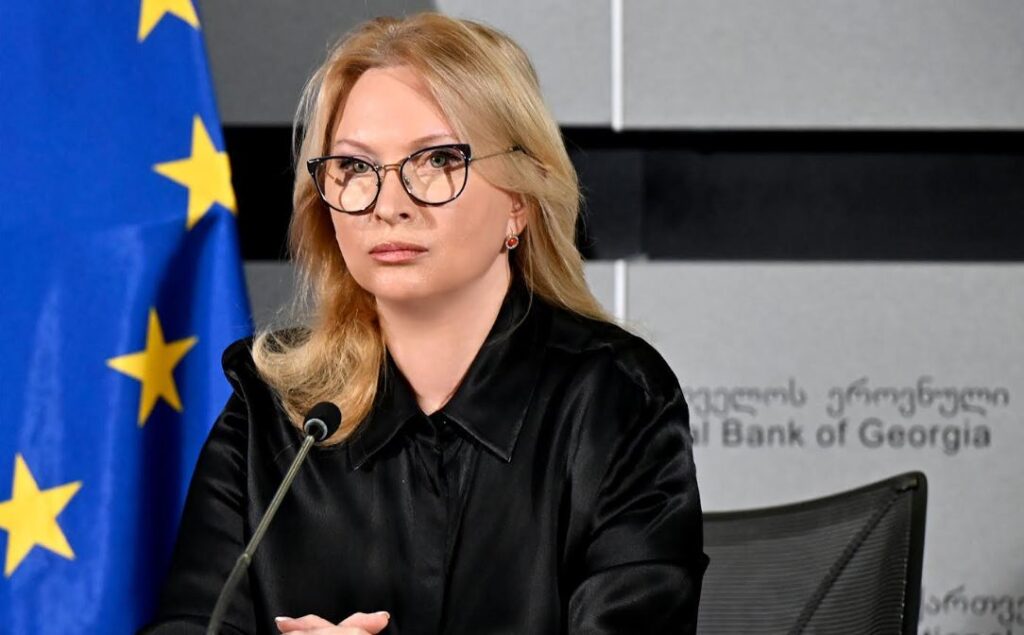
“We were keen to hear views on how the new geopolitical challenges will affect the global economy, so that we can determine our next steps accordingly. We are ready for any scenario that may unfold,” said President of the National Bank of Georgia Natia Turnava, speaking in Washington following a meeting with Jihad Azour, Director of the IMF’s Middle East and Central Asia Department.
The two sides discussed Georgia’s fiscal and monetary policy, the macroeconomic situation, and prospects for future cooperation with the IMF.
Turnava noted that Georgia’s economy is proving highly resilient to various shocks, including risks arising from the acute geopolitical tensions in the Middle East, and those connected specifically with Iran. She added that the IMF consistently underscores Georgia’s economic resilience at every meeting.
According to the National Bank President, the country possesses sufficient resources, historically high international currency reserves, a low fiscal deficit, and robust economic growth to navigate the new global challenges.
She also emphasised that engaging in dialogue about the current profound uncertainty and its potential impact on the global economy is of great importance, as it allows Georgia to plan its next steps and policies on a solid and well-informed basis.
“We have put in place adequate measures that we can deploy to ensure macroeconomic stability is maintained at all times,” Turnava added.
The annual forum brings together IMF and World Bank governors and alternate governors, representatives of the financial sectors of the majority of the world’s countries, central bank governors, finance ministers, and private sector executives. The spring session addresses issues of global significance, including the world economic outlook, poverty reduction, economic development, financial stability, cybersecurity, and financial technology.